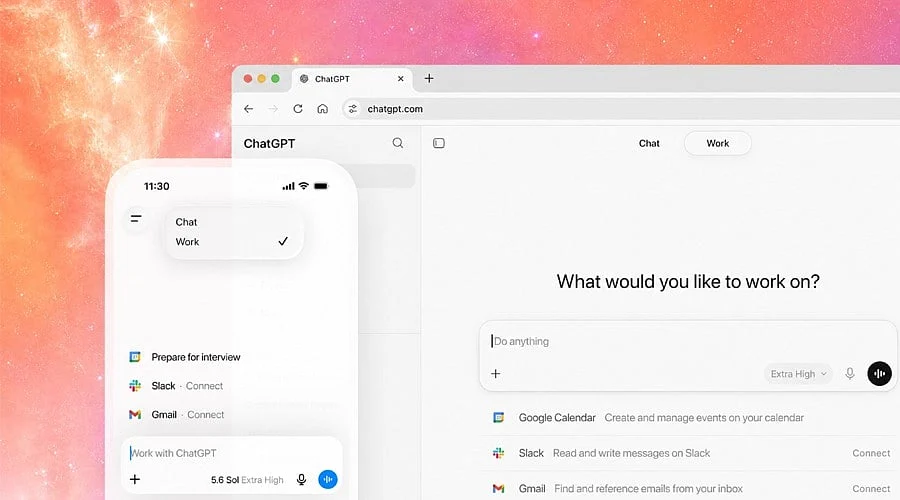
OpenAI is broadening ChatGPT’s capabilities past the conventional chat window by introducing Space, a collaborative environment meant to consolidate individuals, documents, and AI-driven tasks into a single location. Unveiled at DevDay 2026, the feature targets users looking to build, structure, and collaborate without constantly switching between different programs.
Acting as a centralized hub for documents, uploaded files, and assorted materials, Space lets users set up distinct zones dedicated to specific projects or groups, subsequently sorting relevant data via pages and subpages. For accounts granted access, Space also takes the place of the earlier Library interface.
Pages Turn ChatGPT into a Working Document
Pages form the core of this new feature, functioning as editable documents that can either be built from the ground up or produced using previous ChatGPT conversations. Users have the ability to incorporate text, pictures, graphs, and dynamic features onto a page, continuously polishing the content alongside ChatGPT.
Capabilities include reorganizing text, generating summaries, producing charts, and contrasting data points. Furthermore, individuals can post feedback on particular parts of a document and direct ChatGPT to execute precise edits.
Collaboration is built directly into Pages. Individuals with editing permissions are able to collaborate on a single document simultaneously, with every participant leveraging their personal instance of ChatGPT to assist with the joint material.
AI Can Work from Shared Context
A major shift lies in how ChatGPT interacts with data already housed within a given Space. By pooling files, documents, and project details together, teams provide giving ChatGPT more context whenever it is prompted to investigate, revise, or expand upon previous tasks.
Additionally, OpenAI points out that individuals can assign directives to pages regarding updates, reference materials, and scheduling checks. As a result, the platform functions effectively for project outlines, meeting minutes, research briefs, dashboards, and other ongoing tasks.
OpenAI additionally markets Space as an environment where its fresh lineup of agents—such as Codex and the brand’s ‘dot’ assistants—can operate right alongside human users.
Also Read: ChatGPT Desktop App: Features, Uses, & How It Compares With the Web Version
Availability and What Comes Next
At present, Space rolls out to ChatGPT Pro, Business, and Enterprise customers. While users can build and modify pages across web browsers and desktop software, mobile access is limited to locating, viewing, and sharing pages, as mobile editing remains unsupported for now.
Furthermore, OpenAI has revealed plans for collaborative spreadsheets and presentations, though these additions remain labeled as upcoming. Ultimately, the company is reshaping ChatGPT into a shared environment where dialogue transforms into documents, documents undergo ongoing refinement, and users collaborate alongside AI in one unified space.