Key Takeaways –
-
Modern AI voice solutions currently enable expressive delivery, multilingual output, live conversations, and tailored voice profiles.
-
Voice technology decreases production workloads while broadening possibilities in accessibility, localization, educational tools, and customer support.
-
High-fidelity voice replication introduces significant dangers regarding identity theft, financial fraud, privacy breaches, non-consensual usage, and eroding digital confidence.
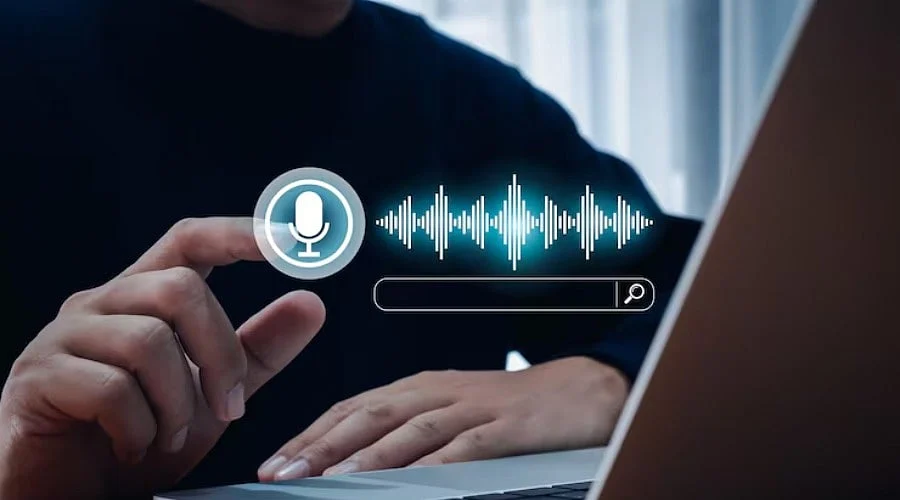
Artificial intelligence voices have evolved far beyond simple text reading. Contemporary AI voice platforms generate lifelike speech, replicate an individual’s distinct vocal style, accommodate numerous languages, and manage live dialogues. This evolution has integrated voice technology into customer care, video creation, educational tools, video games, advertising, accessibility features, and entertainment. Simultaneously, convincing voice replication has sparked major worries about scams, data privacy, user consent, and personal identity.
AI Voices Move Beyond Basic Text-to-Speech
Legacy text-to-speech programs frequently produced monotonous audio characterized by minimal emotion and awkward pacing. Advanced platforms grant superior oversight over intonation, tempo, sentiment, persona, and conversational flow. Google rolled out its newest Gemini 3.8 Flash TTS and Flash-Lite TTS engines on September 23, 2026, prioritizing expressive speech, customizable character voices, and contextual scene dialogue. Google distributes these tools through Google AI Studio, the Gemini API, Gemini Enterprise, Gemini Notebook, and Google Vids.
Additionally, OpenAI steered its voice capabilities toward live communication via GPT-Live in July 2026. Later, the firm incorporated SynthID watermark tools to track audio originating from GPT-Live and its developer API. Developments like these highlight a distinct pivot from basic narration to interactive voice engagement.
Businesses Find Practical Uses for AI Voices
Media producers leverage synthetic speech for video voiceovers, podcast creation, audiobooks, promotional spots, and social media clips. Production crews can generate multiple vocal variations without booking separate recording sessions for individual scripts. Video platforms can also tailor single pieces of media for international viewers.
Localization has emerged as another prominent application. Through its Gemini 3.1 Flash TTS upgrade, Google Vids incorporated 30 conversational voices spanning 24 languages. The framework also supplies adjustments for emotion, pauses, and sound effects. Such capabilities assist media teams in producing authentic variants of identical content tailored to distinct geographical markets.
AI-driven voice agents now hold an established role in sales and customer service operations. These platforms answer inquiries, process standard requests, and manage telephone interactions. ElevenLabs announced more than USD 500 million in annual recurring revenue during the initial four months of 2026, marking an increase from USD 350 million at the close of 2025. The enterprise attributed part of this expansion to business voice agents deployed for client support, sales pipelines, recruitment, and marketing.
Also Read – Top Celebrity AI Voice Generator Tools in 2026
Voice Technology Can Improve Access
Synthetic audio also delivers distinct utility outside commercial applications. Individuals who lose their natural speaking ability can deploy a customized digital voice for interpersonal communication. The Federal Trade Commission recognizes medical voice recovery as a valuable application of voice cloning technology.
Educational sectors stand to benefit from natural speech applications as well. AI voices can deliver instructional lessons, language training, spoken counterparts of written texts, and assistance for individuals facing reading challenges. Gaming properties and interactive narratives utilize unique character voices without incurring the expenses tied to extensive studio recording sessions.
Automated dubbing has likewise expanded significantly. Perso Dubbing logged 303,241 paid dubbed minutes through August 2026, backed by 2,902 paying creators across 68 target languages. This metric demonstrates how rapidly synthetic speech has integrated into active media production pipelines.
Realistic Voices Create Serious Fraud Risks
The very realism that grants synthetic voices their natural cadence enables malicious actors to fabricate convincing impersonations. Cloned audio can mimic relatives, corporate executives, public figures, or enterprise representatives during phone interactions. Fraudsters then exploit these manufactured identities to extract funds or confidential data.
CBS highlighted an incident in the Atlanta area where a local couple incurred losses of approximately USD 800,000 via a cryptocurrency scam leveraging AI-driven identity deception. Incidents of this nature explain why a familiar-sounding voice can no longer serve as definitive proof of identity.
Additional worries involve unauthorized voice duplication, privacy violations, manufactured audio evidence, copyright disputes, and potential displacement of professional voice talent. Public confidence can likewise erode when individuals struggle to distinguish authentic human recordings from synthetic AI outputs.
Also Read – Top AI Voice Generators for Audiobooks in 2026: Best Picks Ranked
Laws and Safeguards are Catching Up
Regulators and technology developers have begun taking steps to mitigate these hazards. U.S. lawmakers reintroduced the NO FAKES Act in Congress in May 2026, featuring clauses targeting unauthorized digital simulations of human voices and likenesses.
Furthermore, China’s highest court published updated guidelines in September 2026 focusing on AI deepfakes, privacy protection, fraudulent activity, and consumer safeguards. On the technical front, watermarking mechanisms like SynthID seek to supply methods for authenticating or tracking synthetic audio streams.
Upcoming iterations of AI voice technology will likely de-emphasize rudimentary audio quality in favor of real-time communication, minimized latency, broader language support, vocal modulation, identity safeguarding, user consent, and audio traceability.
The primary dilemma currently exists where operational convenience intersects with digital trust. While artificial intelligence streamlines speech generation to be faster, cheaper, and more available, robust protective measures must evolve concurrently with the sophistication of the voices themselves.
FAQs
1. What are AI voice generators?
AI voice generators produce spoken audio derived from text inputs or alternative prompts using artificial intelligence algorithms.
2. Where are AI voice generators used?
Common implementations involve video voiceovers, podcast creation, automated dubbing, customer support, educational instruction, gaming, advertising, and accessibility tools.
3. Can AI generate a person’s voice?
Yes. Contemporary voice replication systems can duplicate the attributes of a specific individual’s voice, generating both functional use cases and profound consent concerns.
4. What are the main risks of AI voice generators?
Primary hazards encompass fraud, impersonation, privacy breaches, unauthorized voice exploitation, fabricated audio clips, and ownership disputes.
5. How can AI-generated voices become safer?
Consent frameworks, identity verification protocols, mandatory disclosures, watermarking technologies, audio authentication, and enhanced safeguards assist in minimizing misuse.