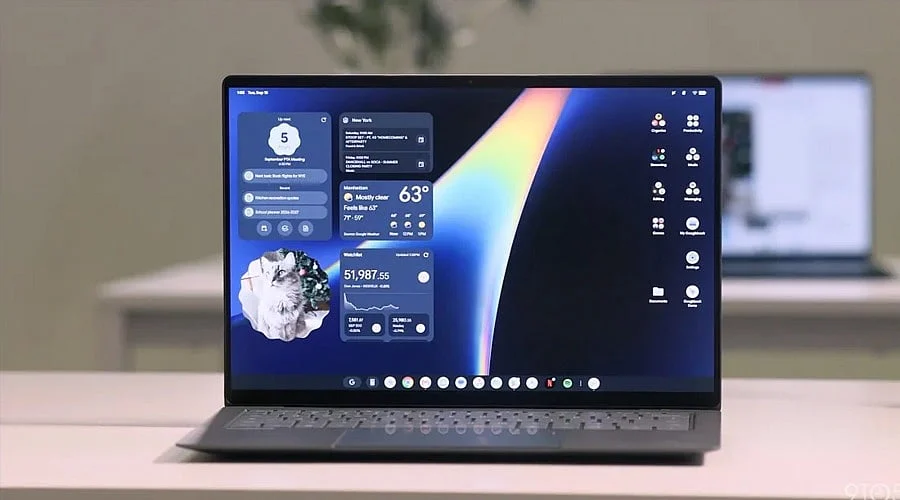
Google is getting ready to move past ChromeOS, having confirmed that the operating system will remain supported until mid-2034 before being phased out. This shift centers on Googlebook OS, a fresh operating system that merges features of ChromeOS with the Android technology stack.
The tech giant explains that this transition aims to introduce enhanced multi-device capabilities, native Android apps, and integrated Gemini artificial intelligence tools to its laptop lineup.
What Happens to Existing Chromebooks?
Owners of Current Chromebook devices will not experience any immediate disruptions. Google has assured users that current hardware will keep getting security patches and software updates across the entirety of their supported lifespans.
Furthermore, the corporation noted that a variety of newer Chromebook models will eventually qualify for an upgrade to Googlebook OS. Specific information regarding eligibility and the mechanics of the migration has not yet been shared.
According to Google’s support guidelines, eligible devices with a 10-year support window stretching past 2034 will receive a migration route to Googlebook OS. The firm emphasizes its goal to ensure a seamless transition for schools, enterprises, and other entities that depend heavily on fleets of managed Chromebooks.
Googlebook OS Brings Android Closer to Laptops
Rather than relying on the traditional ChromeOS architecture, Googlebook OS is constructed using the Android technology stack. Google explains that the fresh platform merges desktop web browsing capabilities with native support for Android applications and tighter integration with Android smartphones.
Additionally, users can expect functionalities like simpler file sharing and cross-device task continuity, alongside AI assistance powered by Gemini. Google is marketing Googlebook as a more powerful laptop operating system while preserving the core attributes that drove Chromebook popularity, such as straightforward management, simplicity, and security.
Also Read: Chromebook as a Daily Computer: What You Need to Know
Enterprise and Education Transition Begins Later
For educational institutions and corporate environments, Google’s migration will unfold over a more extended timeframe. The initial major management tools for Googlebook are slated to debut during the latter half of 2027. The company noted that current Chrome Education and Chrome Enterprise upgrades will continue functioning on existing hardware. Support for web apps will also be preserved, alongside APIs for institutions utilizing third-party enterprise management software.
Consequently, this migration represents a gradual evolution rather than an abrupt termination of Chromebooks. ChromeOS will keep receiving support for years as Google progressively builds Googlebook OS to serve as the upcoming foundation for its laptop ecosystem.