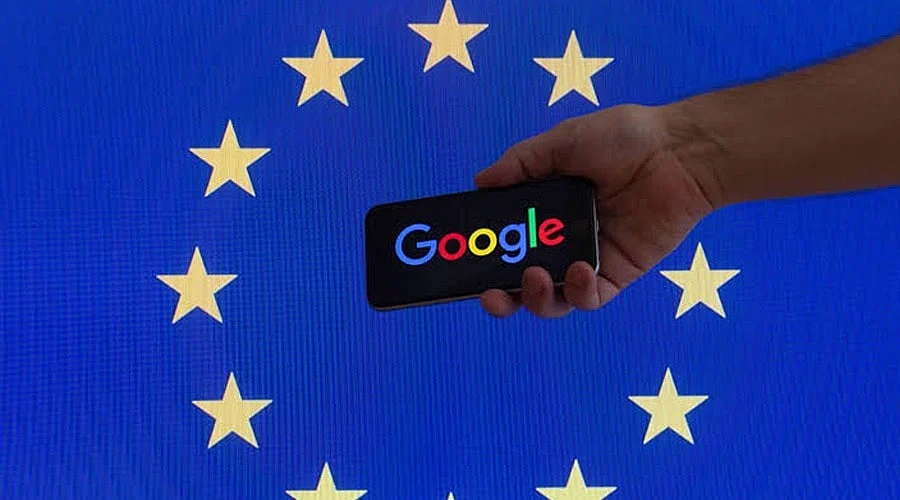
Google has initiated legal action against the European Union concerning regulatory mandates that compel the tech giant to open segments of its Android platform to competing artificial intelligence services and share search data with rival search providers.
Alphabet, the parent company of Google, submitted two separate legal challenges to the EU’s General Court on Monday, deepening the conflict over the extent to which the bloc’s Digital Markets Act (DMA) can compel major technology firms to integrate competitors.
The European Commission introduced these regulations in July to foster greater competition within online search and AI services. These modifications are scheduled to be implemented in 2027.
Search Data Sharing at the Centre
A primary point of contention involves a directive obligating Google to supply anonymised search metrics to qualified rival search platforms on fair, reasonable, and non-discriminatory conditions.
The European Commission contends that Google’s market dominance in search grants it a vast repository of data that continuously refines its platform. Brussels asserts that granting competitors access to pertinent information will aid them in building alternative search tools, ultimately offering European consumers broader options.
Under this regulatory framework, AI chatbots possessing search functionality are also eligible to participate. Google strongly contested this obligation, asserting that despite anonymisation protocols, releasing search logs risks exposing sensitive private data.
“We’re appealing decisions that will force us to share people’s private search history without sufficient anonymisation and weaken vital security protections on Android,” stated Oliver Bethell, Google’s senior director of competition.
“People use Search for their most personal questions from medical worries to close relationships and mandating we share these personal queries without adequate safeguards would cause irreversible harm to user privacy,” he added.
Android AI Access Also Disputed
The second contested directive targets the Android operating system, requiring Google to grant external AI assistants access to hardware and software features presently reserved for Google’s own AI services. This EU ruling would permit rival AI tools to tap into 11 specific Android functions, enabling users to launch alternative AI helpers via voice commands and execute in-app tasks.
Google countered that exposing these system capabilities to external applications risks eroding Android’s built-in security architecture. The firm noted that it has put forward alternative solutions addressing regulatory concerns regarding competition while safeguarding user privacy and device safety.
Also Read: OpenAI, Microsoft Face Copyright Lawsuit from US Publishers
EU Defends its Competition Measures
In response, the European Commission maintained that the directives incorporate robust protections designed to secure personal data, maintain device integrity, and uphold security standards. The Commission noted that Google retains the authority to verify whether competing platforms satisfy established privacy and cybersecurity criteria.
Meanwhile, privacy-oriented search engine DuckDuckGo backed the EU stance, maintaining that the established anonymisation protocols are robust enough. These court filings now shift the disagreement directly to the EU judiciary.
The outcome of this litigation will likely shape the enforcement of the DMA across search metrics, the Android environment, and emerging AI markets as watchdogs push to break up monopolies held by big tech corporations.