Overview:
-
Google’s Pixel Tag allows Android users to monitor keys, wallets, bags, and luggage via Find Hub.
-
UWB-compatible Pixel devices feature directional Precision Finding, whereas standard versions deliver core tracking capabilities.
-
Customers ought to verify accessory expenses, battery longevity, water resistance, and mobile device compatibility prior to purchase.
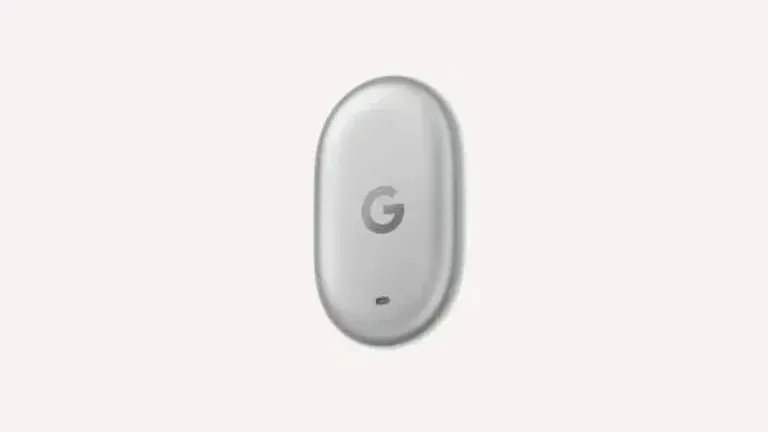
Google has introduced the Pixel Tag to India as its inaugural Bluetooth item tracker, presenting Android users with an alternative to Apple’s AirTag. It is built to locate keys, wallets, bags, and luggage utilizing Google’s Find Hub network, even at long distances. Nonetheless, purchasers should verify phone compatibility, Ultra-Wideband (UWB) support, and the expense of an optional holder before buying.
The Pixel Tag appears on the Google India Store with a November 2026 release window. In India, pricing is set at Rs. 3,799 for a single unit and Rs. 12,900 for a four-pack. It is offered exclusively in a Fog color variant.
Google Pixel Tag: Which Android Phones are Compatible?
Google states that the Pixel Tag functions with Android devices operating on Android 9 or newer. Pairing is executed via Fast Pair: take out the battery tab, bring the tag close to the handset, and adhere to the on-screen prompts. The tracker then shows up within the Find Hub application, enabling users to name it and check its coordinates.
Individuals can view the logged coordinates of the tag and trigger its speaker to produce a sound when nearby. Outside of Bluetooth range, Google’s ecosystem comprising over one billion Android devices can assist in transmitting its whereabouts.
Also Read: Google Messages May Soon Get iMessage-Like Threaded Replies
UWB Support: Check Your Phone Before Buying
Ultra-Wideband makes Precision Finding possible. On a compatible handset, Find Hub supplies distance and directional pointers to assist in tracking down a close-by tag, moving beyond mere reliance on maps or audio alerts.
Google’s compatible Pixel lineup encompasses the Pixel 6 Pro, Pixel 7 Pro, and Pixel 8 Pro, alongside the Pixel 9 Pro, Pixel 9 Pro XL, and Pixel 9 Pro Fold. Support also extends to the Pixel 10 Pro, Pixel 10 Pro XL, and Pixel 10 Pro Fold, as well as the Pixel 11 Pro, Pixel 11 Pro XL, and Pixel 11 Pro Fold. Standard variants and A-series models—including the Pixel 8a, 9a, and 10a—lack UWB hardware.
Bluetooth Channel Sounding features distinct criteria. Google indicates it necessitates a compatible mobile device running Android 16 or later alongside Bluetooth 6.0. UWB Precision Finding demands UWB hardware. India counts among the territories where supported UWB functionalities are accessible, though travel may introduce regional constraints.
Pixel Tag Accessories: A Case or Holder May Cost Extra
Measuring 46.1 x 28 x 5.4mm, the tracker weighs 11.8g inclusive of its battery. Its slender profile slips easily into a pocket or wallet, yet it lacks an integrated keyring loop. Consumers intending to clip it onto keys, a backpack, or luggage must account for the purchase of a compatible case, holder, or mounting accessory.
Google packages only the Pixel Tag itself; no case or keyring attachment is supplied in the box. While third-party cases and holders might exist, shoppers must ensure they match the dimensions of the Pixel Tag.
Battery, Water Resistance and Other Features
The Pixel Tag runs on a user-swappable CR2032 coin-cell battery projected by Google to endure for more than a year. Actual longevity fluctuates depending on usage patterns and environmental factors. It features an IP67 rating, engineered to survive submersion in up to one meter of water for a maximum of 30 minutes. Google warns that the device is neither completely waterproof nor drop-proof.
An integrated speaker aids users in locating the tag, while a physical button permits ringing a linked smartphone, even when set to silent mode. Access sharing is permitted with up to 10 individuals. Google notes that Find Hub location metrics feature end-to-end encryption, and Android users receive warnings if an unrecognized tracker appears to move alongside them.
Also Read: Google Doodle Games: Best Interactive Games You Can Play Online
What to Check Before Placing an Order
For standard tracking purposes, an Android 9 or newer phone suffices. To utilize directional Precision Finding, verify UWB capabilities; for Bluetooth Channel Sounding, check for Android 16 and Bluetooth 6.0 compatibility. Furthermore, budget for an extra mounting bracket if securing the tag to keys or luggage, as the advertised cost may exclude necessary attachment gear.
FAQs
1. What is the price of Google Pixel Tag in India?
Google Pixel Tag retails for Rs. 3,799 per single unit and Rs. 12,900 for a four-pack within India. The tracker comes in the Fog colorway.
2. Which Android phones are compatible with Google Pixel Tag?
Google Pixel Tag supports Android mobile phones operating on Android 9 or newer. Users can complete pairing through Fast Pair and manage belongings utilizing the Google Find Hub app.
3. Does Google Pixel Tag support Ultra-Wideband?
Yes, selected Pixel Pro editions feature UWB integration, enabling Precision Finding. This capability delivers distance and directional cues to help users pinpoint nearby tags with greater accuracy.
4. How long does the Google Pixel Tag battery last?
Google Pixel Tag utilizes a replaceable CR2032 coin-cell battery. Google estimates a lifespan exceeding one year, though real-world battery endurance relies on usage frequency and conditions.
5. Is Google Pixel Tag waterproof?
Google Pixel Tag holds an IP67 classification, permitting immersion in up to one meter of water for 30 minutes. Nevertheless, Google specifies that it is neither waterproof nor drop-proof.