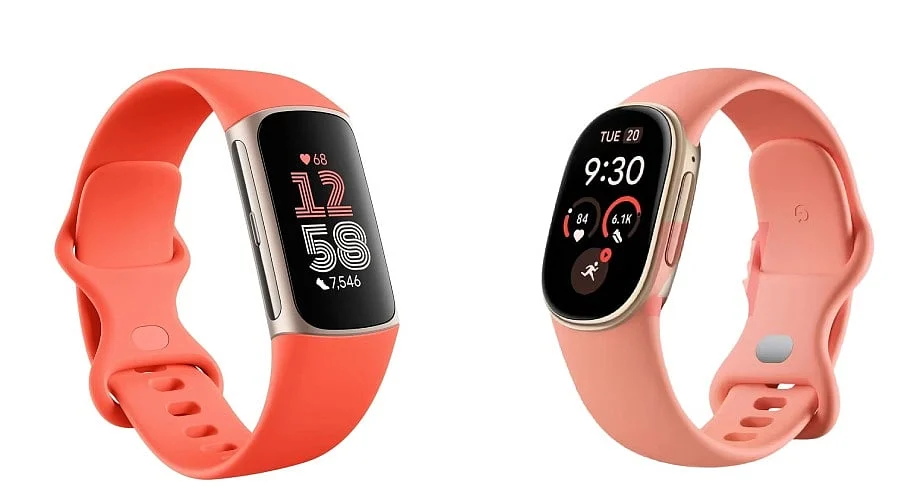
Google is reportedly expanding its wearable portfolio with another Fitbit device. Following the launch of display-less Fitbit Air, the technology company is said to be developing a mid-range offering to bridge the gap between the Air and its premium models. Known tentatively as the Fitbit Edge, the upcoming device is rumored to feature an oval design alongside capabilities missing from the newest entry.
According to leaked information, the smartwatch could feature an oval AMOLED display, built-in GPS, and a battery lasting up to seven days. The AMOLED screen is expected to handle call and app notifications, alongside support for Google Maps, YouTube Music, playback controls, and Find My Phone. On the wellness front, leaks point to continuous 24/7 heart-rate monitoring, SpO2 tracking, and skin-temperature sensing, with potential integration for Google Health Premium.
Because Google has not officially verified these specifications, the details remain speculative. Nonetheless, the anticipated price range falls between USD 149 and USD 199, which translates to roughly Rs. 14,344 to Rs. 19,157 in India. A release could happen as early as late October, potentially timing with Diwali, though these plans are still unconfirmed.
Also Read: Google Fitbit Air: Expected India Price, Launch Date, Key Features
Fitbit Air, Edge and Pixel Watch Could Target Different Users
Each of these three Google wearables addresses distinct consumer preferences. The Fitbit Air caters to users seeking straightforward health tracking minus a display, offering a simple experience and a weekly battery lifespan.
Conversely, the Fitbit Edge appears tailored for individuals who want a screen and GPS capabilities while retaining extended battery performance. Sitting at the top of the hierarchy, the Pixel Watch provides advanced smartwatch functionalities for consumers desiring a robust suite of wrist-based applications.
In short, the Edge aims to capture buyers who consider the Fitbit Air overly basic yet have no use for the comprehensive feature set of the Pixel Watch. This strategic positioning could allow Google to give customers tailored hardware choices rather than forcing them to pay for unused capabilities.