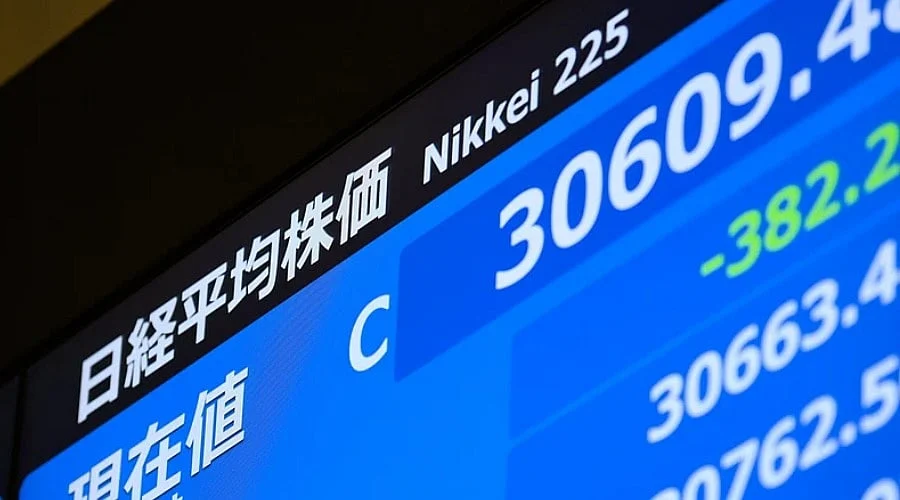
On October 5, Japan’s Nikkei 225 climbed 2.53% to close at 70,037.61, marking a three-month high. Japanese equities advanced as market participants headed back into Tokyo semiconductor shares and artificial intelligence stocks.
During Monday’s trading, the index briefly hit 70,072, and the broader Topix index rose 1.16% to 4,138.57. This upward movement came on the heels of positive Wall Street momentum, which was spurred by milder US employment figures that lowered anticipation of Federal Reserve interest rate hikes.
Semiconductor stocks spearheaded the surge, featuring a roughly 5.7% jump for Tokyo Electron and an increase of nearly 4.5% for Advantest. Meanwhile, SoftBank Group rose 3.68% to bolster the technology-driven rally.
This upward trend highlights renewed interest in artificial intelligence equities, specifically businesses tied to AI infrastructure and chip manufacturing. Following a period of market softness, investors have zeroed in once more on the outlook for AI expenditures.
Resona Asset Management chief strategist Mamoru Shimode noted that market participants purchased AI-oriented equities, though he cautioned that overall sentiment continues to be more selective than it was earlier in the year.
Reflecting this cautious stance, memory producer Kioxia inched up 0.49% over the session, keeping the stock nearly 50% under its mid-June peak.
Financial shares additionally joined in the gains, with Mitsubishi UFJ Financial Group climbing 0.99% and Mizuho Financial Group rising 1.86% to contribute to the overall strength of the Japanese market.
Despite the notable headline increase in the Nikkei 225, overall market breadth stayed mixed. On the Tokyo Stock Exchange Prime Market, roughly 53% of shares moved higher while 42% dropped.
A significant caution flag surfaced within Japan’s fixed-income sector as the yield on 30-year government bonds climbed to 4.235%. Market participants looked ahead to Prime Minister Sanae Takaichi’s upcoming policy address for clues regarding economic strategy and government spending.
Apprehensions surrounding fiscal spending have mounted pressure on longer-term Japanese sovereign debt. Concurrently, the 10-year yield dipped marginally to 3.08%, and the two-year yield dropped to 1.9%.
Moving forward, the primary hurdle for the Japanese stock market will be sustaining the 70,000 threshold following Monday’s rapid recovery. Furthermore, whether this AI-driven surge can expand past prominent semiconductor companies depends heavily on achieving broader market participation.
Also Read: 10 Stock Market Rules Every Long-Term Investor Should Know in 2026