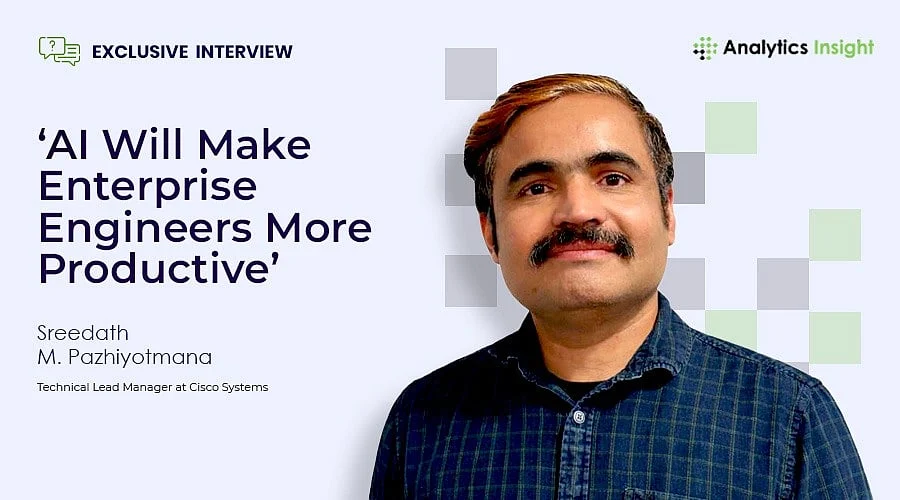
I serve as a Technical Lead Manager at Cisco Systems, bringing over 19 years of background in enterprise platforms, software engineering, distributed systems, and network management. Throughout my professional path, I have concentrated on creating and scaling large-scale enterprise software platforms, prioritizing automation, reliability, scalability, and resolving intricate technical hurdles.
My work at Cisco involves the architecture and development of enterprise network management systems, such as Cisco Catalyst Center. My background encompasses cloud-native and microservices architectures, distributed data platforms, Kubernetes-driven deployments, DevOps, CI/CD automation, real-time data processing, and observability. I have worked extensively using tools and technologies like Java, Apache Kafka, Apache Beam, Elasticsearch, Redis, Kubernetes, and contemporary cloud-native development frameworks.
Designing data architectures capable of performing efficiently at an enterprise scale has formed a major portion of my responsibilities. I am a co-inventor of the published technical disclosure titled “Method and Apparatus for Data Partitioning in a Multi-Tenant Hybrid Controller.” This solution resolves difficulties including data isolation, uneven tenant growth, storage efficiency, query performance, and scaling tenant data without forcing disruptive migrations. These experiences have firmly shaped my conviction that sound data architecture serves as one of the critical cornerstones for constructing scalable enterprise platforms.
Additionally, I have been deeply engaged in platform engineering and DevOps initiatives. My efforts have centered on enhancing the software development lifecycle via CI/CD automation, streamlined development and deployment pipelines, infrastructure automation, and heightened operational visibility. In my view, successful DevOps platforms must empower engineering teams to release software swiftly while upholding quality, security, and reliability.
More recently, I have investigated how generative AI and AI coding agents can advance software engineering and enterprise operations. I am particularly fascinated by how robust engineering context and precise requirements allow AI agents to aid with code generation, testing, documentation, API creation, troubleshooting, and other phases of the software development lifecycle. I view AI as an instrument that boosts engineering productivity while ensuring engineers remain accountable for architecture, security, validation, and vital choices.
Beyond the technology itself, I enjoy collaborating across operations, QA, SRE, and engineering teams, mentoring engineers, taking part in design and architecture conversations, and assisting teams in overcoming challenging technical obstacles. Over the years, I have observed that thriving engineering organizations rely just as heavily on clear technical direction, collaboration, and knowledge sharing as they do on individual technologies.
I maintain a strong interest in the ongoing development of platform engineering, DevOps, distributed data systems, AI-assisted software development, and observability. I look forward to sharing my practical enterprise engineering background with the wider developer community, gaining insights from fellow technology leaders, and helping guide discussions around the engineering practices and technologies that will shape the next generation of enterprise software platforms.
Your career spans nearly two decades in software engineering and enterprise platforms. What key technology shifts have had the biggest impact on how modern network management systems are built today?
Over the past twenty years, I have watched network management progress through several significant transformations. We shifted from administering physical devices and static infrastructure to virtualized environments, Kubernetes, cloud-native platforms, and increasingly distributed services. Network monitoring has similarly shifted from gathering device status and reacting to outages to continuously parsing telemetry, understanding application trends, and preemptively spotting problems.
Automation represents another major transition. In the past, numerous operational tasks required manual effort. Today, infrastructure provisioning, software delivery, validation, and even portions of incident response are automated. Recently, AI has begun assisting engineers in processing logs, metrics, and events at a much faster pace, though I view this as an enhancement to strong observability rather than a substitute for engineering expertise.
The primary takeaway is that while technology continually evolves, the core objective persists: creating platforms that are scalable, reliable, and straightforward to operate.
Many organizations are investing heavily in AIOps. How do you define “production-ready AIOps,” and where do enterprises often get it wrong?
For me, production-ready AIOps goes beyond merely applying AI to operational data. It involves embedding AI into an operational workflow that engineers can genuinely trust. The platform must supply accurate suggestions, clarify why those suggestions were generated, and function inside explicitly defined boundaries.
Many organizations stumble by expecting AI to make up for weak operational foundations. When logs, metrics, events, configuration data, and topology details are inconsistent or incomplete, the AI will naturally yield inconsistent outcomes.
Organizations that succeed typically prioritize investments in observability, automation, and data quality first. AI then evolves into a potent mechanism for cutting down alert fatigue, accelerating root-cause analysis, and boosting operational efficiency instead of just adding another dashboard.
You have been involved in transforming monolithic applications into cloud-native microservices architectures. What were some of the biggest challenges and lessons learned during that journey?
One major lesson is that transitioning to microservices is not simply a matter of breaking a monolith into smaller applications. The deployment model, architecture, security, monitoring, and operational procedures must all mature in tandem.
I collaborated with my teams to rethink service boundaries, deployment automation, observability, and API contracts. Troubleshooting in a monolith is relatively direct. Within a distributed ecosystem, a single user request can traverse multiple services, making metrics, logs, and tracing indispensable.
An additional lesson involved migrating incrementally. Shifting service by service while preserving compatibility and automation dramatically lowered risks compared to executing a complete rewrite.
GenAI is rapidly entering enterprise operations. How do you see GenAI complementing traditional AIOps platforms in network and infrastructure management?
I see them addressing different facets of the problem space. Traditional AIOps excels at gathering operational data, recognizing anomalies, correlating events, and pinpointing potential root causes. GenAI complements this by rendering the information vastly easier for engineers to digest.
Rather than combing through thousands of log entries and multiple dashboards, engineers can pose natural language questions, obtain summarized explanations, and secure recommendations grounded in operational metrics.
I do not foresee GenAI replacing operational platforms. Rather, it will serve as an additional interface that helps engineers comprehend complex systems more rapidly and arrive at better-informed decisions.
As a technical leader overseeing DevOps platform work, how do you balance speed of delivery with reliability, security, and operational excellence in large-scale environments?
I do not view speed and reliability as competing objectives. The secret lies in constructing automation where the safe route naturally becomes the fastest route.
We concentrate heavily on automated testing, CI/CD automation, infrastructure as code, policy enforcement, and standardized deployment workflows. Security and quality verifications should occur continuously across the delivery pipeline instead of serving as a manual sign-off at the conclusion.
Maintaining solid operational visibility post-deployment is equally vital. Observability, deployment metrics, health checks, and rollback mechanisms empower teams to move swiftly while retaining confidence in production.
Enterprise AI initiatives often struggle with data quality and architecture limitations. In your experience, how critical is the underlying data platform in determining the success of AI-driven analytics?
I consider it fundamental. AI is only as dependable as the operational data fed into it.
Throughout my work building enterprise platforms, I have learned that decisions surrounding data architecture, retention, partitioning, governance, and data ownership carry long-term implications. Once customers are onboarded, revising those decisions becomes exceptionally costly.
A properly structured data platform delivers trusted, consistent, and observable data. This advantages reporting, analytics, troubleshooting, and operational decision-making, far beyond just AI. Without a robust data foundation, even the most sophisticated AI models will struggle to provide consistent value.
You have extensive experience with technologies such as Apache Beam, Kafka, Elasticsearch, and Kubernetes. Which emerging technologies or trends do you believe will define the next generation of enterprise data platforms?
I believe we will continue shifting toward event-driven architectures, where streaming data emerges as the primary driver of operational insight rather than periodic batch processing.
Furthermore, platform engineering is rapidly growing in importance. Instead of every individual application team constructing its own infrastructure, enterprises are funding shared developer platforms that supply standardized deployment, security, observability, and operational capabilities.
Finally, I anticipate that AI-assisted operations will integrate tightly with these platforms, aiding engineers in evaluating operational data and automating routine tasks while keeping humans accountable for production and architectural decisions.
What role do observability, automation, and predictive analytics play in building resilient enterprise systems, and how are these areas evolving with AI?
I view these three capabilities as mutually supportive layers.
Observability grants visibility into platform health via logs, metrics, traces, and events. Automation permits routine operational procedures to run reliably and consistently. Predictive analytics assists in recognizing patterns ahead of them turning into customer-facing defects.
AI accelerates this evolution by empowering engineers to correlate details across multiple systems, synthesize operational data, and suggest corrective measures. The long-term trajectory shifts away from reactive monitoring toward proactive operations and, where appropriate, automated remediation for well-understood scenarios.
Having worked closely with engineering, QA, SRE, and operations teams, what leadership principles have helped you successfully drive large-scale technology initiatives?
I have discovered that successful technology initiatives rarely hinge on technology alone. They rely on shared ownership, robust collaboration, and transparent communication.
I encourage teams to engage early—from initial requirements and architecture all the way through implementation, testing, and operations. This shared comprehension minimizes downstream friction and enhances the overall caliber of the platform.
Additionally, I believe in designing systems that remain simple to operate and fostering teams that continuously draw lessons from production experiences. Funding documentation, mentoring, and knowledge sharing builds engineering groups capable of sustaining complex platforms over the long haul.
Looking ahead, what is your vision for the future of AIOps, DevOps, and AI-powered enterprise operations over the next five years, and what advice would you give organizations preparing for that future?
I expect the upcoming five years to focus less on substituting engineers with AI and more on making engineers substantially more productive. AI will increasingly aid with software delivery, operational troubleshooting, incident investigations, documentation, and knowledge distribution.
Concurrently, DevOps will progress toward platform engineering, where internal platforms furnish standardized capabilities for deployment, operations, observability, and security. This frees development teams to concentrate more on delivering business value rather than handling infrastructure.
My advice is to invest in the fundamentals first. Build reliable data platforms, automate routine processes, enhance observability, and standardize engineering practices. Organizations equipped with those foundations will occupy the ideal position to capitalize on AI as it continues maturing, since AI yields maximum value when anchored in trustworthy operational data and dependable platforms.