Understanding AI Governance: Why Oversight is Becoming Essential
AI governance provides enterprises with structural frameworks to guide artificial intelligence deployment, ensuring risk mitigation, data privacy protection, human accountability, and continuous legal compliance.
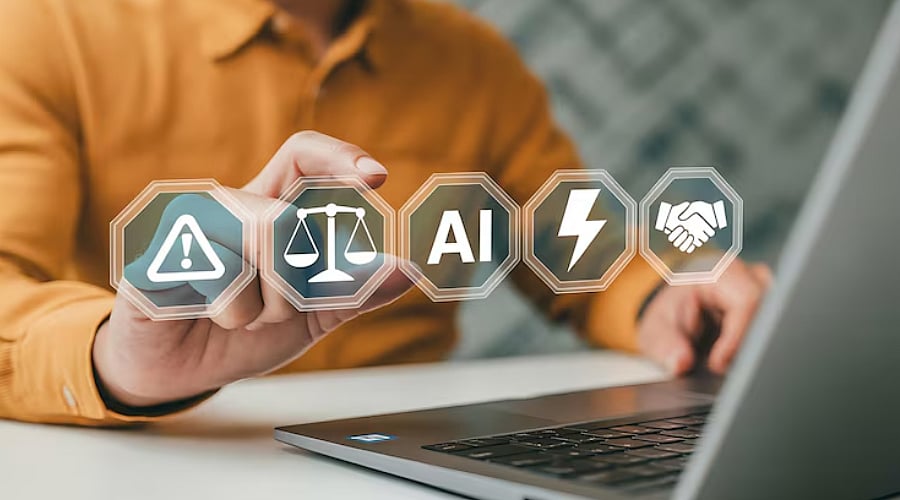
AI governance refers to the structural framework companies rely on to guide the creation, implementation, and tracking of artificial intelligence. It outlines the specific rules, duties, and safeguards governing these technologies. As enterprises integrate AI throughout their daily workflows, this oversight enables decision-makers to spot potential hazards, align systems with organizational objectives, and consistently fulfill legal, ethical, and internal standards.
Why AI Oversight Matters
Artificial intelligence shapes critical business functions ranging from recruitment and customer support to financial choices and security. Unchecked systems can generate mistakes or prejudiced results that negatively impact individuals and operational outcomes. Through AI governance, enterprises gain a systematic method to evaluate these dangers, designate responsibility, and ensure that human supervision remains intact throughout every stage of an AI tool’s lifespan.
Managing AI Risks
The deployment of AI can introduce threats related to false data, prejudiced rulings, data breaches, security vulnerabilities, and ambiguous responsibility. Implementing governance allows enterprises to spot these dangers early on. Through routine evaluations, transparent policies, active testing, and ongoing tracking, companies can pinpoint potential breakdown points in AI and set up safeguards to minimize harm.
Protecting Data and Privacy
Because numerous AI tools rely on vast quantities of information, safeguarding privacy and data is a core focus of governance. Enterprises must establish explicit guidelines detailing what data AI may access, the storage methods used, and the permissible contexts for its application. Robust governance minimizes the risk of unauthorized data exposure, misuse, and subsequent privacy breaches.
Keeping Humans Accountable
While artificial intelligence can aid decision-making, accountability cannot be transferred entirely to software. Governance defines precisely who evaluates AI results, signs off on major choices, and takes action when errors occur. Human intervention is particularly vital for high-stakes decisions, ensuring enterprises successfully balance automated processes with critical thinking, personal responsibility, and timely intervention.
Supporting AI Compliance
Regulations and industry standards surrounding artificial intelligence are continuously evolving across various regions. Companies require governance frameworks capable of evolving alongside these shifting standards. Maintained policies, risk reviews, system logs, and constant monitoring assist enterprises in proving their commitment to responsible AI usage. Furthermore, compliance-oriented governance lowers the likelihood that AI initiatives will trigger unforeseen legal or functional hurdles.
The Future of AI Governance
Rather than serving as a singular IT project, AI governance is evolving into an enduring corporate obligation. As artificial intelligence becomes woven more tightly into business operations, enterprises will demand continuous observation, distinct accountability, periodic audits, and refreshed policies. Proper governance equips businesses to scale their AI adoption while retaining command over risks, liability, data management, and choices.
Join our WhatsApp Channel to get the latest news, exclusives and videos on WhatsApp