OpenAI Releases 377 New Math Findings to Aid Researchers
OpenAI has released 377 new mathematical findings on GitHub to aid researchers, aiming to enhance AI reasoning, foster collaboration, and advance artificial intelligence as a mathematical research tool.
OpenAI’s New Mathematical Push: OpenAI has shared 377 fresh mathematical results on GitHub, highlighting its deepening commitment to AI-driven mathematical exploration. By making these findings available, the organization provides researchers and enthusiasts with novel problems, solutions, and concepts designed to spark further investigation.
What Has Been Released? The repository hosts a total of 377 mathematical results in an open, publicly available format. Instead of maintaining these findings privately, OpenAI is offering the broader scientific community an opportunity to review, validate, and expand upon the research.
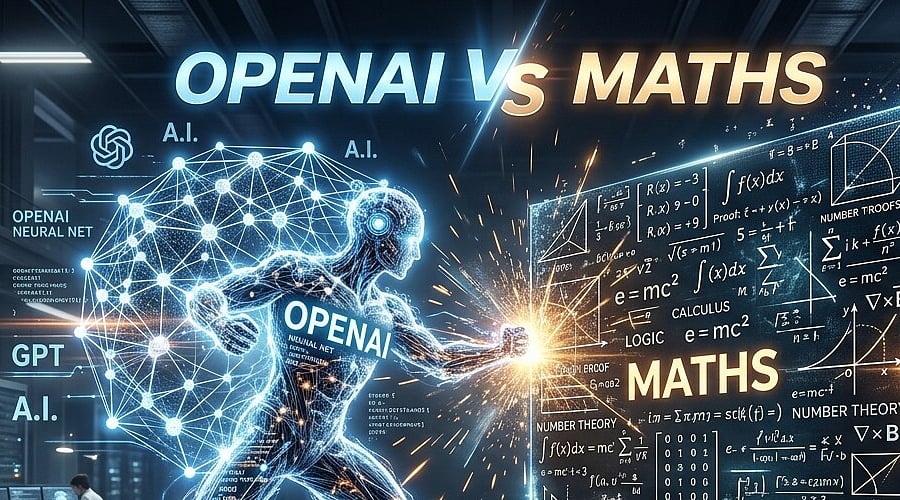
Why Mathematics Matters For AI: Advanced mathematics serves as a foundational pillar for modern artificial intelligence, influencing everything from algorithmic training to complex logical deduction. Enhancing mathematical proficiency could empower AI models to reason with greater precision, grasp abstract concepts, and tackle multi-step problem-solving tasks.
GitHub Makes Research Accessible: Hosting the data on GitHub ensures that developers, students, and academic researchers can easily obtain the files. Furthermore, the platform fosters teamwork, allowing users to analyze the findings, test concepts, and engage in ongoing discussions regarding AI-produced mathematical breakthroughs.
AI As A Mathematical Research Tool: This drop underscores a wider trend in leveraging artificial intelligence as a collaborative research assistant. Rather than merely solving pre-existing equations, scientists are increasingly evaluating sophisticated AI platforms on their capacity to identify patterns, generate hypotheses, and deliver valuable new outputs.
What Researchers Could Do Next: Investigators can leverage these newly published findings as baselines for validation and deeper study. Certain discoveries may spark entirely new inquiries, whereas others might provoke fresh angles on classic mathematical dilemmas, illustrating how machine-generated output can support human-driven science.
A New Research Frontier: The introduction of these 377 results emphasizes the growing synergy between artificial intelligence and mathematics. As machine reasoning advances, mathematical inquiry stands to become yet another domain where human knowledge and machine insights intersect.