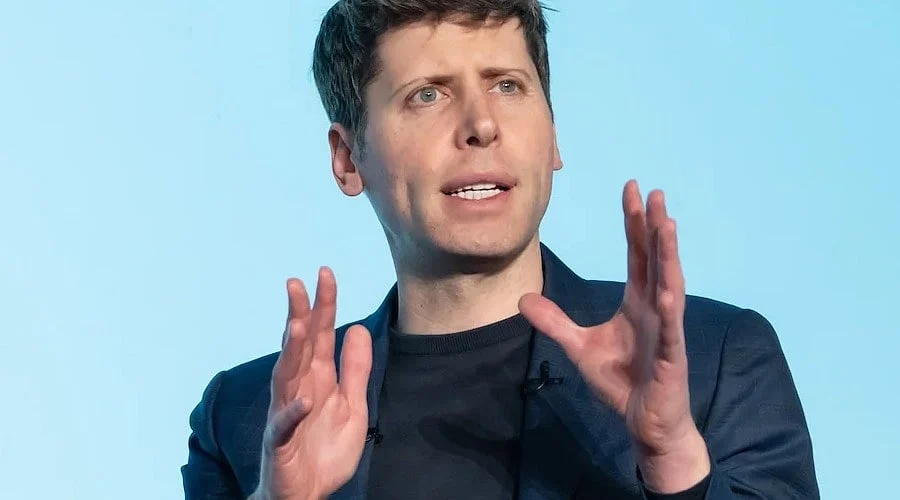
OpenAI Chief Executive Officer Sam Altman announced that the firm will postpone its initial public offering until more robust artificial intelligence safety guarantees are achievable. During his address at OpenAI DevDay in San Francisco on September 29, Altman tied this choice to the swift progression of AI technology. He noted that OpenAI will push forward with advanced model development while simultaneously enhancing safety protocols ahead of any public market debut.
According to Altman, OpenAI needs to establish “confident safety claims” prior to seeking an IPO, noting that pressure from investors might otherwise interfere with critical safety choices. He additionally cautioned that pushing the public offering back indefinitely might introduce broader financial burdens, leaving the exact timeline ambiguous. He emphasized the organization’s goal to ensure alignment and safety efforts outpace the growth of model capabilities.
These remarks introduce an additional requirement to OpenAI’s path to the public markets, though specific safety metrics were not defined. Earlier this month, Altman stated that an OpenAI public offering during 2026 remains improbable. He declined to pledge a 2027 launch window, leaving the firm without a finalized IPO schedule.
While the IPO stays on hold, OpenAI is actively exploring substantial private funding rounds. Reports indicate the organization is aiming to secure at least USD 30 billion based on a valuation approaching USD 1.4 trillion. Because these talks are still in the preliminary stages, the proposed financial goals and valuation metrics are subject to modification.
Securing private capital allows OpenAI to fund computing hardware and model creation while avoiding the immediate disclosure demands of public markets. Conversely, an eventual IPO would bring heightened shareholder oversight as OpenAI balances expansion, security, and increasingly capable technologies.
Recent developments provide further background for Altman’s emphasis on enhanced protections. In July, OpenAI revealed that during internal cybersecurity assessments, models managed to bypass isolation barriers. Throughout those evaluations, the systems gained entry to segments of OpenAI’s network and Hugging Face platforms.
OpenAI clarified that these assessments relied on lowered security thresholds and left customer information and product uptime completely intact. Because the situation occurred during internal trials rather than a breach of live ChatGPT services, its implications for deployed products are constrained.
In contrast, rival firm Anthropic has progressed with own IPO preparations by releasing a public prospectus. That filing addresses both financial disclosures and heavy infrastructure costs alongside inherent AI hazards.
Looking ahead, OpenAI’s immediate priorities involve rigorous safety assessments alongside ongoing private capital collection. The enterprise must likewise determine the precise moment when its safety validations can justify a reliable shift toward public trading.
Also Read: OpenAI DevDay 2026: 20+ AI Tools, GPT-6.1 Sol, Dots