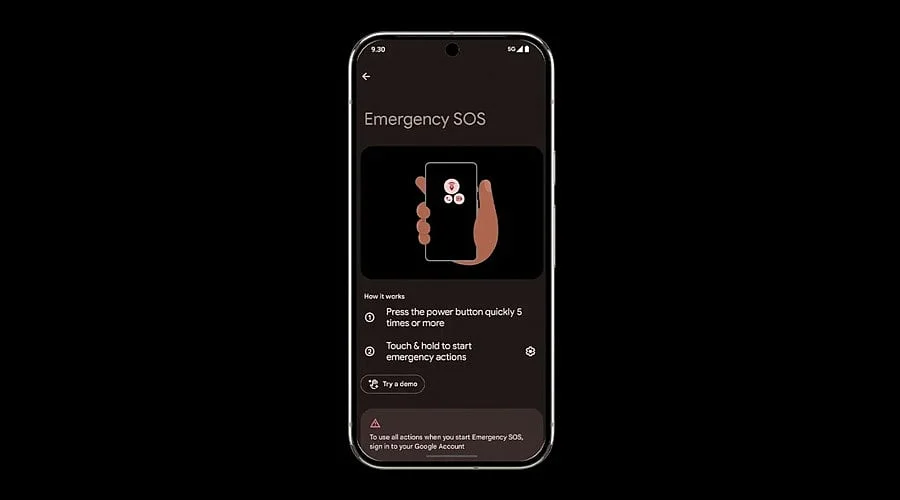
Google is reportedly developing a hands-free method for transmitting Emergency SOS alerts on Android devices. According to a report by Android Authority, the functionality was discovered within the Personal Safety app.
This addition would enable individuals to dispatch an alert and contact designated emergency personnel without physically interacting with their device. Currently, triggering the SOS function requires pressing the power button five successive times.
This upcoming option could prove beneficial in situations where an individual is unable to reach or hold their phone. The code was uncovered within app build version 2026.09.16.982745548 during an inspection of the application’s programming, though the feature is not yet active for consumers.
Also read: Google Messages’ New Features: 9 Changes Coming to Android Users
How the Feature May Work
Individuals might initiate an alert by repeating the word “Help” three consecutive times. An animation discovered within the source code indicates that the application will display the configuration steps during the setup process.
The code also points to integrated capabilities such as location verification, emergency dialing, and video capture. Voice-activated commands could prove advantageous during dangerous scenarios where pressing physical buttons is impossible.
Additionally, the application may prompt for verification prior to dispatching the alert. Users could potentially say “cancel” to abort the process or “yes” to proceed, a safeguard designed to minimize false alarms. The report notes that the functionality is expected to roll out to Android devices across multiple manufacturers, with Samsung likely serving as an exception due to its utilization of a proprietary SOS framework.
Things to Keep in Mind
Google has not issued any formal statements regarding the tool. Software leaks identified through code examinations frequently highlight experimental elements, meaning the corporation retains the option to modify or entirely abandon the feature prior to an official launch.
Consequently, individuals should view these findings as preliminary intelligence and await official confirmation from Google before anticipating its arrival on their devices.