Overview:
-
Qualcomm wants AI to work across phones, edge devices, cars, robots, PCs, and data centers.
-
The chip maker targets more than USD 15 billion in data center revenue by fiscal 2029.
-
Amon sees AI agents as a major force behind Qualcomm’s next phase of growth.
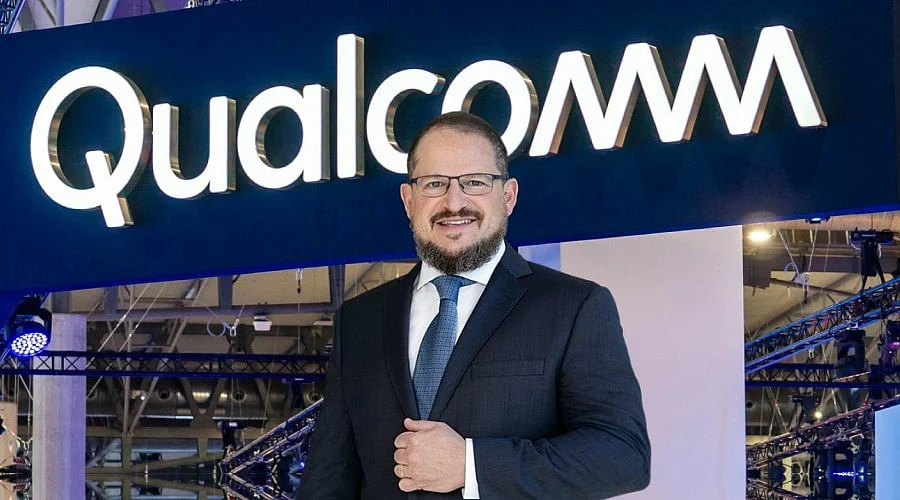
Qualcomm CEO Cristiano Amon has a much bigger AI plan than faster smartphone chips. The company now wants its technology to power AI across phones, PCs, cars, robots, edge systems, and data centers. Amon calls this idea a ‘compute continuum,’ where AI can move across several types of hardware based on the task.
This strategy marks a major shift for Qualcomm. The company once relied heavily on smartphones. Now, Amon wants Qualcomm to supply key parts of the AI system from the data center to the smallest connected device. The firm sees AI agents as the force that can tie these markets together.
The chip maker expects more than USD 15 billion in data center revenue by fiscal 2029. Qualcomm also expects USD 40 billion in non-handset revenue. Handsets could account for about one-third of Qualcomm’s QCT revenue by then. These targets show how far Amon wants the company to move beyond phones.
Qualcomm Takes AI into the Data Center
Qualcomm has made the data center a major part of its AI plan. Its Dragonfly platform covers central processing units, AI accelerators, custom silicon, connectivity, memory, and full rack systems.
The company has a clear focus on AI inference. NVIDIA has a huge lead in AI training systems, while Qualcomm sees a large market for AI systems that process requests after model training. It argues that power use, memory efficiency, cost, and performance per watt will matter more as AI agents handle more tasks.
Major customers now give this plan more weight. Meta and Qualcomm signed a multi-generation deal for Qualcomm data center central processing units. Qualcomm also signed a multi-generation deal with Amazon Web Services for custom AI data center silicon and optical connectivity. The first focus centers on AI inference. Those deals give Amon a path into a market that once sat far outside Qualcomm’s core business.
Smartphone Becomes an AI Agent Hub
Amon also sees a major role for the smartphone. Qualcomm’s latest Snapdragon platforms emphasize AI agents rather than simple chatbot tasks.
An AI agent can understand a request, access information, work across apps, and take action. Such tasks need more than an AI accelerator. They also need a strong central processing unit, fast memory, local models, security, and reliable network access.
Qualcomm’s Snapdragon 8 Elite Extreme Gen 6 and Snapdragon 8 Elite Gen 6 target such workloads. Amon has said that agent workloads can require much stronger CPUs. That view gives Qualcomm’s Oryon CPU architecture a central role across phones, smart glasses, PCs, cars, and data centers.
The strategy also creates a possible reason for consumers to buy new phones. Qualcomm believes older devices lack the hardware needed for AI agents that can operate with greater context and more complex tasks.
Also Read – Snapdragon X2 Powers New Surface PCs as Qualcomm Targets a Wider PC Market
AI Moves into Cars, Robots, and Edge Systems
Qualcomm’s plan is not limited to mobile devices. The company now sees cars, robots, industrial machines, glasses, earbuds, and other connected products as AI endpoints.
Whether it’s a car that can handle local AI tasks or a robot that uses AI to understand its surroundings, this model gives Qualcomm a larger scope to expand the chip business and increase connectivity within an AI ecosystem.
Physical AI also adds another large market. Qualcomm has expanded its work in robotics and plans to acquire PickNik. The company also has a larger focus on industrial automation, autonomous machines, retail, agriculture, and energy.
Software May Decide the Result
Hardware alone cannot secure Qualcomm’s AI plan. Developers need simple ways to move AI models across Qualcomm platforms.
Qualcomm completed its acquisition of Modular in July 2026. The deal adds software technology for generative and agentic AI. Qualcomm also expanded its relationship with Hugging Face to support AI across devices, edge systems, and Dragonfly data centers.
That software layer matters as much as chip speed. A strong developer ecosystem can help Qualcomm turn its hardware into a common platform for AI agents.
Also Read – Qualcomm Snapdragon Sound Elite Gen 2 Brings AI to Earbuds
A Bigger Bet than the Smartphone
Qualcomm’s new strategy grants Amon a bigger objective. The company no longer aspires to just place AI within phones. It executes and provides compute and connectivity across the whole AI chain.
Qualcomm turned in USD 9.95 billion in revenue for fiscal Q3 2026. The automotive and Internet of Things revenue within QCT reflected a 28% year-on-year growth. In fiscal 2027, Amon will see non-handset revenue, including data center sales, grow by more than 60%, after fiscal 2026’s 24%.
This means Qualcomm’s biggest challenge is execution. The company is working to build a strong software ecosystem, add more customers for the data center space, support new AI devices, and keep from getting killed by more entrenched chip companies.
Qualcomm’s core bet remains simple: As soon as agents want phones, cars, robots, edge systems, and data centers concurrent with each other, Qualcomm wants its chips deployed at each major step.
FAQs
1. What is Cristiano Amon’s AI strategy for Qualcomm?
Amon wants Qualcomm to supply AI technology across smartphones, PCs, cars, robots, edge systems, and data centers.
2. What is Qualcomm’s Dragonfly platform?
Dragonfly is Qualcomm’s data center platform, with central processing units, AI accelerators, custom silicon, connectivity, memory, and rack-scale systems.
3. How much data center revenue does Qualcomm target?
Qualcomm targets more than USD 15 billion in data center revenue by fiscal 2029.
4. Why does Qualcomm focus on AI agents?
AI agents can perform tasks across apps and devices, which creates demand for stronger CPUs, AI accelerators, memory, connectivity, and local AI processing.
5. Is Qualcomm still focused on smartphones?
Yes. Smartphones remain important, but Qualcomm now seeks major growth from automotive, Internet of Things, personal computing, robotics, and data centers.