Overview:
-
Meta Muse functions as a cloud agent, whereas ChatGPT, Claude, and Grok operate across different environments.
-
Base API rates range from USD 1.25 to USD 10 per million input tokens, with increased pricing for long prompts on Astra and Grok.
-
All four organizations introduced major product or model updates within weeks of one another in September 2026.
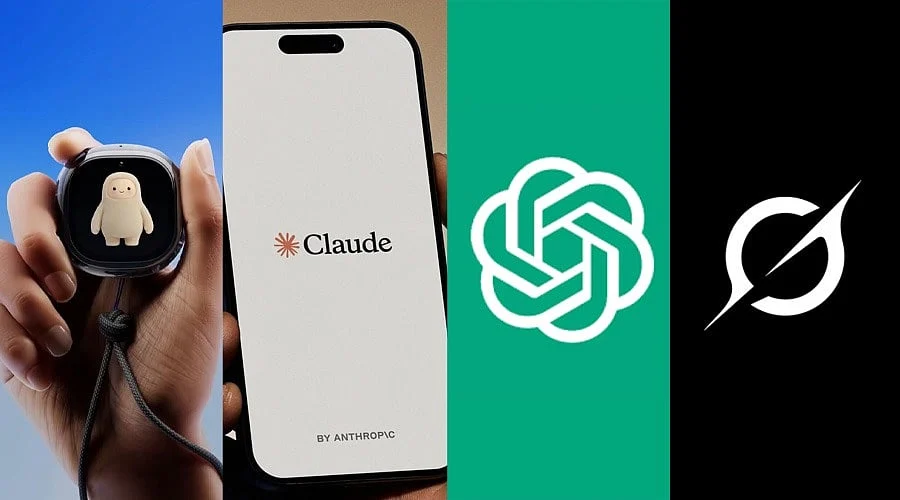
Four artificial intelligence companies launched major offerings within weeks of each other this September. Meta introduced an agent named Muse, while OpenAI rolled out GPT-6 Astra. Anthropic debuted Fable 5.1, Opus 5.5, and Sonnet 5.5, and SpaceXAI released Grok 4.7. Each platform now aims to execute tasks rather than simply answer questions, making the choice between Meta Muse, ChatGPT, Claude, and Grok a practical decision.
From Answers to Actions
Historically, chatbots waited for user prompts before returning text responses. Modern agents operate differently by planning sequences of steps, launching browsers, writing code, and interacting with integrated applications. A balanced evaluation examines the operating environment, accessibility, and user-maintained level of control for each system.
Meta Muse: A Personal Agent in the Cloud
Meta launched Muse on September 8 as a personal AI agent. It operates inside a virtual machine hosted on Meta’s cloud infrastructure, featuring an integrated browser that lets users observe tasks as they execute. Muse is initially free, with subscription tiers available at USD 20 and USD 100 per month. Meta states the platform is ad-free. Initial availability is rolling out in the United States across iOS, Android, and web platforms.
With user authorization, the Mac application can access local calendars, notes, messages, and files. CNN reported that Muse reached the top of Apple’s free app chart ten days post-launch. Muse is powered by Muse Spark 1.3, released on September 2, which accepts text, image, and video inputs.
ChatGPT: The Broadest Workspace
OpenAI released GPT-6 Astra on September 3, available across Plus, Pro, Business, and Enterprise plans, with Astra Pro restricted to Pro, Business, and Enterprise tiers. OpenAI reports approximately one billion weekly active ChatGPT users. The application provides three primary entry points: Chat for conversation, Codex for programming, and Work for office productivity.
Claude: Careful, Long-Running Work
Anthropic released Fable 5.1 on September 1. Mythos 5.1 shares the same underlying model architecture but features distinct safety guardrails and is restricted to vetted participants in trusted-access programs, primarily for life sciences and cybersecurity applications. Opus 5.5 debuted on September 22 for complex assignments requiring rigorous evaluation.
Sonnet 5.5 launched on September 28 as a faster, more economical complement suitable for document preparation, spreadsheets, slide decks, and bug remediation, with Haiku 5.5 anticipated shortly. Agent workflows are handled via Claude Code, Cowork, and Claude in Chrome. Anthropic maintains that its Claude products are free of advertising.
Grok: Live Information from X
SpaceXAI launched Grok 4.7 on September 21. The system executes code and searches both the web and X, accepting text and image inputs alongside four distinct reasoning levels. Terminal-based programming is managed through Grok Build. Although the organization was known as xAI until July, the Grok naming convention was retained, and development on Grok 5 is currently underway.
Side-by-Side Comparison
What the Differences Mean
Astra’s standard input rate is eight times higher than that of Muse Spark 1.3, and extended prompts incur additional costs. For requests exceeding 272,000 tokens, Astra charges double its base input rate and 1.5 times its output rate, while Grok similarly increases pricing for long prompts.
Safety architectures vary by design. OpenAI reported that Astra crossed a critical internal cybersecurity threshold, leading to restrictions on its most advanced cyber capabilities, whereas Anthropic distinguishes between Fable and Mythos through tiered safeguard levels. Muse operates strictly within permissions granted directly by the user.
Target use cases also differ: Muse targets personal tasks, ChatGPT encompasses a wide array of productivity tools, Claude focuses on professional coding and advanced reasoning, and Grok specializes in real-time data access.
Openness remains limited, as all four flagship models feature closed weights. However, Meta provides Muse Glimmer as an open 30-billion-parameter model, and an open-weight version of Muse Spark has been promised without a confirmed release date.
Also Read: ChatGPT, Perplexity, Gemini, Claude, or Grok: Which Has the Best Subscription Plans?
The Bigger Picture
An AI agent can act on behalf of a user only when granted access to personal data, including accounts, messages, and files. Each provider approaches this challenge uniquely, with Meta leveraging its vast user base while requiring explicit user permission.
OpenAI supplies a diverse array of integrated tools, Anthropic imposes strict operational boundaries on its models, and SpaceXAI integrates real-time posts from X. Because these products evolve rapidly, comparisons can quickly become outdated. Users should select tools according to their specific requirements and verify current model specifications.
Also Read: Claude AI vs ChatGPT: Which AI Assistant is Better in 2026?
Final Thought
User trust will likely define the next phase of development. Agents that request approval for every minor action can feel sluggish, while those that never prompt for confirmation carry inherent risks. The developer that successfully balances these factors will establish the industry standard.
You May Also Like:
ChatGPT 5 vs Grok 4: Which Will Dominate AI in 2025?
Meta Muse AI: 15 Useful Prompts & Use Cases You Should Try
Meta Muse Charm Explained: How AI Gadget Brings AI Beyond the Smartphone
FAQs
1. What is Meta Muse AI?
Meta Muse AI is a personal AI agent designed to handle tasks for users. It uses Meta’s Muse Spark model and can work across different tasks beyond basic question answering.
2. How does Meta Muse AI compare with ChatGPT?
Meta Muse focuses on personal agent-based tasks, while ChatGPT offers a broader set of tools through GPT-6 Astra, including Chat, Codex, and Work.
3. What is Muse Spark 1.3?
Muse Spark 1.3 is the AI model that powers Meta Muse. It supports text, image, and video inputs and is designed for agent-based tasks.
4. Which models power Claude and Grok?
Claude uses Anthropic’s Claude 5.5 model family, including Opus 5.5 and Sonnet 5.5. Grok uses Grok 4.7 from SpaceXAI.
5. How should users choose between Meta Muse, ChatGPT, Claude and Grok?
The choice depends on the task. Users should compare agent capabilities, available tools, context limits, pricing, data access and safety controls before selecting a platform.