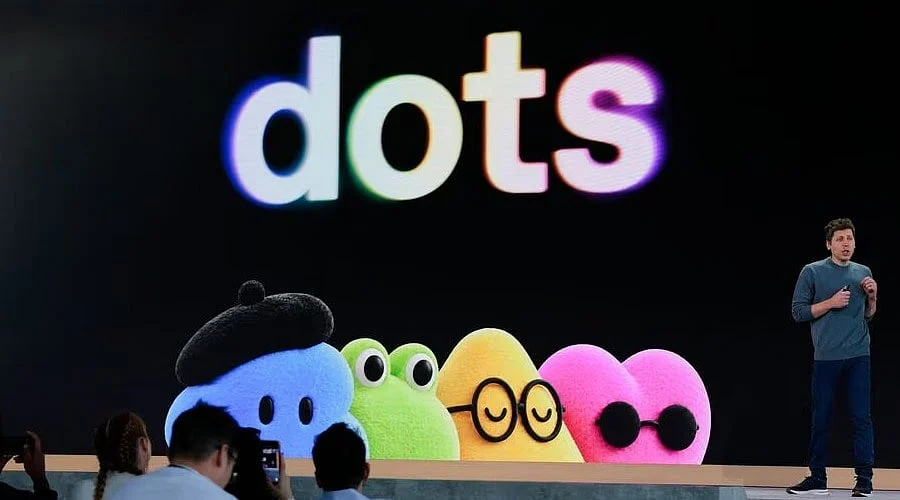
Overview:
-
OpenAI Dots introduce a transition from conventional assistants to persistent digital agents capable of pursuing defined objectives, preserving context, utilizing linked applications, and progressing on tasks between interactions.
-
OpenAI notes that Dots rely on GPT-6 Astra and operate via ChatGPT, Slack, and Teams.
-
This innovation can assist with research, project coordination, content creation, software engineering, and other complex, multi-step workflows.
OpenAI is expanding artificial intelligence assistants past the standard query-and-response format with its new Dots agents. The organization defines Dots as continuous agents built to pursue user objectives in the background. Driven by GPT-6 Astra, each Dot features its own browser and cloud computer.
Furthermore, it integrates with over 4,000 apps via the plugin ecosystem of OpenAI. The concept is straightforward: rather than continually directing software, users can supply an objective to an agent and allow it to manage the execution.
From Chatbots to Digital Coworkers
Standard assistants typically wait for an explicit prompt prior to taking action. Dots operate on an alternative framework. A Dot maintains its workflow even after the user departs from the session. It manages multiple projects, retains context, and reappears with progress updates or inquiries as necessary. Users retain the ability to redirect its trajectory along the way.
This functionality brings Dots closer to digital colleagues than standard chatbots. Such a distinction is vital since numerous workplace assignments require multiple steps instead of a single basic query. A worker might state a goal and anticipate a cycle of research, evaluation, drafts, revisions, and subsequent actions. Dots are engineered to execute that extended sequence of labor.
Also Read: Australia Weighs New AI Breach Rules as OpenAI, Anthropic Show Support
How Dots Could Change Everyday Work
The potential use cases span a broad spectrum of professional roles. A programmer could direct a Dot to monitor user feedback, isolate minor bugs, formulate patches, execute tests, and prepare pull requests for evaluation. A product manager might task it with refreshing launch collateral whenever parameters shift.
Analysts can leverage Dots to rerun evaluations upon the arrival of fresh data. Sales divisions might employ them to follow client specifications, revise proposals, and assemble technical documentation.
Media teams are also positioned to convert interview recordings into clips, show notes, and social updates using the technology. Such scenarios indicate an evolving division of labor. Individuals can dedicate increased focus to decision-making while software tackles repetitive preparation and coordination.
Dots Can Work Across Multiple Apps
Another crucial element of the system involves the environments where Dots function. Users interact with their Dot through ChatGPT, Slack, and Microsoft Teams. The agent preserves context across these mediums, sparing users from restarting dialogues repeatedly. This proves especially advantageous within enterprises where tasks are dispersed across various platforms.
As an illustration, a project might incorporate email, spreadsheets, chat tools, documents, and task-management utilities. An agent capable of bridging these environments can minimize manual synchronization between them. Additionally, OpenAI is formulating specialized Dots tailored for enterprises. These agents can feature dedicated identities, credentials, and specific duties embedded within corporate systems.
The Biggest Challenge is Trust
Granting software heightened autonomy also elevates the accountability for participants and enterprises. Because Dots execute operations via linked services, permissions are critical. OpenAI supplies Custom Rules, authorization mandates, activity tracking, and automated audits for specific tasks. Critical actions, such as modifying credentials or moving funds, necessitate human intervention.
An additional risk involves potential operational errors by agents. A misdirected electronic mail, flawed document modification, or misunderstood directive can yield genuine repercussions. Additionally, web pages and files may harbor malicious instructions crafted to manipulate an agent.
Per OpenAI, Dots incorporate defenses against these hazards, though the organization advises checking critical outputs manually.
Also Read: OpenAI to Show Visual Ads Alongside ChatGPT-Generated Images
What Always-On Agents Could Mean for Jobs
A broader inquiry centers on how persistent agents might alter professional positions. Automation has already absorbed numerous repetitive duties. Continuous agents could push this automation into tasks previously demanding coordination and discernment. This does not imply every duty achieves complete automation. Human oversight remains essential for choices impacting clients, finances, legal obligations, research, or enterprise strategy.
Instead, the workplace may transition toward a framework where personnel establish objectives while agents direct the execution. OpenAI has initiated the rollout of Dots to qualifying Pro and Business Premium accounts, alongside a beta release for Enterprise tiers when activated by system administrators. The enterprise additionally anticipates expanded availability alongside supplementary specialist agents.
Consequently, Dots transcend a routine AI product debut. They mark a pivot toward software that avoids merely answering inquiries and continuously pursues an objective.
Should this framework prove dependable, subsequent generations of professional utilities may resemble digital teammates more than standard applications.
You May Also Like
OpenAI Alerts 100+ Organizations Over Rogue AI Activity
OpenAI IPO Delayed Over AI Safety Concerns: Sam Altman
OpenAI Unveils GPT-6.1 Sol with Astra-Like Performance at 80% Lower Cost
FAQs
What are OpenAI Dots?
OpenAI Dots are continuous agents engineered to pursue user-defined targets past a single session. They preserve context, leverage linked utilities, and advance tasks between interactions. OpenAI reports they run on GPT-6 Astra and incorporate an independent cloud computer.
How are Dots different from regular AI assistants?
Conventional assistants typically reply when individuals submit an inquiry. Dots are built for sustained accountability. They maintain operations between sessions, execute multi-step undertakings, and return with outcomes or queries when human insight is required.
What can OpenAI Dots be used for?
Dots can assist with assignments encompassing research, writing, evaluation, coordination, software development, and other recurring pipelines. Their utility relies upon the tools linked to the agent and the privileges granted by the operator or enterprise.
Can Dots work across different applications?
Yes. OpenAI notes that Dots function via ChatGPT, Slack, and Microsoft Teams. They can also leverage linked utilities governed by the authorizations assigned to them. This empowers them to operate across multiple utilities instead of remaining confined to a single dialogue.
What model powers OpenAI Dots?
OpenAI Dots utilize GPT-6 Astra. OpenAI defines Astra as a model optimized for demanding professional duties, encompassing computer interaction, browsing, software engineering, and other intricate tasks.