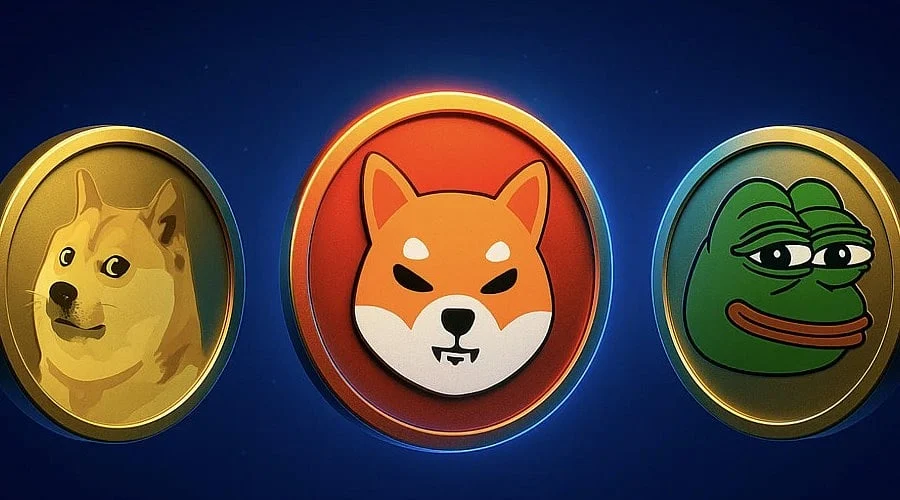
Driven by internet culture, social media trends, and celebrity endorsements, memecoins continue to stand out as one of the cryptocurrency market’s most speculative areas in 2026. Tokens such as Dogecoin, Shiba Inu, and Pepe account for billions of dollars in combined market value despite their minimal real-world utility. At the same time, traders face substantial volatility due to these assets’ heavy reliance on speculative demand, liquidity, and community sentiment.
Memecoin Market Remains Worth Billions
The memecoin sector is valued at approximately USD 35 billion according to CoinGecko. Dogecoin maintains its position as the top token, boasting a market cap close to USD 14.8 billion alongside a daily trading volume of roughly USD 961 million. Meanwhile, Shiba Inu holds a valuation near USD 3.4 billion, and Pepe sits at an approximate market capitalization of USD 1.8 billion.
Even so, the market trades far below its prior peak. Data from CoinGecko’s State of Memecoins report shows that the total market capitalization for memecoins hit USD 150.6 billion back in December 2024, only to drop to USD 47.2 billion by November 2025.
Demonstrating how rapidly speculative enthusiasm can take off, average daily volume across memecoins jumped 767.1% from USD 1.1 billion in 2023 to USD 9.7 billion in 2024.
Why Memecoins Carry Higher Risks
Because many memecoins lack robust functionality, they draw most of their value from community interest and market demand. Consequently, online trends, listings, and celebrity remarks can spark dramatic price shifts.
Another major hazard is liquidity. Smaller tokens often feature thin order books, allowing relatively small trades to trigger sharp price swings.
According to warnings from the CFTC, thinly traded digital assets frequently become targets for pump-and-dump operations. In these scenarios, bad actors leverage messaging applications or social media to hype a token before dumping their own holdings once the price climbs.
US Regulatory Landscape Changed in 2026
In March 2026, the SEC and CFTC issued critical regulatory guidance. Under this framework, typical meme coins are characterized as digital collectibles inspired by trends, characters, or internet memes, which are generally acquired for cultural, social, or entertainment purposes.
The guidance notes that supply and demand—rather than essential managerial efforts from third parties—typically drive their value. That said, the regulatory outcome ultimately relies on the specific facts associated with each individual asset and transaction.
Should an issuer make promises tied to essential managerial efforts, a non-security crypto asset can still be commercialized as part of an investment contract. Such activities may consequently remain governed by federal securities regulations.
Furthermore, the SEC introduced a proposal for Regulation Crypto Assets in August. This measure aims to create customized exemptions for specific crypto investment-contract offerings while preserving safeguards against fraud and manipulation. The public comment period is scheduled to run until October 20, 2026.
Final Thoughts
Memecoins persist as a highly speculative, multibillion-dollar corner of the crypto economy. While US regulators offered clearer definitions for standard meme coins in 2026, legal categorization does not shield traders from liquidity constraints, fraud, volatility, or manipulation risks.
Also Read: BONK Price Surges as Solana Memecoins Rally After Upbit Exit
FAQs:
1. How large is the memecoin market in 2026?
CoinGecko currently values the memecoin sector at roughly USD 35 billion. Dogecoin remains the largest, with a market capitalization of around USD 14.8 billion.
2. Why are memecoins considered highly risky?
Many memecoins depend heavily on community sentiment, social-media attention and speculative demand. Thin liquidity and concentrated ownership can also contribute to sharp price movements.
3. Are memecoins considered securities in the US?
US regulators have indicated that typical meme coins may function as digital collectibles rather than securities. However, classification depends on the specific facts, structure and circumstances surrounding each token and transaction.
4. What is a memecoin pump-and-dump scheme?
A pump-and-dump occurs when promoters artificially generate interest in a token before selling their holdings after its price rises. Remaining traders can face substantial losses when the price subsequently falls.
5. What are the biggest memecoins in 2026?
Dogecoin remains the largest memecoin by market capitalization, followed by major tokens including Shiba Inu and Pepe. Their valuations and trading volumes can change significantly with market conditions.