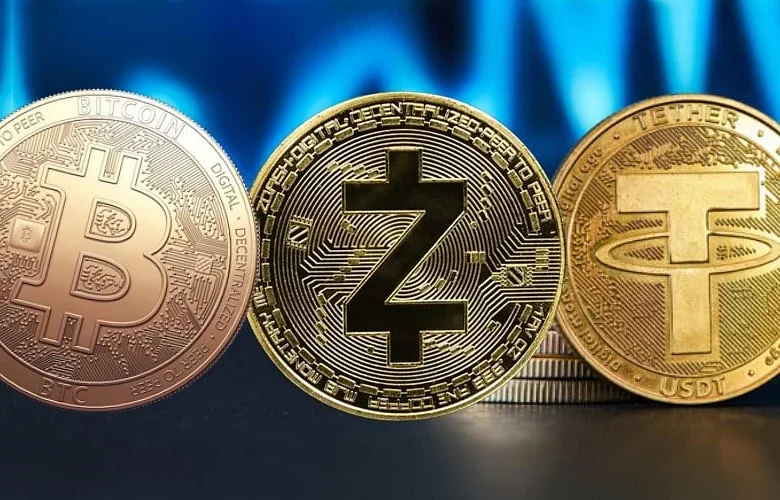
Beyond traditional crypto trading, stablecoins are evolving into foundational infrastructure for international remittances, savings, and general payments. Developing nations are spearheading this growth, as dollar-pegged tokens offer an effective alternative to expensive remittance channels and volatile local currencies.
On a global scale, monthly stablecoin usage for cross-border transactions more than doubled, climbing from USD 11 billion in January 2025 to USD 24 billion in June 2026. Total cross-border transaction value grew by 77.5%, jumping from USD 124.2 billion to USD 220.3 billion. With an average transaction volume of USD 3,000, evidence suggests these assets are primarily utilized for routine commercial operations, everyday payments, and remittances rather than institutional-scale transfers.
Brazil Leads Global Crypto Adoption
Powered by a USD 252.5 billion crypto economy, Brazil secured the top spot in the 2026 Global Crypto Adoption Index. The country also placed second worldwide for cross-border flows, third for domestic P2P activity and service flows, and fourth for on-chain balances.
Adoption of stablecoins is accelerating at a remarkable pace here. Brazil experienced a 495% surge in its stablecoin economy, dwarfing the 89.4% growth rate seen across the rest of Latin America. Furthermore, domestic P2P stablecoin transfers valued between USD 10,000 and USD 100,000 jumped by 562%.
Nigeria Dominates P2P and Cross-Border Activity
Nigeria claimed third place globally while capturing the number-one ranking for both cross-border flows and domestic P2P activity. South Africa landed in the ninth position overall, securing third for cross-border transactions and fourth for domestic P2P transfers.
These figures underscore the vital role stablecoins play in economies where people increasingly depend on digital dollars to execute wallet-to-wallet transactions and move money across borders.
India Remains a Major Crypto Market
India held the sixth global spot, taking second place for total service flows and third for on-chain balances. Nonetheless, the nation ranked 16th in both domestic P2P and cross-border flows.
This disparity demonstrates that possessing a massive crypto market does not automatically translate into dominance within stablecoin-driven payment sectors.
Stablecoins Dominate Global P2P Transfers
Domestic P2P cryptocurrency activity expanded by 302.9%, climbing from USD 56.8 billion to USD 228.7 billion. Stablecoins accounted for roughly 96% of all P2P activity, with their specific domestic P2P value shooting up by 377.7%.
Throughout a prolonged market drawdown, stablecoins demonstrated notable resilience. Over nine months of declines, stablecoin balances hovered between USD 98 billion and USD 109 billion, whereas other crypto assets suffered a 55.6% contraction in on-chain value. By the end of June 2026, stablecoins made up 22.5% of total global crypto balances.
Singapore likewise experienced heightened adoption over recent years, with its cryptocurrency ecosystem expanding 55.4% year-on-year to reach USD 284 billion, despite regional cross-border movements involving stablecoins.
Final Thoughts
The leading countries in the stablecoin space shift depending on the specific metric evaluated. While Brazil merges broad market adoption with soaring stablecoin utility, Nigeria paces the field in cross-border and P2P metrics. Ultimately, recent data cements stablecoins as foundational infrastructure for global savings and payments rather than just speculative trading tools.
Also Read: New Crypto Tax Bill Targets Stablecoins, Fees, and Wash Sales
FAQs:
1. Which country leads global crypto adoption in 2026?
Brazil ranked first in the 2026 Global Crypto Adoption Index, supported by a USD 252.5 billion crypto economy. It also recorded strong cross-border, P2P, service-flow and on-chain activity.
2. Why is Nigeria important for stablecoin adoption?
Nigeria ranked first globally for both domestic P2P activity and cross-border crypto flows. Stablecoins provide users with an alternative for international transfers, digital-dollar access and wallet-to-wallet payments.
3. How significant is stablecoin adoption in India?
India ranked sixth globally, second for total service flows and third for on-chain balances. However, it ranked 16th for domestic P2P and cross-border activity, showing a different adoption pattern.
4. How much of global P2P crypto activity involves stablecoins?
Stablecoins represented approximately 96% of measured domestic P2P crypto activity. Overall domestic P2P value increased 302.9%, rising from USD 56.8 billion to USD 228.7 billion.
5. Why are stablecoins increasingly used for cross-border payments?
Stablecoins can enable digital-dollar transfers without relying entirely on traditional international payment infrastructure. Their growing usage for remittances and commercial payments is particularly visible in markets facing currency volatility or costly cross-border transfers.