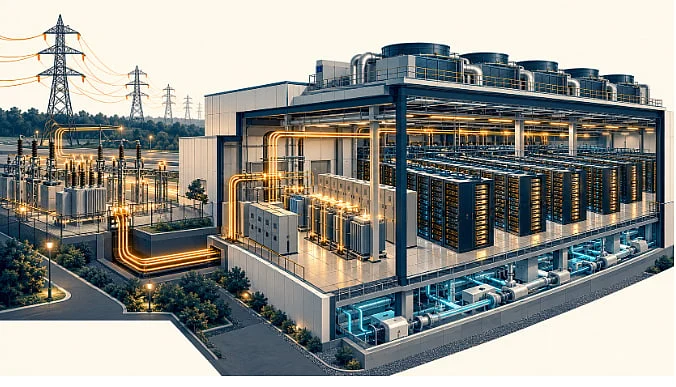
On October 6, 2026, Constellation Energy and Google revealed a long-term power partnership designed to supply 890 megawatts of nuclear energy to the PJM grid. For investors tracking artificial intelligence, the agreement underscores a practical hurdle: while technology firms can continually order advanced microchips, putting that computational power to use requires a matching expansion of electricity supply.
This reality establishes a solid foundation for evaluating leading AI infrastructure investments in 2026, prompting a look at the companies generating electricity, constructing power grids, and maintaining server operations. Individuals navigating this sector of the AI economy can investigate publicly traded corporations or explore service platforms like 51AIpower, which provides individual participation options supporting both electrical power and GPU computing resources.
Why AI Infrastructure Opportunities Extend to Power
The International Energy Agency reported in its 2025 Energy and AI study that global data centers consumed approximately 415 terawatt-hours of power in 2024. Its central scenario anticipates that demand could climb to roughly 945 TWh by the year 2030. These figures account for all data center operations rather than exclusively AI-driven facilities, though artificial intelligence serves as a primary growth catalyst. Furthermore, these are model-driven estimates rather than guaranteed outcomes.
Commercial prospects are distributed across multiple phases of the value chain. Electric utilities and power producers deliver current, equipment manufacturers scale up generation and transmission capabilities, and data hubs require electrical distribution, uninterruptible backup power, and thermal management systems. Translating these fundamental needs into financial gains relies heavily on contract structures, execution capabilities, and expense management.
Consequently, analyzing AI infrastructure stocks demands more than simply noting a tie to artificial intelligence. It requires a clear understanding of what a company sells, who its customers are, and the timeline for converting demand into top-line revenue. This overview centers on power-focused enterprises, encompassing electricity generators, energy project developers, and data center hardware suppliers.
Platforms and Public Companies in AI Power Infrastructure
The layout groups 51AIpower alongside five publicly traded enterprises operating within the broader infrastructure ecosystem. While 51AIpower provides platform-based participation plans, the remaining entities can be traded on major stock exchanges. This sequence does not imply any ranking regarding potential investment returns or risk levels.
51AIpower: Helping Individuals Participate in AI Infrastructure Through Power and GPU Computing
Developing AI infrastructure typically entails purchasing advanced graphics processing units, deploying server racks, securing dependable power allocations, and servicing physical hardware. For individual participants, these requirements demand significant capital outlays and specialized technical know-how. 51AIpower aims to streamline involvement via its Power Plans, permitting qualified users to support the electrical power and GPU computing capacity necessary for modern AI factories without personally procuring hardware or power supplies, while earning rewards tied to actual operational output.
How Does It Work?
When an end user prompts an artificial intelligence model, generates automated text, or executes background operations, the software consumes computational processing power to resolve the request. Language models frequently quantify inputs and outputs using AI tokens. Processing these tokens demands dedicated hardware accelerators like GPUs alongside steady electrical currents. This directly ties the AI token economy to tangible physical infrastructure: consumers utilize AI applications, service providers handle inference, and underlying hardware infrastructure fuels the necessary computations.
According to 51AIpower’s structured plan model, financial inputs sustain the power and processing assets required to run AI facilities. The platform computes and distributes rewards based on established guidelines, factoring in an individual’s power-support contributions, associated token yields, and operational metrics. Participants do not directly maintain the physical equipment, though they must review plan lengths, reward formulas, and withdrawal terms.
While AI tokens quantify the volume of content handled by an algorithm, they do not correlate to a fixed quantity of electricity or financial return. Machine learning models, hardware efficiency gains, computational complexity, and utilization rates all influence operational expenses. Consequently, expanding AI market demand does not automatically guarantee specific plan rewards.
How to Get Started
-
Create an account and sign in. Go to the 51AIpower website, register your details, and complete the necessary verification steps.
-
Try the free Starter Plan. In accordance with promotional policies for new users, qualified participants can access 200 complimentary Starter Plan executions, capped at one use per day. Earnings produced via this option are genuine and credited to the user profile, though withdrawals remain subject to standard platform regulations.
-
Review and choose a Power Plan. Carefully evaluate pricing, duration terms, projected returns, reward distribution formulas, and withdrawal prerequisites prior to committing funds to any paid plan. Projected returns carry no guarantees.
-
Track plan activity and rewards. Once a plan becomes active, participants can monitor its operational status and reward history directly through their profiles, eliminating the need to install or service GPU machinery.
For retail participants drawn to AI infrastructure, 51AIpower presents an engagement framework focused on electricity and computational backing. Users should independently evaluate their financial standing and the associated operational risks. These offerings function as contractual platform agreements rather than equity ownership in publicly listed artificial intelligence firms.
Five AI Power Infrastructure Companies to Watch
1. Constellation Energy: Turning Technology Companies’ Power Needs Into Long-Term Agreements
Constellation derives its market significance from increasingly tangible power supply pacts forged with major technology enterprises. Its October 2026 agreement with Google targets the integration of 890 megawatts of nuclear power into the PJM transmission grid, successfully bridging technology-sector electricity consumption with fresh supply. This development provides clear contracts and milestones for observers of the AI energy sector.
Existing power generation assets and future capacity expansions must be assessed on separate terms. While long-term contracts enhance revenue visibility, capital expenditures, regulatory approvals, infrastructural upgrades, and commissioning schedules continue to influence financial outcomes. Key factors to weigh include operational start dates, required capital investments, and the lifetime operating yields of each agreement.
2. GE Vernova: Building the Power Systems Behind Additional Computing Capacity
GE Vernova’s footprint encompasses power generation machinery, grid modernization technologies, and supportive maintenance services. Its targeted offerings for data centers focus on site selection strategies, electricity procurement, gas turbines, microgrid configurations, and grid interconnectivity. Its business exposure thus spans the preliminary planning and engineering phases that precede active facility operation.
The central question facing the firm centers on delivery timelines. While surging power demand drives order intake, manufacturing capacity, supply chain stability, installation schedules, and operational execution ultimately dictate how swiftly those orders convert into recognized income. Order book quality, profit margins, and cash conversion are just as critical as top-line growth figures.
3. Eaton: Delivering Reliable Power Inside the Facility
While electrical generation dictates where power originates, Eaton’s electrical distribution and power management portfolios govern how data facilities utilize that power safely and efficiently. As computing centers scale up in size, their internal electrical architecture must expand in tandem.
During its first-quarter 2026 financial reporting, Eaton highlighted a 42% year-over-year increase in the rolling twelve-month average of orders for its Electrical Americas division, pointing to robust data center demand as a catalyst. This metric reflects segment-wide order trends rather than an isolated 42% jump in AI-specific revenue. Subsequent areas of inquiry include the conversion rate of those orders into actual sales and the preservation of profit margins as delivery volumes scale.
4. Vertiv: Extending Power and Cooling Expertise Toward Earlier Access to Electricity
Vertiv specializes in power distribution, thermal management, and associated infrastructure products tailored for modern data centers. High-density computing installations must concurrently resolve electrical power delivery and heat dissipation, intertwining Vertiv’s operational success with physical hardware deployments.
Vertiv announced an agreement in September 2026 to acquire UtilityInnovation Group, a strategic move intended to expand its competencies into utility interconnectivity and localized onsite energy generation. The realization of projected synergies remains dependent on successful integration. This corporate step also reflects an industry-wide trend: infrastructure vendors are engaging earlier in the data center development lifecycle to assist clients in securing operational power more rapidly.
Research efforts should center on genuine product demand, project execution, and operational integration rather than relying solely on share valuations or analyst price targets. Even amidst robust demand, customer construction bottlenecks and growth expectations already factored into equity valuations can influence investment results.
5. NextEra Energy: Planning Data Centers and Energy Supply Together
NextEra Energy approaches the sector from an energy development perspective. In December 2025, the company outlined an expanded partnership with Google Cloud aimed at building out multiple gigawatt-scale data center hubs supported by dedicated power generation and transmission capacity. This arrangement merges computational facilities and energy infrastructure under a unified development blueprint.
While large-scale corporate demand establishes a reliable foundation for new projects, planned power capacity is not synonymous with active, revenue-generating capacity. Real estate acquisition, zoning permits, grid interconnection queues, construction milestones, and project financing can all create timeline shifts. Furthermore, analysts should distinguish between NextEra’s regulated utility operations and its competitive energy development segments instead of classifying all corporate revenue as AI-driven.
What Happens Between AI Demand and Actual Returns?
These enterprises occupy distinct tiers within a shared infrastructure supply chain, operating under varying revenue structures and delivery schedules. Power producers rely on long-term supply contracts and operating capacity; equipment manufacturers depend on active order books and physical shipments; and infrastructure developers must successfully transition blueprints into functioning assets. For equity investors, the purchase valuation is equally vital, as strong fundamental growth may already be priced into the stock.
Participation models such as 51AIpower demand separate evaluations based on the platform’s proprietary disclosures. Users must carefully review fund utilization, operational transparency, reward calculation methods, plan durations, and exit conditions. Public-market order expansion and broader electricity projections do not dictate the performance of platform-specific plans. Macro industry trends offer helpful context, whereas individual financial choices hinge on specific business models and contractual terms.
Risk notice: This material is published for informational purposes exclusively and does not constitute formal financial or investment advice. Equities carry the risk of capital loss, and platform participation plans carry operational, contractual, and financial risks. Projected returns are not guaranteed, and accumulated earnings remain subject to applicable withdrawal rules. Listing 51AIpower alongside other entities does not imply any corporate partnership, investment alliance, or official endorsement by the named companies.
Frequently Asked Questions
What Are AI Infrastructure Stocks?
AI infrastructure stocks represent equity shares in businesses that provide the foundational hardware, facilities, or services required to sustain artificial intelligence applications. These span microprocessors, server systems, networking equipment, data storage, physical data centers, and power management grids. This overview centers specifically on electrical power generation, energy equipment manufacturing, and data center electrical controls.
Which Power-Related Companies Can Investors Research for AI Infrastructure Exposure?
Constellation Energy, GE Vernova, Eaton, Vertiv, and NextEra Energy present varied commercial linkages to electricity supply, generation machinery, grid distribution systems, thermal cooling, and energy project development. Their respective functions should be evaluated independently rather than treating them as uniform AI investment vehicles.
Does Rising AI Electricity Demand Guarantee Higher Stock Returns?
No. Market demand must successfully materialize into binding contracts, completed construction, equipment shipments, and recognized revenue, while operating costs, financing expenses, and competitive pressures influence profitability. Additionally, share prices frequently anticipate future growth before it materializes, meaning industry-wide expansion does not automatically translate into positive shareholder returns.
Can Individuals Participate in AI Infrastructure Without Owning GPUs or Supplying Electricity?
Several avenues exist, including purchasing shares in relevant publicly traded corporations or reviewing alternative participation plans provided by platforms like 51AIpower. Under the 51AIpower model, participants are not required to personally supply GPUs or electrical power, though they must understand the governing plan rules, financial parameters, and associated risks.
How Do 51AIpower Power Plans Differ From Buying AI Stocks?
Purchasing corporate shares typically grants fractional equity ownership in a public enterprise, with potential returns derived from share price appreciation and dividend distributions. Conversely, Power Plans function as contractual platform arrangements where rewards are computed according to platform specifications and actual operational performance. Ownership privileges, exit procedures, reporting transparency, and risk profiles differ substantially between the two.