Overview:
-
Rs. 57 Crore Fresh Capital: Rs. 40 crore is earmarked for electric two-wheelers through Kinetic Watts & Volts.
-
Dealer and Product Expansion: The company is broadening its retail footprint alongside a more extensive EV lineup.
-
Scalability: Increased scooter volume, better margins, and stronger cash generation will dictate whether the strategy succeeds.
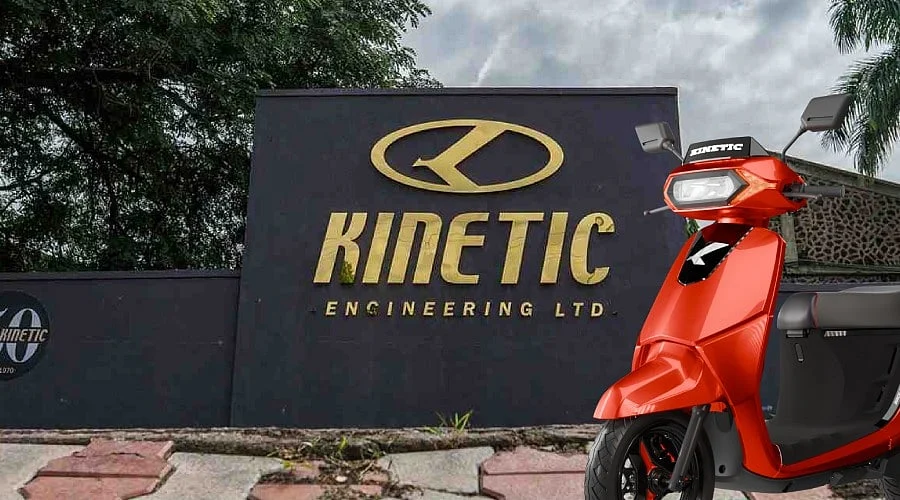
Kinetic Engineering has injected fresh funds into its electric vehicle initiative, prioritizing scooters, retail network expansion, and EV components. In September, promoters backed a Rs. 57 Crore injection. Kinetic Engineering intends to allocate Rs. 40 Crore toward electric two-wheelers via Kinetic Watts & Volts, while reserving the remaining Rs. 17 Crore for plant operations and business requirements.
Fresh Capital Gives the EV Plan More Force
The Rs. 57 Crore stems from converting 44.51 lakh promoter warrants priced at Rs. 171 per share. The overall warrant transaction reaches approximately Rs. 76.1 Crore. Over a four-year span, promoter ownership climbed from roughly 50% to 69.27%.
A portion of the Rs. 17 Crore is tied to driveline projects for Europe and Mexico. Kinetic Engineering has pointed to prospective orders valued at around Rs. 500 Crore spanning seven years. Although this work exists outside the scooter business, it serves as an additional revenue stream for the broader enterprise.
Kinetic DX Leads the Product Push
The Kinetic DX anchors the electric vehicle strategy. Kinetic Watts & Volts supplies the DX in 2.6 kWh and 3.0 kWh configurations. Ex-showroom prices in Pune begin at Rs. 1,11,499 for the 2.6 kWh variant and climb to Rs. 1,18,599 for the 3.0 kWh model.
The DX+ variant introduces a 2.6 kWh version priced at Rs. 1,21,174 and a 3.1 kWh version at Rs. 1,27,650. The 3.1 kWh DX+ delivers an IDC-certified range reaching up to 132 km. Furthermore, Kinetic highlights its LFP battery technology, 37-liter storage capacity, and K-Coast energy recovery system.
The product roadmap extends past a single scooter. Corporate projections span super-premium, premium, executive, and mass-market tiers. The schedule also encompasses electric motorcycles and delivery two-wheelers, with global distribution targeted for roughly 2027.
Also Read – How Long Does it Take to Charge an Electric Vehicle?
A Broader EV System Supports the Scooters
Another crucial element of Kinetic Engineering’s EV strategy lies in its ecosystem. The group maintains capabilities across vehicle components, motors, controllers, displays, chargers and batteries. Specifically, Kinetic Engineering produces EV-centric axles, trans-axles, chassis elements, and gearbox assemblies. Meanwhile, Kinetic Communications develops BLDC motors, motor controllers, displays, DC-DC converters, and EV chargers.
Range-X expands the group’s battery manufacturing capabilities. Its disclosed facility boasts an annual output of 60,000 battery units, capable of producing both LFP and NMC batteries for internal group use and external OEM clients. This arrangement grants Kinetic tighter oversight of critical EV hardware, helping to regulate costs and stabilize supply chains as production scales.
Dealer Growth Marks a Key Step
The retail footprint has developed rapidly. By August, Kinetic Watts & Volts recorded 111 dealer letters of intent alongside 30 operational exclusive showrooms. Approaching late September, those metrics advanced to more than 150 letters of intent and exceeding 60 active dealerships. The network operates under a 3S framework encompassing sales, service, and spare parts.
An initial corporate objective targeted 100 dealerships by October 2026 accompanied by 15,000 scooter sales throughout 2026. Longer-range projections anticipate 400 to 500 or more sales and service outlets, aligning with a previous goal of producing roughly 250,000 units annually within a five-year window.
Scale Still Needs Proof
The electric vehicle division remains modest relative to dominant electric two-wheeler manufacturers. Kinetic’s February 2026 investor presentation indicated a cumulative total of over 600 EV sales alongside seven operational Kinetic Watts & Volts dealerships at the time. While the subsequent increase in storefronts indicates a wider market reach, dealership quantities alone do not guarantee corresponding surges in consumer demand or profitability.
Additionally, Kinetic Engineering faces a distinct financial hurdle. Consolidated revenue for the first quarter of fiscal year 2027 hit approximately Rs. 50.58 Crore, representing a 43.1% year-over-year increase. However, the company reported a negative core business result of Rs. 9.85 Crore, while net profit registered at a negative Rs. 12.97 Crore.
Also Read – India’s EV Push: Can it Overcome These Three Hurdles?
Next Test is Volume and Margin
The forthcoming evaluation will hinge on scooter sales volume, dealer output, gross margins, and capital efficiency. Although Kinetic Engineering has outlined ambitious targets, those goals must be validated by actual sales figures and financial statements. The established dealer network, diverse product catalog, and integrated parts manufacturing supply the firm with a much larger foundation than it possessed during its initial EV relaunch.
The Rs. 40 Crore EV allocation provides the DX venture with a sturdier financial foundation. The upcoming period will determine whether this capital can transform the revived Kinetic brand into a substantial electric vehicle enterprise characterized by healthy margins and consistent cash flow.
FAQs
1. How much fresh capital has Kinetic Engineering raised for its EV strategy?
Kinetic Engineering has secured roughly Rs. 57 crore via the conversion of 44.51 lakh promoter warrants, with Rs. 40 crore explicitly designated for electric two-wheelers.
2. Which EV scooter is central to Kinetic’s product strategy?
The Kinetic DX and DX+ form the centerpiece of the enterprise’s current electric two-wheeler commercial rollout.
3. How large is Kinetic’s dealer network?
By late September, Kinetic Watts & Volts reported possessing over 150 dealer letters of intent and exceeding 60 active retail locations.
4. What other EV components does the Kinetic group make?
The corporate group possesses manufacturing capabilities encompassing axles, trans-axles, chassis components, gearboxes, BLDC motors, controllers, displays, chargers, and batteries.
5. What is the biggest challenge for Kinetic’s EV strategy?
The primary obstacle involves successfully converting capital investments, product lineups, and an expanding retail network into sustainable scooter sales volumes, robust profit margins, and positive cash flow.