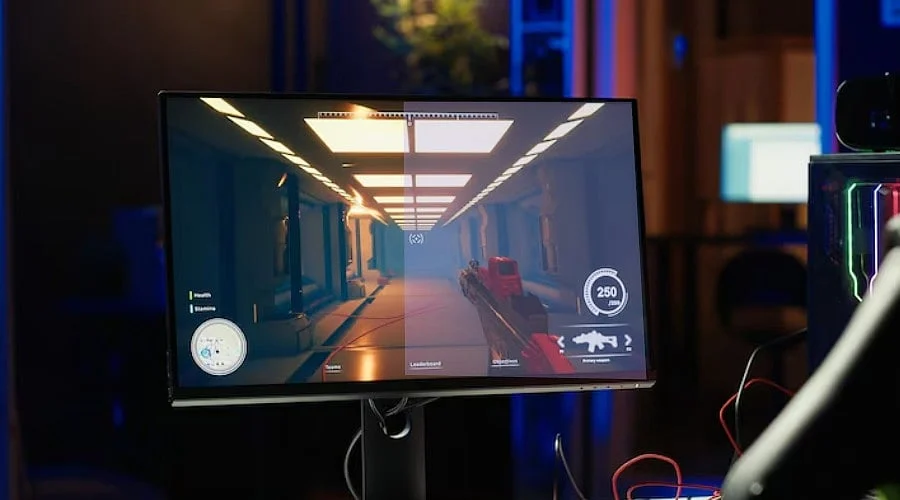
Overview
-
OLED monitors offer deep blacks, strong contrast, and very fast response times, making them a strong choice for gamers who care about picture quality and smooth motion.
-
LCD monitors offer more choices across sizes, prices, brightness levels, and refresh rates, making them useful for gamers with different needs and budgets.
-
I would choose between OLED and LCD based on the games I play, my room, my PC, my budget, and how I use the monitor outside gaming.
The expansion of PC and cloud gaming has saturated the market with capable gaming monitors. Consequently, deciding on a display isn’t as straightforward as it was a few years ago. Major brands now provide affordable models featuring top-tier specifications, including screen size, resolution, refresh rate, response time, HDR, brightness, and panel type.
When it comes to gaming, however, OLED and LCD remain the primary options. Both deliver quality gaming experiences through different mechanisms. OLED is celebrated for superior picture quality, whereas LCD has a longer history on the market, providing a wider variety of options across different price points.
These distinctions become apparent during actual gameplay. Display quality directly impacts elements like dark environments, fast motion, bright gaming spaces, and extended playing sessions.
OLED and LCD Gaming Displays: Pros and Cons
OLED stands for Organic Light-Emitting Diode, while LCD stands for Liquid Crystal Display. The fundamental difference between them lies in how they produce light. In OLED screens, every individual pixel generates its own light when powered, giving OLED monitors a major competitive advantage.
OLED monitors deliver true blacks. When a scene requires darkness, the individual pixels can switch off entirely, creating profound blacks and sharp contrast. This capability is particularly advantageous in horror titles, where darkness dictates the atmosphere.
Another defining characteristic of OLED screens is their response time. Because OLED panels operate quickly, they reduce motion blur during rapid on-screen movement. This benefits genres like racing games and shooters, where fast camera pans keep visuals crisp.
Many modern OLED gaming monitors now support high refresh rates, with some exceeding 240Hz. When paired with a PC capable of generating sufficient frames, these high refresh rates produce exceptionally smooth gameplay.
Despite these advantages, OLED screens have drawbacks that users should consider before purchasing. The primary concern is burn-in; if static imagery remains on screen for extended periods, certain OLED panels can develop permanent ghost images. Although newer models incorporate mitigations to lower this risk, it is not entirely eliminated.
Price can also be a hurdle. While OLED monitors are increasingly accessible, they generally cost more than their LCD counterparts.
LCD technology functions differently, utilizing a backlight positioned behind the panel, with variants including IPS, VA, and TN types. The standout advantage of LCD is brightness. Certain LCD monitors achieve very high luminance levels, which helps in vibrant, colorful games, though this strength becomes problematic in dark settings.
When this limitation is acceptable, LCD displays provide large screen formats, ultrawide models, high refresh rates, and high-resolution options at budget-friendly prices.
Despite these perks, LCD technology has limitations. Because backlights cannot illuminate individual pixels separately, dark regions often appear greyish, which is easily noticeable in games set at night or in shadows. Additionally, some LCD screens exhibit more motion blur during fast action, even though modern LCD engineering has advanced significantly.
Also Read: Samsung Unveils New Odyssey Gaming Monitors with Up to 1,100Hz Refresh Rate
OLED vs LCD: Which One is Better for Gamers?
There is no universal answer; the right choice depends on the specific genres you play. For fans of horror games, LCD is a poor choice, making OLED the mandatory pick due to its deep blacks and high contrast that render dark environments with rich detail and cinematic depth. Open-world games, which feature dynamic weather systems and dark areas, also benefit greatly from OLED screens.
Furthermore, competitive players often favor OLED for its rapid response times. Of course, these options assume the buyer is comfortable with the higher costs associated with OLED monitors.
Conversely, gamers working with a strict budget will find LCD monitors to be an easy alternative. If you game in a brightly lit room, LCD is an unbeatable choice. It also serves as an optimal fit for non-gaming tasks, such as watching movies or working in static windows over long hours.
Also Read: Best Gaming Monitors for PS5, Xbox & PC in 2026: Buying Guide
The Right Display Depends on How I Play
Neither LCD nor OLED gaming monitors can be declared an absolute winner or loser. Each technology comes with its own unique strengths and weaknesses.
While OLED delivers deep blacks, stark contrast, quick response times, and premium picture fidelity, LCD provides high brightness, swift refresh rates, diverse form factors, and economical pricing. Therefore, shoppers should not select a monitor simply based on whether it uses OLED or LCD; instead, the decision should rely on the gaming environment, available budget, and regular game choices.
FAQs
1. Is OLED better than LCD for gaming?
Ans: OLED can offer deeper blacks, better contrast, and faster response times. LCD can be a better choice for brightness, price, and wider product options.
2. What is the biggest advantage of an OLED gaming monitor?
Ans: The biggest advantage is picture quality. OLED can produce deep blacks and strong contrast, which can make dark game scenes look more detailed.
3. Does OLED have any drawbacks for gamers?
Ans: OLED monitors can cost more and carry a risk of burn-in when static images stay on the screen for long periods. Modern models include features to reduce this risk.
4. Are LCD gaming monitors still worth buying?
Ans: Yes. LCD monitors offer many choices in screen size, brightness, resolution, refresh rate, and price. They can be a practical option for many gamers.
5. Which display should I choose for competitive gaming?
Ans: Both can work well. OLED’s fast response times can be useful for competitive games, while a fast LCD can also deliver smooth gameplay at a lower price.