Overview
-
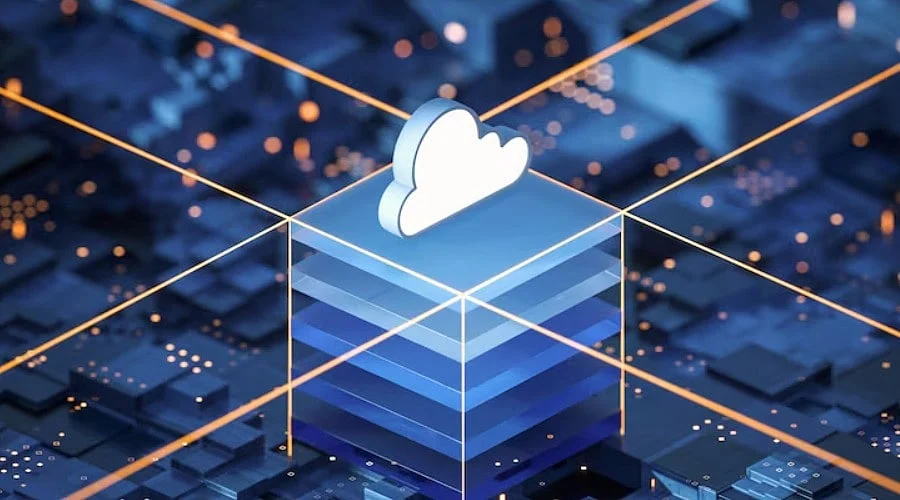
Cloud architecture integrates compute, storage, networking, applications, data, and security into a unified system.
-
Public, private, hybrid, and multi-cloud models cater to various workloads and regulations.
-
Key priorities for 2027 encompass AI infrastructure, financial management, proven resilience, and distinct ownership.
Cloud expenses frequently escalate before leadership takes notice. By 2027, artificial intelligence tools, data platforms, and client-facing applications will vie for the exact same infrastructure. Each requirement demands its own specific balance of processing speed, capacity, security, and governance. The design of these systems ultimately determines whether cloud expenditure establishes genuine business value or merely drives up expenses.
What Cloud Architecture Covers
Cloud architecture is the framework that allows computation, storage, networking, application, data, and security services to function as a cohesive entity. High-quality cloud architecture ensures applications run efficiently, maintain security, and remain cost-effective. Conversely, poor cloud design leads to system outages and unforeseen expenses.
Core Components of Cloud Architecture
Compute serves as the driving engine for cloud applications. Engineering groups can utilize virtual machines, containers, serverless functions, or specialized hardware tailored for AI tasks. Kubernetes is frequently deployed to manage container orchestration and scaling.
Appropriate storage solutions depend entirely on the characteristics of the data and the workload. Object storage accommodates vast quantities of unstructured data, managed databases handle transaction processing, and data lakehouses are leveraged to evaluate massive datasets.
Networks establish the connectivity linking users, applications, and data. Load balancing divides traffic across multiple servers, while private connections bridge cloud environments with corporate networks and data centers, bypassing reliance on the public internet.
Security starts with identity and access management. Organizations establish clear parameters regarding who can access specific resources and what permissions they possess. Zero trust eliminates automatic trust based solely on network boundaries or devices.
Monitoring grants visibility into overall system performance. Through logs, metrics, and traces, teams can identify problems, bottlenecks, and anomalies. Infrastructure as code ensures consistency by defining cloud resources directly through configuration files.
Cloud Deployment Models Compared
Enterprises frequently combine multiple models. Data protection mandates and residency regulations across various jurisdictions heavily dictate where specific workloads must execute. Some organizations incorporate a secondary cloud provider to minimize vendor lock-in, though this introduces additional operational burdens, as utilizing a second provider does not inherently guarantee resilience.
Teams can begin by cataloging every workload alongside its designated owner and data compliance rules. Consequently, the optimal model frequently varies from one workload to another.
Also Read: Best 7 Platforms to Design and Deploy Cloud Architecture
Cloud Architecture Priorities for 2027
Six primary design considerations are actively shaping cloud architecture in 2027. AI workloads regularly demand specialized hardware, high-speed networks, and extensive data pipelines. Architects must align computing capacity with the specific workload, model dimensions, required response latency, and associated expenses. When an application demands rapid responses, processing can shift closer to end-users or data sources, provided the added operational effort is justified.
Platform engineering assists teams in provisioning cloud resources uniformly. Internal platforms deliver pre-approved templates for routine operations while enforcing shared system standards and security protocols.
Edge computing processes data proximate to its origin, such as within factories, retail locations, or vehicles. This practice minimizes latency and reduces the volume of data transmitted to a centralized cloud. FinOps integrates financial considerations directly into design decisions. Teams utilize resource tagging to link expenditures directly to individual workloads, revealing that metrics like cost per sale or cost per customer provide far deeper insight than a standard monthly bill.
Data gravity is equally critical. Transporting massive datasets consumes time and incurs data transfer fees, prompting teams to position computing resources adjacent to the data source. Robust resilience stems from deliberate design rather than multi-cloud adoption alone; workloads require failover strategies that have undergone rigorous testing across multiple availability zones or regions.
Also Read: The Growing Importance of Cloud Solution Architecture in Modern IT Careers
Best Practices for Cloud Architecture
Anticipate failure from the outset by distributing workloads across multiple availability zones and regularly testing disaster recovery procedures. Grant individuals and roles strictly the minimum permissions required. Implement infrastructure as code and integrate automated policy checks into deployment pipelines to maintain repeatability.
Establish comprehensive monitoring early in the lifecycle. By tracking logs, metrics, and traces, administrators can observe system health and mitigate faults before end-users experience disruption.
Preserve data portability by relying on open standards and standard APIs. Assign a designated owner to every workload to oversee financial management and routine upkeep, and establish agreed-upon uptime and performance service level targets prior to launch.
Moving to the cloud likewise requires careful deliberation. Lifting and shifting legacy servers directly often carries forward obsolete issues that escalate costs. Evaluate each workload individually: retain some in their current state, rearchitect others, and retire applications that no longer deliver sufficient value.
Final Thought
Cloud providers continually roll out novel services at a pace exceeding the adoption capacity of most engineering groups. Accumulating more services does not automatically improve architecture. Forward-thinking teams evaluate every prospective service against a distinct operational requirement before integration.
You May Also Like:
The Architecture of Adaptive AI Security: How Cloud Systems Can Learn to Defend Themselves
The Future of Cloud Computing: How Serverless Architecture is Transforming Technology
Reimagining Enterprise Architecture for the AI-Cloud Era: An Interview with Rachit Gupta
FAQs
1.What are the core components of cloud architecture?
Compute, storage, networking, identity and access management, monitoring, and automation form the core. Compute run applications, and storage holds data. Networking moves traffic between users, applications, and data. Monitoring and automation keep systems visible and consistent.
2.Which cloud deployment model suits most organizations?
No single model fits every case. Public cloud suits variable workloads and new applications, while private cloud suits specific control or regulatory requirements. A hybrid cloud mixes cloud and on-premises systems. Teams are usually chosen by workload, based on their data rules and traffic patterns.
3.Does using more than one cloud provider improve resilience?
Not on its own. A second provider reduces reliance on one vendor but adds operational work. Resilience comes from design, such as tested failover plans and workloads spread across availability zones or regions.
4.What does zero trust mean in cloud architecture?
Zero trust gives no automatic trust to a user or device based only on network location or ownership. Systems check each request against identity, device state, and application context. NIST describes this approach in Special Publication 800-207.
5.How can teams keep cloud costs under control?
Teams map spend to workloads using tags and other methods. They track cost per transaction, customer, or workload, since a monthly bill only shows what was spent. Clear ownership for each workload also helps keep spending accountable.