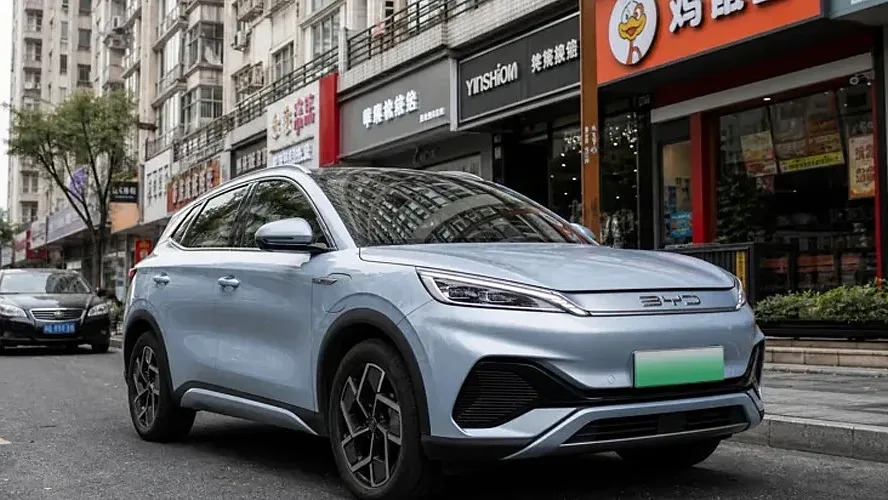
Major US automakers are urging Congress to enact legislation that would permanently block Chinese vehicles from the American market. The trade association representing top automotive companies is pushing for lawmakers to address the measure during the post-midterm legislative session.
The Alliance for Automotive Innovation—whose members include General Motors, Toyota, and Volkswagen—is renewing its call for tighter barriers while a bipartisan bill designed to formalize current restrictions continues to stall on Capitol Hill.
Automakers Raise Security Concerns
John Bozzella, president and CEO of the Alliance, contends that Chinese cars pose potential national security and surveillance risks for the United States. Today’s connected vehicles rely on cellular networks, Wi-Fi, and Bluetooth, all of which are capable of gathering and relaying data.
Additionally, the trade group worries about market competition from Chinese producers. They argue that firms backed by government subsidies could secure an unfair advantage over carmakers that have spent decades pouring investments into American manufacturing and local economies.
Also Read: AI Leaders Warn of Risks as Chinese Models Challenge US Tech
Bipartisan Bill Awaits Congressional Action
Backed by Republican Senator Bernie Moreno and Democratic Senator Elissa Slotkin, the proposed legislation seeks to strengthen and codify the limits established under the Biden administration, which effectively prevent Chinese automakers from building and marketing passenger vehicles in the US.
Although the Senate Commerce Committee advanced the measure in July, disputes regarding specific clauses slowed its momentum. In September, the bill’s authors opted to hold off on fast-tracking it until November.
Also Read: Trump-Xi Summit Draws U.S. and Chinese Tech Leaders for AI Talks
Industry Restrictions Could Affect Global Brands
The prospective ban additionally introduces uncertainty for international car companies that have ties to China or Chinese ownership. Mercedes-Benz, for example, boasts substantial Chinese backing, sparking fears that sweeping ownership rules might impact firms that are not strictly Chinese vehicle producers.
Chinese marques like BYD, Chery, and SAIC have grown their global footprint, heightening competition across various automotive sectors. The legislation is still under evaluation, and its final parameters will likely dictate the market access available to Chinese manufacturers and businesses with operational ties to China.