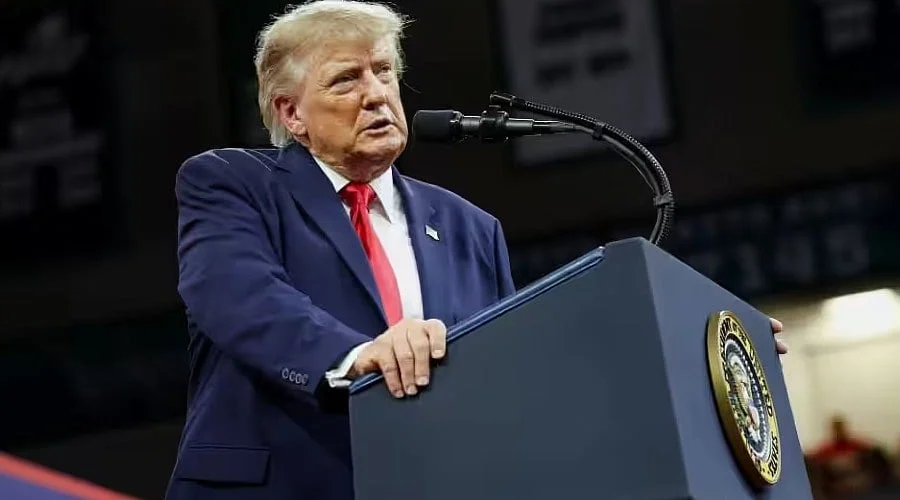
President Donald Trump lifted 50% tariffs on specific Canadian merchandise on Friday, providing relief to Maine enterprises while Republican Senator Susan Collins navigates a competitive reelection contest. While the directive provides exemptions for imports utilized by agricultural producers and manufacturers, it simultaneously slaps identical heavy duties onto additional Canadian items. As the November 3 midterm elections approach, Republicans are fighting to retain control of Congress in several closely watched Senate battles.
Tariff Relief Targets Maine Farms and Businesses
Collins had urged the White House to reevaluate the trade levies that inflated expenses for local companies and agricultural operations in her home state. Because Maine borders Canada, numerous local enterprises depend on goods sourced from across the international boundary.
Friday’s White House announcement detailed an exemption list featuring plywood sheets, particular paper products, specific machinery, refrigeration apparatus, packaging crates and boxes, along with fresh and dried seaweed.
For the state’s blueberry, potato, apple, and seaweed producers, the policy adjustment touches materials essential to everyday business functions. According to Collins, certain suppliers are unable to acquire specialized tools or packaging domestically without absorbing substantial replacement expenses.
Describing these agriculturalists as vital to the rural and coastal economy, Collins issued a statement welcoming the adjustments following months of tariff-related friction between Ottawa and Washington. Her appeal specifically targeted inputs for local farms and businesses rather than demanding a complete reversal of the administration’s trade restrictions.
New Duties Keep the Canada-Trade Dispute Alive
At the same time, the administration broadened the scope of the 50% tariff list. Newly targeted items encompass carpets, paints, waste, shampoo, cocoa powder, wooden coffins, ice cream sticks, air-conditioning units, chest freezers, archery equipment, and canoes. Although this maneuver alters which specific items are taxed, the broader commercial conflict remains active.
Trump originally enacted the 50% levies in August on $20 billion worth of Canadian imports following the collapse of bilateral negotiations. In response, Canada implemented retaliatory tariffs ranging from 15% to 50% on $20 billion of U.S. merchandise in September.
This ongoing feud has strained cross-border supply chains within Maine and Michigan, where commercial operators purchase everything from lumber and automotive components to fruit-harvesting machinery. Both states are currently hosting highly competitive Senate races.
White House representative Matthew Middleton explained that the recent updates calibrate the boundaries of current tariffs while countering what the administration views as unfair Canadian treatment of U.S. commerce.
On Friday, Trump remarked that Canada was moving toward an agreement. Meanwhile, Canadian trade minister Dominic LeBlanc stated that Ottawa was evaluating the modifications and maintained its willingness to engage in productive discussions that safeguard Canadian priorities.
Read More: Trump Waives Russia Sanctions Before Oil Tariffs Take Effect
Senate Campaigns Face a Tariff Test
Facing Democratic challenger Troy Jackson in a tight race according to recent polls, Collins saw the trade issue take center stage during their October 6 debate.
Following Trump’s directive, Jackson accused the administration’s trade battles of driving up expenses for Maine residents. Furthermore, he faulted Collins for backing the officials responsible for the levies while subsequently taking credit for partial exemptions.
Collins did not immediately provide a statement in response to Jackson’s criticisms. On the other side of the aisle, Oregon Senator Ron Wyden, the leading Democrat on the Senate Finance Committee, also questioned the timing of the carve-outs. Wyden asserted that the trade taxes had inflated the cost of everyday household goods and predicted that voters would not forget those price spikes.
The political friction extends beyond Maine. In Michigan, Republican Senate contender Mike Rogers—who previously advocated for resolving the Canada trade dispute—expressed support for tariffs targeting Canadian waste shipments crossing into his home state.
Meanwhile, Trump rescinded a planned restriction against Canadian aircraft manufacturer Bombardier in Kansas this week. The firm supports 1,500 jobs in Wichita, prompting Republican Senator Roger Marshall to join colleagues in lobbying against the ban.
Marshall, much like Collins, is locked in a challenging reelection battle. GOP hopefuls across northern border states are attempting to maintain support from Trump’s base while avoiding alienating independent constituents who are anxious about the financial toll of tariffs.
Final Thoughts
Trump’s directive rescinds certain 50% levies on Canadian commodities utilized in Maine while simultaneously incorporating new products onto the taxable roster. While Collins praised the concessions for agriculturalists amid a competitive Senate contest, Canada continues to review the updates, and both nations remain at loggerheads regarding the trade penalties enacted earlier this year.