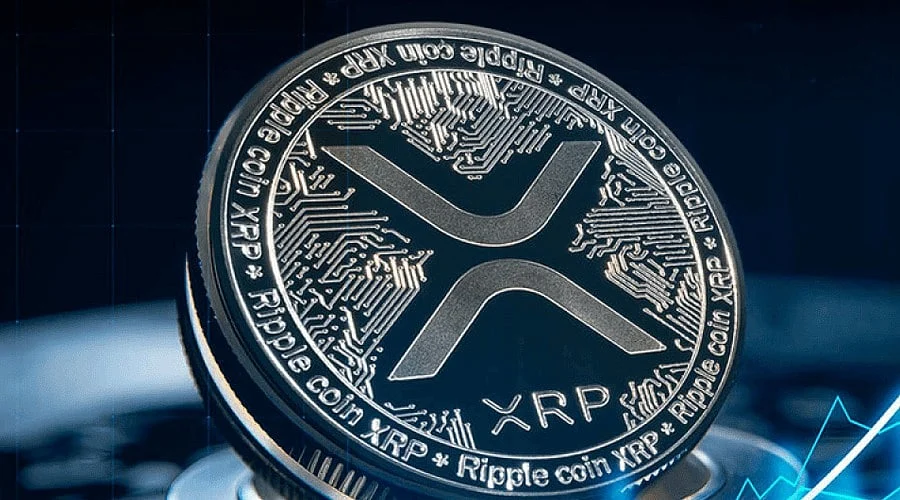
Institutional finance is increasingly exploring the XRP Ledger (XRPL) as major firms test blockchain technology for investment fund recordkeeping. A recent initiative in Brazil highlights how securities markets can leverage public networks without needing to transition legal ownership data directly onto a blockchain.
Brazil Begins Recording Fund Ownership on XRPL
On September 29, 2026, Ripple and Brazilian financial infrastructure provider CSD BR announced a project centered on investment funds managed by BTG Pactual. Per Ripple’s announcements, CSD BR will mirror fund ownership data on the public XRP Ledger while keeping its legacy database as the definitive system of record for registration, custody, and settlement.
CSD BR currently manages over BRL 22 trillion—roughly USD 4 trillion—in registered assets, though this total reflects its broader business operations rather than the specific value of the funds tracked on the XRPL. Rather than relying on simulated environments, the project utilizes actual fund records, giving institutions a practical way to evaluate blockchain infrastructure under live conditions.
How Blockchain Records Support Institutions
Within this framework, investment fund shares are modeled utilizing the XRPL Multi-Purpose Token standard. Authorized financial entities can cross-reference blockchain data against CSD BR’s official database, helping to spot discrepancies more quickly and minimize the need for manual reconciliation.
Participation remains strictly gated by anti-money-laundering protocols and identity verification procedures. The token architecture also permits specific transfer and ownership restrictions. Still, the ledger entries function merely as a supplementary auditing tier; they neither substitute for the legally mandated securities register nor automatically permit open trading.
Aviva Investors Expands Tokenized Fund Adoption
Brazil is not alone in exploring institutional applications. Back in July 2023, Aviva Investors introduced a novel product structured as a tokenized share class of its US Dollar Liquidity Fund on the XRP Ledger. Aviva Investors noted that the offering secured approvals from the Central Bank of Ireland, with Komainu delivering institutional digital asset custody and Licuido handling the tokenization process.
While the fund preserves its standard investment objectives and safeguards, qualified investors gain blockchain-based access to the share class. Additionally, Aviva highlighted that the XRPL has processed four billion transactions since its 2012 inception and currently supports nearly eight million active wallets.
What Comes Next for Fund Infrastructure?
To further bolster its transfer agency, asset issuance, and collateral management capabilities, Ripple disclosed strategic investments in ZILO and Licuido in August 2026. Going forward, CSD BR and Ripple may investigate issuing and trading additional assets natively on the XRPL, such as agricultural and real estate-backed receivables. Although these developments aim to boost settlement efficiency, hurdles related to interoperability, regulatory compliance, and operational security still persist.
Final Thoughts
The institutional utilization of the XRPL is transitioning past proof-of-concept demonstrations into live recordkeeping environments. The Brazilian venture prioritizes verification and transparency over replacing legacy legal frameworks. Ultimately, broader market integration will rely on robust risk controls, demonstrable cost savings, and seamless compatibility with existing financial systems.
FAQs:
1. How is the XRP Ledger being used for institutional fund records?
The XRP Ledger is being used to mirror investment fund ownership records on a public blockchain, allowing authorized institutions to verify and reconcile information. The official legal records remain within existing financial infrastructure, while XRPL provides an additional layer of transparency and verification.
2. What is the purpose of Ripple’s partnership with CSD BR in Brazil?
Ripple and CSD BR are working to record ownership information for investment funds managed by BTG Pactual on the XRP Ledger. The initiative aims to improve record verification, reduce reconciliation complexity, and evaluate blockchain technology in institutional financial operations.
3. How much in assets does CSD BR oversee, and are they all tokenized on XRPL?
According to the reported figures, CSD BR oversees more than BRL 22 trillion, approximately USD 4 trillion, in registered assets. However, this represents its overall registered asset base and does not mean the entire amount has been tokenized or recorded on the XRP Ledger.
4. How is Aviva Investors using the XRP Ledger for tokenized investment funds?
Aviva Investors has introduced a tokenized share class of its US Dollar Liquidity Fund using the XRP Ledger, with Komainu providing custody and Licuido supporting tokenization. The initiative allows eligible investors to access blockchain-based fund records while retaining the fund’s conventional investment structure.
5. What are the benefits and challenges of using XRPL for institutional fund management?
XRPL could help financial institutions improve transparency, streamline record reconciliation, and reduce operational inefficiencies through blockchain-based infrastructure. However, broader adoption depends on regulatory compliance, data security, interoperability, and successful integration with existing financial systems.