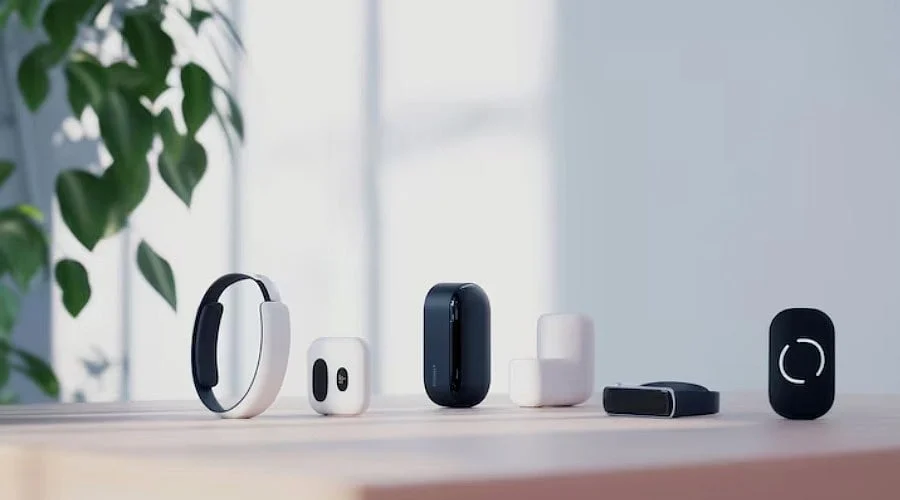
Today’s personal hardware excels at quantifying our physical selves.
Smartwatches count daily steps, track sleep, measure heart rates, and convert everyday motion into streams of data. Smartphones know our locations, search histories, and most frequently opened applications. Fitness trackers turn physical workouts into neat charts, performance scores, and long-term trends.
However, a massive blind spot remains within the broader personal technology market.
We measure what the body does far more easily than we measure how the mind works.
That imbalance could soon shift.
The upcoming wave of consumer tech does not necessarily require additional screens, physical sensors, or wearable bands. Instead, it may arrive as digital software built to spark user curiosity regarding cognitive capabilities, mental performance, and everyday reasoning habits.
Within this framework, online intelligence testing emerges as a surprisingly relevant element of the modern smart-device dialogue.
From Counting Steps to Examining Thought
Wearable devices achieved widespread success on a fundamental premise: data drives behavioral change.
A person who realizes they walk very little each day may decide to become more active. Someone spotting erratic sleeping patterns might adjust their nighttime routine. Meanwhile, a runner can easily track monthly improvements instead of relying solely on memory.
That exact principle can be applied to human cognition, albeit with a much higher degree of caution.
The Mind Is Not a Heart Rate Sensor
Cognitive performance relies heavily on context, background familiarity, attention spans, fatigue levels, personal motivation, formal education, and various other influences.
Consequently, an IQ score should never be treated as a comprehensive evaluation of a person’s overall intelligence.
Rather, a cognitive test functions best as a structured snapshot measuring specific problem-solving and reasoning skills.
This distinction matters because the true value of modern personal tech increasingly lies not in spitting out a final number, but in guiding users to ask better questions about that metric.
MyIQ and the Idea of Cognitive Self-Tracking
MyIQ merges online intelligence evaluations with interactive exercises designed to stimulate mental faculties.
From a consumer-technology standpoint, the compelling factor isn’t simply that another digital platform generates a score.
Instead, it is the potential to transform raw cognitive curiosity into an engaging interactive experience.
An individual might finish an assessment and immediately begin pondering:
-
Why did certain problems feel much simpler than others?
-
Did I rush through the test, prioritizing speed over accuracy?
-
Which specific pattern types did I spot right away?
-
At what point did I make careless errors?
-
Could deliberate mental practice alter my strategic approach?
Such reflections shift the user experience away from a traditional, static test-score model.
A public Reddit discussion debating whether a MyIQ score serves as a legitimate indicator of intelligence highlights precisely this broader concept: MyIQ.
This conversation proves fascinating because it emphasizes a critical boundary separating measurement from interpretation.
What Smart Devices Could Learn From Cognitive Tools
The historical evolution of everyday gadgets offers a helpful point of comparison.
This particular product category is still evolving.
Even so, it signals an exciting path forward for consumer electronics: systems that do not merely automate chores, but prompt users to grow more mindful of their own actions.
The Personal Dashboard Is Getting Deeper
Picture a standard health dashboard.
Steps. Sleep. Heart rate. Calories.
Now picture an extra layer integrated into that display:
Pattern recognition. Reasoning drills. Problem-solving metrics. Learning milestones.
This approach should never replace a formal clinical or psychological evaluation. Nor should any single online metric be viewed as a definitive summary of an individual’s worth.
It is much more accurately viewed as an alternative tool for self-observation.
Why Gadgets May Eventually Become More Adaptive
Artificial intelligence introduces another layer to this concept.
Contemporary devices grow increasingly responsive to their operators. Recommendation algorithms learn user tastes. Mobile phones predict frequent tasks. Fitness apps dynamically update goals. AI assistants tailor their answers to fit specific contexts.
Cognitive technology could easily follow a comparable path.
From Static Tests to Dynamic Experiences
Rather than serving identical exercises to every user, tomorrow’s software platforms could leverage performance patterns to tailor personalized challenges.
For instance:
-
A user completes a series of logical reasoning tasks.
-
The software pinpoints recurring strengths and problem areas.
-
Future challenges are dynamically tailored based on those results.
-
The user reviews the provided feedback.
-
Performance trends are monitored over an extended period.
The ultimate outcome would look more like a digital training ground than a standard, one-off test.
Crucially, increased personalization does not inherently guarantee scientific validity. A slick user interface can easily make measurements appear far more exact than they actually are.
That reality makes transparency an absolute necessity within the realm of cognitive technology.
The Gadget You Cannot Put on Your Wrist
There is an inherent irony in today’s consumer electronics ecosystem.
People willingly strap sensors onto their wrists overnight to track their sleeping habits, yet the most sophisticated biological machine they own remains virtually invisible to their personal tech.
The human brain does not output a neat percentage representing “optimal thinking.”
Instead, cognition manifests directly through outward behavior.
You recognize a familiar pattern. You work through a difficult problem. You recall stored facts. You update your perspective when presented with new evidence. You spot an underlying contradiction.
While technology cannot reduce the complexities of the human mind into a simple dashboard, it can successfully aid in exploring a few of these mental processes.
What an IQ Score Cannot Tell You
This is precisely where editorial and personal restraint becomes necessary.
An intelligence assessment fails to measure every trait tied to overall human potential or brilliance.
It cannot automatically predict:
-
who will launch a thriving business enterprise;
-
who will craft profound works of art;
-
who will develop into a brilliant software engineer;
-
who will consistently make wise life choices;
-
who will possess high emotional intelligence;
-
who will maintain resilience under severe pressure.
Real-world success is infinitely more complicated.
Consequently, the most valuable aspect of platforms like MyIQ may not involve measuring oneself against other people.
Instead, it may lie in utilizing the exercise as a catalyst for genuine self-reflection.
The New Philosophy of Smart Devices
Historically, the label “smart device” has referred to hardware capable of executing complex computational tasks.
However, another definition is entirely possible.
A genuinely smart device could be defined as technology that elevates user awareness.
That might look like a smartwatch exposing poor sleep hygiene, a fitness program highlighting a training plateau, an AI tool helping uncover a blind spot in your knowledge, or a cognitive app inspiring someone to analyze how they tackle foreign challenges.
The technology does not need to issue a final judgment.
It simply needs to illuminate aspects of behavior that were previously difficult to track.
The Next Personal-Tech Frontier Is Inside
Consumer electronics manufacturers have spent years surrounding everyday users with physical sensors.
The next phase may focus instead on helping individuals interpret their own internal data.
MyIQ serves as one early example of this emerging trend. Its web-based assessments and mental training tools integrate cognitive self-discovery directly into the broader ecosystem of digital self-betterment that has already revolutionized personal fitness, productivity tracking, and health analytics.
That does not transform a simple IQ score into the ultimate verdict on human intelligence.
Rather, it lowers the barrier to asking thoughtful questions about how our minds operate.
And that just might be the true definition of the next-generation smart gadget.
Not a machine that knows everything about you.
But a piece of technology that empowers you to understand yourself just a little bit better.