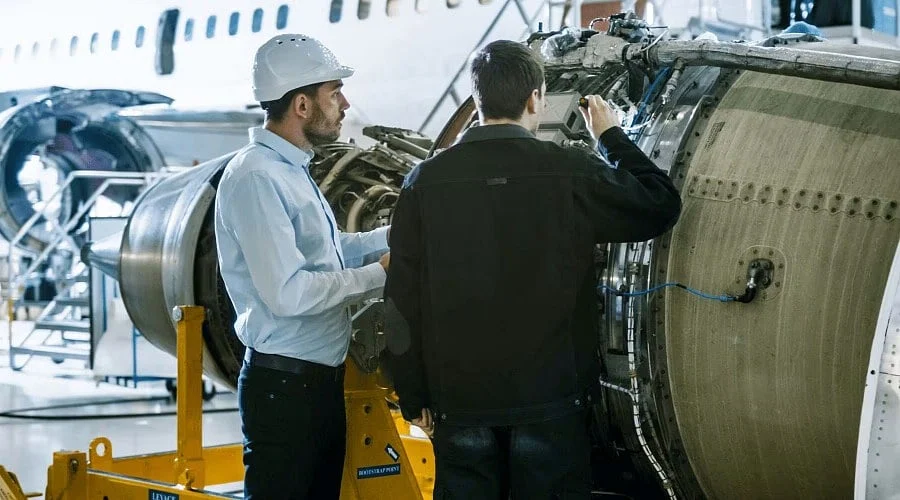
While aerospace innovation is frequently discussed in terms of hardware—lighter spacecraft, autonomous navigation networks, advanced avionics, reusable rockets, and aircraft capable of managing massive data flows—every sophisticated machine relies on a human mind to interpret signals, make choices, spot patterns, and navigate uncertainty.
This dynamic raises a compelling question: as aviation and space systems grow smarter, should greater focus be placed on the cognitive capabilities of the operators and engineers who work alongside them?
The solution isn’t simply giving pilots or engineers a basic IQ test, as intelligence is far more intricate than any single metric. Instead, structured cognitive evaluations offer a unique form of feedback, helping individuals analyze their problem-solving approaches, reasoning under pressure, and areas where targeted mental exercises could prove beneficial.
Within this broader conversation surrounding cognitive performance, online platforms such as MyIQ have emerged as points of discussion.
Aerospace Is Becoming a Cognitive Engineering Problem
Today’s aerospace professionals rarely face single-faceted duties.
An engineer might analyze telemetry data, weigh competing technical theories, evaluate statistical information, and convey a choice to a diverse team. Meanwhile, a pilot navigates another layer of complexity, balancing visual queues, flight instruments, standard procedures, radio communication, shifting weather, and fast-paced priorities.
Space missions introduce an even more demanding environment.
The Information Bottleneck Is Human
Because satellites and spacecraft generate vast amounts of data—and autonomous tools increasingly pre-process that data before operators see it—the primary challenge has shifted from simply gathering information to deciding:
-
Which information matters?
-
Which pattern is meaningful?
-
Which anomaly deserves attention?
-
Which assumption might be wrong?
-
What should happen next?
At their core, these dilemmas are cognitive.
While technology can reduce the volume of data an individual must manually review, it cannot fully replace human judgment. In critical scenarios, recognizing an unusual relationship often outweighs memorizing standard operating procedures.
What Can an IQ Test Actually Contribute?
IQ tests are sometimes mistaken for definitive measurements of an individual’s overall intelligence, but that viewpoint is overly simplistic.
Instead, a cognitive test acts as a structured snapshot of specific reasoning capabilities. Depending on the specific assessment, these might include pattern recognition, logical deductions, numerical problem-solving, or verbal reasoning.
For those drawn to the aerospace sector, this makes the tool surprisingly relevant.
From Score to Self-Observation
The most important question is rarely, “Is my score high enough?”
A much more constructive inquiry is:
“What does the way I solved these problems tell me about how I think?”
For instance, an individual might realize they excel at spotting visual patterns but struggle with numerical relationships. Another might discover a tendency to rush through basic questions, sacrificing accuracy in the process.
Neither realization defines an individual’s professional skill. Rather, both serve as a starting point for self-reflection.
MyIQ and the Idea of Cognitive Training
By blending online IQ tests with exercises designed to challenge mental faculties, MyIQ highlights the distinction between assessment and training.
Evaluations supply feedback, whereas training offers a space for practice.
For anyone passionate about aerospace, this pairing can function almost like a personal flight simulator for the mind—not as a replacement for formal credentials, but as a method for experimenting with cognitive routines.
A Reddit discussion detailing a user’s experience with their MyIQ score highlights this dynamic: receiving a cognitive metric can spark internal reflection rather than serving merely as a number for competitive comparison.
That mental shift is crucial. A score becomes far more valuable when it prompts deeper questions regarding learning strategies, focus, reasoning, and underlying assumptions.
Three Cognitive Skills With Aerospace Relevance
1. Pattern Recognition
Aerospace systems rely heavily on patterns, from telemetry trends and sensor outputs to navigation data, structural reactions, weather systems, and past maintenance records.
Spotting a meaningful trend quickly is essential, especially when an anomaly surfaces amid otherwise normal information.
Cognitive drills focusing on sequences, relationships, and visual patterns offer an abstract method to train this type of awareness.
2. Logical Reasoning
Engineering work is inherently bound by constraints.
Modifying a single component can alter an entire system, and if a foundational assumption fails, an entire line of reasoning must be reevaluated.
Logical reasoning exercises train individuals to make these relationships explicit rather than relying solely on gut instinct.
3. Mental Flexibility
Perhaps the most neglected skill is the readiness to adjust one’s strategy.
The history of aerospace is filled with unforeseen events that forced teams to discard initial assumptions and invent alternative solutions. While cognitive flexibility doesn’t ensure flawless choices, practicing versatile approaches reduces rigidity in problem-solving.
Assessment vs. Reality: A Necessary Distinction
Aviation and space exploration demand capabilities that online IQ tests cannot replicate.
Drawing this line prevents a major error: mistaking an IQ score for a professional credential.
Aerospace engineers require rigorous technical training, while pilots need certifications, situational awareness, communication skills, and field experience. Astronauts, meanwhile, face an intense mix of physical, psychological, technical, and team-oriented demands.
Online evaluations belong in an entirely different category: personal growth and cognitive self-discovery.
The Next Frontier May Be Human-AI Collaboration
As artificial intelligence grows more embedded in flight operations, spacecraft architecture, engineering workflows, and mission planning, the interplay between human and machine reasoning will only deepen.
The objective isn’t to turn humans into computers.
Instead, the aim is to develop professionals who know when to trust a machine, when to challenge it, and when to investigate an unexpected outcome.
Achieving this demands curiosity, reasoning, skepticism, and the capacity to rethink assumptions—traits that cannot be condensed into a single intelligence score.
A More Useful Question Than “How Smart Am I?”
Ultimately, the future of cognitive testing may depend on asking better questions.
Rather than seeking validation of intelligence through a score, individuals can leverage tests to explore deeper inquiries:
-
How do I approach unfamiliar problems?
-
Where do I tend to make avoidable mistakes?
-
Which reasoning tasks feel natural to me?
-
Which ones require more deliberate effort?
-
How can I practice thinking differently?
For aerospace enthusiasts, engineers, students, and technology specialists, these questions may prove far more valuable than any final test score.
The Human Variable Still Matters
While the aerospace sector will likely push toward greater automation, autonomy, and artificial intelligence, innovation doesn’t erase the human element—it transforms its function.
As machines take over calculations and data processing, humans contribute through interpretation, judgment, creativity, skepticism, and the ability to notice when reality strays from expected patterns.
This makes cognitive self-evaluation a compelling complement to technical education. Tools like MyIQ fit into a practical niche: serving not as definitive proof of potential, but as a mechanism to turn curiosity about intelligence into a deliberate exploration of personal thought processes.
In an industry dedicated to driving machines beyond familiar limits, understanding the boundaries—and capabilities—of the human mind remains an equally vital frontier.