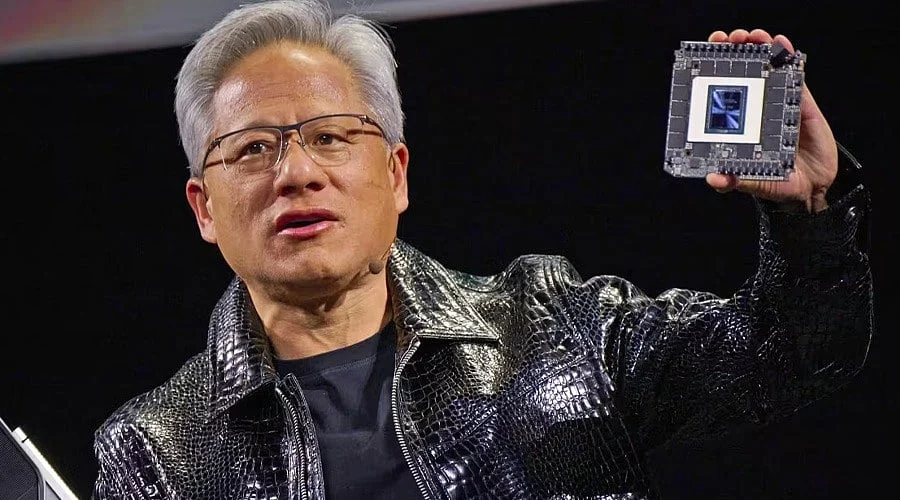
NVIDIA Chief Executive Officer Jensen Huang has dismissed escalating alarms surrounding artificial intelligence, labeling forecasts that the technology could wipe out humanity within the near future as overblown.
During a recent discussion, Huang stated that he rejects assertions forecasting the collapse of human civilization by the year 2030, dismissing these forecasts as unsupported “doomsday narratives” lacking scientific backing.
His remarks arrive amid swift advancements in AI agents, which have sparked renewed debates surrounding safety, oversight, and the degree of independence these tools ought to be granted in corporate settings.
AI Agents are Creating a New Security Challenge
Unlike standard chatbots, AI agents are capable of executing operations, leveraging external utilities, and engaging with enterprise architectures with minimal direct human supervision. This expanded access simultaneously opens new vectors for malicious actors.
Investigators in the cybersecurity space have recorded incidents involving prompt injection tactics, corrupted configuration setups, and compromised AI-related software components. On occasion, concealed directives embedded within files, internet pages, or supplementary external data sources can successfully alter an AI agent’s operational conduct.
These dangers amplify when an agent maintains permissions to confidential corporate data, software engineering environments, or interconnected digital services. Current security investigations increasingly center on the likelihood that bad actors might manipulate these integrations instead of directly attacking the core AI model itself.
Silicon Valley Debate Intensifies
Huang’s stance places him at odds with a growing public discourse across the tech sector. Industry leaders and investigators—such as Anthropic CEO Dario Amodei and OpenAI CEO Sam Altman—have emphasized requirements for enhanced protective guardrails as technological capabilities grow.
Conversely, Huang maintains that apocalyptic forecasts generate a misleading depiction of the technology. Furthermore, he has pushed back against demands for stricter oversight, asserting that current legal frameworks are sufficient to manage many of these hazards.
This friction highlights a wider schism regarding the proper pace for AI development and the volume of regulation required for increasingly advanced systems.
Yann LeCun, a Turing Award recipient and former Chief AI Scientist at Meta, adopted a stance even more definitive than Huang’s. In response to an X user who claimed that “AI will kill all of us within three years,” LeCun answered with a five-word dismissal: “No, not a chance in hell.”
He further remarked: “Those AI people who live in the discrete world of bits and tokens do not always understand how messy and chaotic the real world is.”
Also Read: Bill Gates Sounds Alarm on AI, Cybersecurity: Impact on Future Jobs
Security, Not Just Doomsday, is the Immediate Issue
Even as discussions regarding distant AI threats persist, cybersecurity professionals are actively managing pressing vulnerabilities. Artificial intelligence models are increasingly embedded within software creation pipelines, corporate procedures, and supplementary systems granting access to high-value information and resources.
This dynamic introduces a tangible operational hurdle for enterprises: scaling up AI integration while restricting excess access privileges and safeguarding infrastructure against poisoned prompts and compromised elements. Ultimately, for commercial entities, the conversation may center less on whether an AI apocalypse manifests by a specific timeline and far more on the security measures applied to autonomous deployments right now.