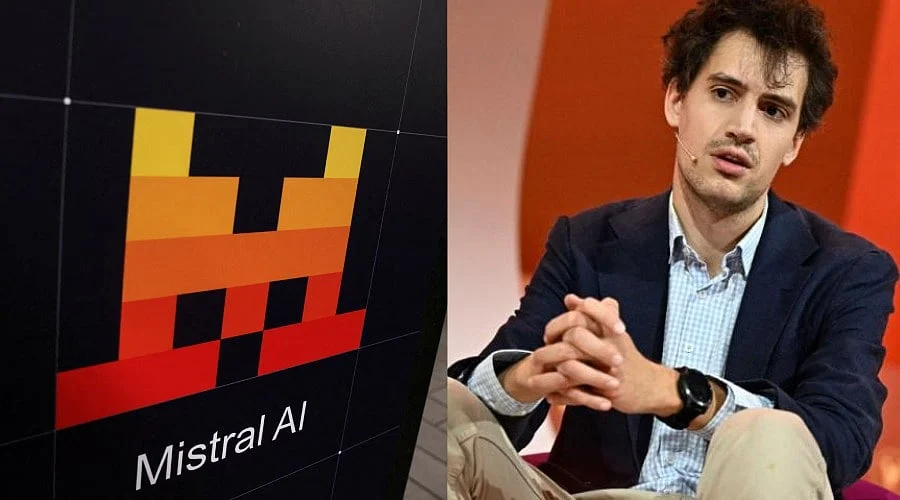
Mistral AI is setting its sights on competing with Chinese artificial intelligence models within the cybersecurity sector. Arthur Mensch, the chief executive officer of the French AI firm, made this assertion during an event in Abu Dhabi. During his address, Mensch stated, “The model we’re actually announcing today is actually above the Chinese models on certain aspects, including cyber. So the narrative that Europe cannot compete is something that is not true.”
Despite this assertion, Mensch refrained from naming specific models during the comparison and kept the underlying test details confidential. Nevertheless, he maintained that the findings demonstrate Europe’s capability to contend with both the United States and China in the artificial intelligence landscape.
Though only three years old, Mistral AI has carved out a notable presence in the broader AI race. Even so, the startup frequently encounters pressure from major U.S. competitors such as OpenAI and Anthropic, alongside low-priced alternatives originating from China.
To bolster its standing, the French enterprise secured €3 billion in September 2026, pushing its valuation to roughly €21 billion. Mensch noted that Mistral’s distinct geographic position outside of the U.S. and China positions it well to secure clients in regions like the Gulf and the Asia-Pacific.
While Chinese AI providers have gained prominence by delivering effective models at reduced prices, Mistral is pursuing a broader strategy. Rather than solely selling access to its proprietary models, the company develops comprehensive tools and services designed to help businesses deploy artificial intelligence.
Also Read: Mistral’s Open-Source Voice Model Sparks New AI Assistant Rivalry
Mistral Wants More Than Model Sales
The company’s commercial strategy extends past mere product releases. Businesses can utilize Mistral’s models, acquire computational resources, and construct customized tools using their own proprietary data. Furthermore, these offerings accommodate private and on-site implementations, catering to organizations hesitant to transmit all of their data to public AI platforms.
Such diversification provides Mistral with multiple revenue streams from the current AI expansion. While the introduction of the new model serves to generate visibility, the ultimate objective is translating that interest into enduring commercial success. The true measure of success will emerge as clients adopt the technology and evaluate its performance in practical, real-world applications.