How Multi-Agent Architecture Powers Reliable AI Systems Through Orchestration
Discover how multi-agent architecture utilizes orchestration, specialized roles like researchers and coders, and feedback loops to build reliable AI systems while managing production challenges.
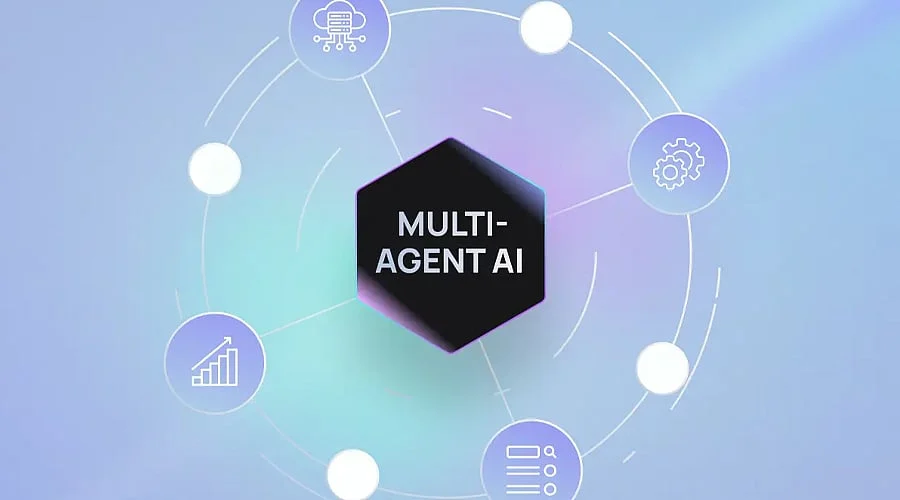
Orchestrator: The orchestrator directs the broader workflow by determining which agent tackles each specific task. It manages dependencies, directs requests among specialized agents, and preserves the operational sequence. Rather than burdening a single system with every duty, orchestration establishes distinct responsibilities while keeping the end-to-end process linked and easy to control.
Researcher: A researcher agent is tasked with collecting essential information and context before peer agents kick off their assignments. It has the ability to search available resources, structure its findings, and supply helpful background details to downstream agents. Isolating the research phase from actual execution minimizes confusion, giving other agents the freedom to focus entirely on their distinct duties.
Coder: A coding agent converts raw requirements and background research into functioning software or technical fixes. Rather than juggling research, planning, and validation all at once, it concentrates strictly on implementation. Such focused expertise streamlines development pipelines and enables separate agents to independently audit the resulting code for bugs or vulnerabilities.
Reviewer: The reviewer agent assesses work generated by other agents prior to advancing it in the pipeline. It inspects code, logical reasoning, research data, or finished tasks for mistakes and discrepancies. Implementing this extra validation layer serves as a vital quality-assurance checkpoint, catching issues early rather than letting defective outputs propagate down the line.
Feedback Loop: Feedback loops send flawed or unfinished outputs back to earlier steps for remediation. Instead of halting entirely when an agent hits a snag, the system relays constructive feedback and triggers a retry. This mechanism builds an iterative environment where agents steadily refine their work according to detected errors.
Specialized Responsibilities: Multi-agent systems function by assigning precise, well-defined duties to separate agents—such as one handling research, another managing code, and a third validating outcomes. Drawing these distinct lines establishes clearer boundaries and makes troubleshooting much easier. The primary goal is not to drive up the sheer number of agents, but rather to grant each one a targeted role that enhances the unified workflow.
Production Challenges: Expanding the agent lineup brings added complications, such as higher coordination overhead, increased latency, elevated token costs, and the risk of cascading errors. Consequently, production environments demand robust orchestration, thorough validation, strict guardrails, and well-placed human oversight. An effective architecture carefully weighs specialization against simplicity to guarantee that every added agent delivers genuine value instead of redundant operational friction.
Join our WhatsApp Channel to get the latest news, exclusives and videos on WhatsApp