Overview
-
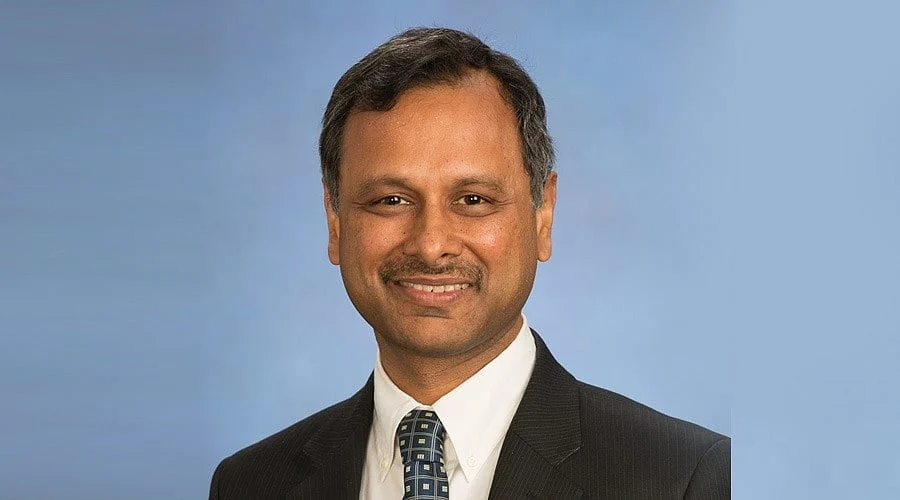
As a Senior Director at Google DeepMind, Manish Gupta directs artificial intelligence research operations spanning India and Japan.
-
His professional background encompasses high-performance computing, AI investigations, enterprise software, startup ventures, and tech leadership.
-
His initiatives concentrate on inclusive, real-world AI applications covering reasoning, healthcare, agriculture, and natural language processing.
Artificial intelligence continues its transition from academic environments into everyday life. Few technology figures in India have navigated this evolution as closely as Dr. Manish Gupta. Directing AI research teams across India and Japan as a Senior Director at Google DeepMind, Gupta oversees machine intelligence, computing infrastructure, and practical deployment, drawing on decades of experience bridging research, industry, and entrepreneurship.
From High-Performance Computing to AI
Gupta established his technical foundation well before the current surge in generative AI, earning his PhD in Computer Science from the University of Illinois Urbana-Champaign. He subsequently held prominent research positions at Xerox and IBM, where his work at the T.J. Watson Research Center centered on system software for the Blue Gene/L supercomputer.
This background in large-scale computing systems later branched into AI exploration, technology entrepreneurship—including a stint leading the video technology startup VideoKen—and executive leadership. His academic and professional portfolio features roughly 75 published research papers and 19 US patents.
Furthermore, he is recognized as a Fellow of the ACM and the Indian National Academy of Engineering, and he has earned a Distinguished Alumnus Award from IIT Delhi.
Building AI Research in India
Gupta has been instrumental in growing Google’s AI research footprint within India, where his teams currently tackle challenges related to reasoning, model efficiency, voice technology, and language.
In a recent interview, he characterized Google’s research branch in Bengaluru as a critical contributor to the company’s frontier AI initiatives, supported by a staff of approximately 75 researchers.
With several scientists having returned to India after completing graduate studies abroad, Gupta maintains that compelling research challenges serve as a magnet for global Indian talent. This trend mirrors a broader transformation within India’s tech sector, shifting the nation’s status from a conventional engineering outsourcing base to a primary research destination.
AI Built Around India’s Diversity
A central pillar of Gupta’s philosophy is inclusive AI. Given India’s vast array of languages, cultural nuances, and social frameworks, he contends that AI models require more than simple English-to-regional translations; they must comprehend local context.
This perspective has shaped projects such as Project Vaani and the curation of domestic language datasets, both designed to bolster speech and language tools for demographics frequently sidelined by standard platforms.
Additionally, Gupta has emphasized medical innovations, pointing to Google DeepMind’s diabetic retinopathy initiative. Initially piloted in Madurai, the screening tool has since facilitated more than 600,000 examinations internationally and maintains active deployment across Thailand and India.
Connecting Indian Research With Global Impact
Gupta’s strategic vision extends past domestic applications, treating India’s distinct hurdles as catalysts for innovations with international utility.
Agricultural technology provides a clear illustration, as models engineered for Indian farming conditions have since been adapted for deployment in Vietnam, Malaysia, Indonesia, and Japan.
In the medical sector, collaborations between Google DeepMind and Indian institutions are similarly exploring AI capabilities to aid healthcare delivery and clinical research.
Through this model, India secures a unique position in the global AI landscape, using local trials to incubate tools with worldwide relevance.
Shaping the Next Phase of AI
Gupta’s work underscores the changing nature of AI research, which now demands multimodal capabilities, efficiency, and advanced reasoning alongside raw predictive power. His groups contribute directly to the broader Google AI ecosystem, including the Gemini models.
Moreover, Gupta has urged India to adopt greater ambition regarding artificial intelligence, advocating for domestic companies to increase research spending and urging the creation of startups capable of competing on the world stage. While India possesses abundant talent, keeping and empowering that workforce remains paramount, according to Gupta.
A Leadership Philosophy Built on Human Potential
Rather than framing AI strictly as a substitute for human labor, Gupta views the technology as a means to amplify human capability. This outlook aligns with his commitment to inclusive AI, ensuring advanced systems benefit a broad audience rather than a privileged few.
For Gupta, responsible stewardship is just as vital as rapid innovation, requiring a steady focus on safety, rigorous evaluation, and ethics. As artificial intelligence embeds itself deeper into education, agriculture, healthcare, and daily routines, maintaining that equilibrium will remain essential. Gupta’s career illustrates how Indian technology leadership can shape both domestic progress and the worldwide AI dialogue.