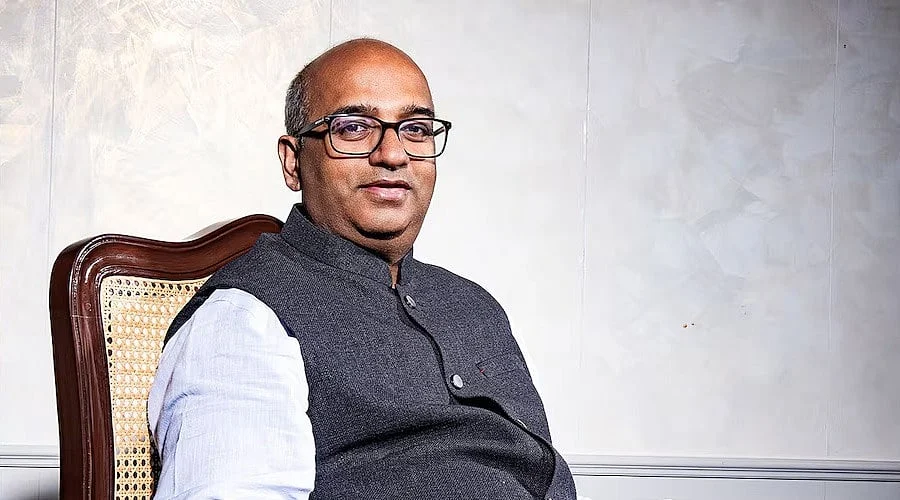
With nearly thirty years inside India’s bureaucratic apparatus, Abhishek Singh finds his career at a unique crossroads. After building the nation’s most ambitious artificial intelligence initiative entirely from the ground up, he transitioned to rescue a struggling examination agency. Few civil servants in India have pivoted between such technically rigorous and politically delicate roles in such rapid succession.
Early Years and Education
A member of the 1995 Indian Administrative Service batch assigned to the Nagaland cadre, Singh graduated from IIT Kanpur with a mechanical engineering degree in 1992. He later attended the Harvard Kennedy School of Government as a Mason Fellow in 2013, earning a Master’s in Public Administration. This combination of engineering training and public policy studies heavily influenced his future endeavors in technology governance.
His early postings at the district level provided firsthand experience with poverty eradication efforts and the delivery of educational and health services. Furthermore, he worked closely with ministers, a state governor, and a chief minister on policy development, laying the administrative foundation that would later benefit his work in digital governance.
Building Digital India
From 2014 to 2017, Singh acted as Executive Director of the Food Corporation of India, managing information technology, storage, and engineering operations. In addition, he assumed the roles of Chief Vigilance Officer and Executive Director (North Zone) at FCI.
His transition into technology-centric governance occurred via the Ministry of Electronics and Information Technology (MeitY). Over the years, he took the helm of several key digital platforms:
-
Chief Executive Officer of MyGov, the official citizen engagement portal
-
Chief Executive Officer of the National e-Governance Division
-
Chief Executive Officer of the Digital India Corporation
-
Director General of the National Informatics Centre, which serves as the technological core for central government agencies
Through these positions, Singh aided major digital projects including CoWIN, DigiLocker, and DIKSHA. Additionally, he served as Chief Executive Officer of Karmayogi Bharat under the Department of Personnel and Training, an enterprise dedicated to civil service capacity building.
As Additional Secretary at MeitY, his purview broadened to encompass cybersecurity, artificial intelligence, digital skilling, and emerging technologies, placing him squarely at the heart of India’s technology policy framework.
Leading the IndiaAI Mission
Singh’s most high-profile appointment was as Chief Executive Officer of the IndiaAI Mission, a government program greenlit by the Union Cabinet in March 2024 with a budget exceeding Rs 10,372 crore. The mission seeks to cultivate public compute resources, back homegrown foundation models, fund AI startups, generate accessible datasets, and set up guidelines for responsible AI utilization.
Under his guidance, IndiaAI established a framework encompassing compute access, training initiatives, datasets, and ethical standards for AI deployment, which was detailed in November 2024. Singh also represented MeitY at the India AI Impact Summit in February, where top officials promoted India’s AI goals through international outreach and policy statements. That gathering encountered its own challenges, such as logistical hurdles and a controversy surrounding a robotic dog that was showcased as a domestic creation despite reportedly being manufactured in China.
A Sudden Reassignment
At the close of March 2026, the Appointments Committee of the Cabinet greenlit a major bureaucratic overhaul impacting upwards of 40 senior officials, with Singh prominently featured. Relieved of his duties at MeitY, he was designated Director General of the National Testing Agency, moving his reporting authority to the Ministry of Education.
The National Testing Agency administers vital nationwide entrance tests such as NEET and JEE. It has faced continuous backlash following the NEET-UG 2024 paper leak scandal, which sparked student demonstrations, Supreme Court petitions, and a CBI inquiry. The organization has also faced scrutiny over delayed exams and technical malfunctions. His predecessor at the NTA, Subodh Kumar Singh, was ousted in 2024 amid accusations linked to the NEET irregularities.
Singh steps into the role at a time when the organization requires a restoration of credibility rather than a mere technical upgrade. While his background in large-scale digital architectures may help resolve some of the technical flaws that have hampered exam administration, winning back public confidence in the testing system will require far more than just systems fixes.
When his appointment was announced, the administration had not yet named a replacement for his MeitY duties, which included heading the IndiaAI Mission and serving as Director General of the NIC.
Looking Ahead
Singh’s professional trajectory reflects a clear trend: he is continually tasked with guiding organizations through complex, high-stakes trials, whether constructing brand-new digital architecture or steering an agency out of a reputation crisis. His career spanning roughly thirty years covers grassroots administration, e-governance systems, and one of the nation’s premier technology-policy ventures.
His move to the National Testing Agency signifies a departure from pure technology tasks toward an assignment rooted in exam security and institutional trust. The manner in which he applies his administrative expertise to this new challenge will dictate whether the agency can move beyond its recent troubles and regain the trust of the millions of students who rely on it annually.