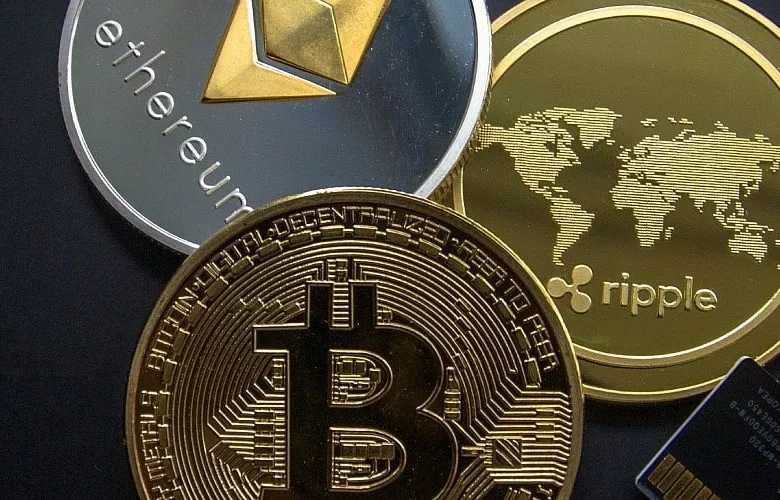
Ethereum, Solana, XRP, BNB, and Apeing are approaching 2027 from vastly different places in the market. Four already feature established, large-scale blockchain networks, whereas Apeing remains in an active presale at a price of USD 0.0006.
While Ethereum anchors smart-contract operations, Solana concentrates on high-speed infrastructure, XRP is built for rapid payments, and BNB powers the broader BNB Chain ecosystem, Apeing provides an early-stage token model developed on Ethereum.
This mix gives market participants several lenses through which to view the next crypto-to-explode narrative. At the same time, each digital asset comes with its own technological framework, market capitalization, level of maturity, and hypothetical 2027 price outlook.
Apeing Presale Brings an Early-Stage Market Scenario
Apeing functions as an Ethereum-based ERC-20 token, positioning USD APEING as an entertainment and utility asset designed for participation. Its total supply is capped at a fixed 16.75 billion tokens.
The presale has been allocated 40% of that supply, amounting to 6.7 billion tokens. Project information indicates that each stage lasts for one week or until its specific token allotment sells out.
Stage 6, known as Fearless FOMO, currently prices USD APEING at USD 0.0006. According to project documentation, the presale spans 33 stages in total and has successfully raised upward of USD 110,000.
The same data shows that buyers have acquired more than 479 million tokens. Furthermore, Apeing outlines a projected listing price of USD 0.01, though this figure serves as an internal target rather than a guaranteed future market valuation.
Based on the Stage 6 pricing, a notional USD 5,000 investment would yield roughly 8.33 million tokens before accounting for transaction fees. Valued at the targeted USD 0.01 listing price, those tokens would hold a mathematical worth of approximately USD 83,333.
This calculation purely highlights the mathematical gap between the stated presale and listing prices; it does not constitute a financial forecast or a guaranteed return.
Project documentation also notes that the USD APEING smart contract has undergone verification and auditing on Ethereum. Utilizing the ERC-20 standard ensures the token’s compatibility with standard Ethereum-compatible wallets and infrastructure.
Additionally, Apeing reports that liquidity amounting to 10% of the aggregate supply will remain locked for 18 months. Its hypothetical 2027 valuation spans from USD 0.005 to USD 0.015, contingent upon strong growth in community adoption, exchange listings, liquidity, and overall ecosystem expansion.
Ethereum and Solana Represent Major Blockchain Infrastructure
Ethereum continues to stand as a premier programmable blockchain network, facilitating smart contracts, decentralized applications (dApps), decentralized finance (DeFi) protocols, tokenized assets, and various other utilities.
CoinGecko data puts ETH at approximately USD 2,700, boasting a market capitalization exceeding USD 326 billion. Its historical peak reached roughly USD 4,946.
Following The Merge, which transformed its consensus mechanism, Ethereum now operates on a Proof-of-Stake model. Its massive scale also positions ETH as a foundational benchmark for projects utilizing the ERC-20 token standard.
A conceptual 2027 price projection positions Ethereum between USD 4,500 and USD 7,500. Achieving such levels would necessitate heightened demand and broader user activity across Ethereum-centric applications.
Solana takes an alternative path to blockchain architecture. The Layer 1 network prioritizes high transaction throughput and minimal fees while supporting decentralized finance, non-fungible tokens, digital payments, and dApps.
Market statistics from CoinGecko value SOL near USD 116, with a market cap of roughly USD 68 billion. Its all-time high surpassed USD 293.
A projected 2027 price window between USD 250 and USD 450 would bring SOL near or past its previous record highs, an outcome reliant on sustained ecosystem engagement and increased network utilization.
Also Read: Brazil’s CSD BR Puts Fund Records on XRP Ledger
XRP and BNB Add Payments and Ecosystem Utility
XRP functions as the native cryptocurrency of the XRP Ledger, a Layer 1 blockchain optimized for rapid settlement and asset transfer rather than conventional mining. Current market metrics place XRP near USD 1.50 with a market capitalization of roughly USD 94 billion, while its all-time high sits at USD 3.65.
The XRP Ledger relies on a consensus protocol built to execute transactions in a matter of seconds, giving XRP a distinct focus on payments compared to programmable smart-contract networks like Ethereum.
A hypothetical 2027 range of USD 3 to USD 6 would propel XRP toward or past its historical peak, though this remains purely illustrative rather than a predictive forecast. Meanwhile, BNB drives transaction fees, services, and operational activity throughout the BNB Chain ecosystem, directly linking its utility to decentralized applications and blockchain infrastructure.
CoinGecko metrics place BNB around USD 780, with a market cap surpassing USD 103 billion and an all-time peak near USD 1,370.
BNB incorporates a programmed token-burning mechanism designed to systematically reduce its circulating supply according to its tokenomic structure. Its model-based 2027 outlook projects a trading range between USD 1,200 and USD 1,800, which would require renewed market momentum and ongoing expansion within the BNB Chain network.