7 Easy Networking Questions to Help IT Support Beginners
Discover seven essential networking questions and concepts for IT support beginners, covering IP addresses, subnet masks, MAC addresses, routers, and firewalls.
IP Address: An IP address serves as a logical identifier for a device or network interface, allowing systems to recognize each other and share data across networks. These addresses can be configured either manually or automatically, and they remain vital for data exchange across both local networks and the global internet.
IPv4 And IPv6: While IPv4 relies on 32-bit addresses, IPv6 employs 128-bit addresses to offer a vastly expanded address capacity that accommodates the soaring volume of online devices. The two protocols contrast in their address structures, total capacity, setup approaches, and particular network communication traits utilized today.
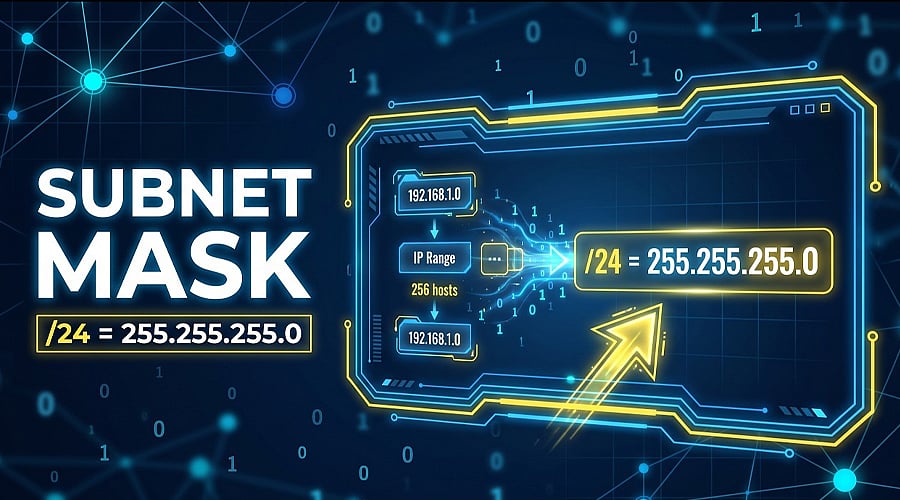
Subnet Mask: A subnet mask distinguishes the network portion of an IPv4 address from the host portion. This tool assists devices in figuring out if a target destination sits on the same local network or if traffic must go through a router to reach an external network.
MAC Address: Functioning at the data-link layer, a MAC address acts as a distinct identifier linked to a network interface to facilitate communication inside local networks. Although network hardware typically comes with pre-assigned MAC addresses, certain operating systems and hardware configurations allow users to alter or randomize them.
Router: A router links separate IP networks together and passes data packets between them. By looking at destination IP addresses and consulting routing data, it decides the subsequent path for each packet. Routers frequently bridge local networks with broader environments like the internet while regulating traffic flow across linked networks.
OSI Model: The OSI model provides a seven-tier structure for conceptualizing network communication processes. Comprising the Physical, Data Link, Network, Transport, Session, Presentation, and Application layers, this framework breaks down specific networking tasks to aid professionals in designing systems, diagnosing issues, and understanding inter-system communication.
Firewall: Operating as hardware, software, or a mix of both, a firewall inspects network traffic according to established security guidelines. It grants or denies incoming and outgoing connections to safeguard networks and devices from unauthorized entry, undesirable traffic, and specific network vulnerabilities.
Join our WhatsApp Channel to get the latest news, exclusives and videos on WhatsApp