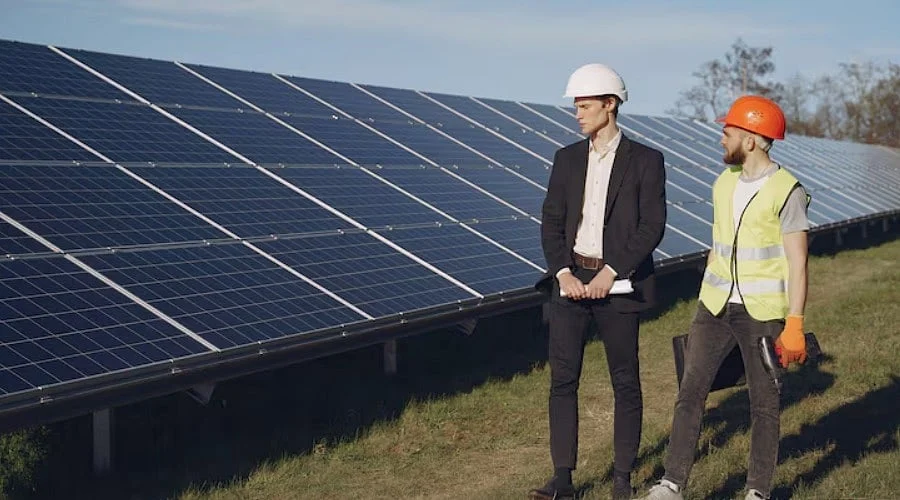
How Community Solar Works
A community solar initiative utilizes a larger array designed to serve multiple customers. This array feeds electricity into the utility grid, and the utility tracks the assigned share of each subscriber through billing records. Individuals looking into community solar in Oregon can evaluate project terms, eligibility criteria, billing methods, and cancellation policies prior to signing up. This approach decouples solar access from property ownership and bypasses the need for rooftop construction.
Electricity from the solar array does not flow exclusively to a single subscriber’s apartment. Instead, the installation delivers power to the shared grid, supplying homes and businesses tied to the utility network. The subscriber’s account is then issued a credit based on their allocated portion of solar generation and the specific billing guidelines of the program.
Why Renters Gain Access
Renters achieve access because the installation is located away from their residences. Property owners are not required to authorize panels, reinforce roofs, or oversee maintenance. The solar farm remains linked to the grid, while subscribers reap financial rewards via their utility accounts. This setup is ideal for apartment dwellers and people who transition between rental properties.
Community solar initiatives also remove the necessity of purchasing major equipment. Subscribers do not need to acquire solar panels, inverters, batteries, or mounting hardware. They likewise bypass rooftop setups, ongoing upkeep, and upfront costs, although fees and payment structures differ by program. A month-to-month arrangement can grant renters greater flexibility to cancel their subscriptions when housing or household expenses shift, though terms and conditions will apply.
Furthermore, community solar accommodates homes featuring shaded roofs or incompatible building layouts. Renters do not need to evaluate roof orientation, structural integrity, panel positioning, or equipment access, as those considerations apply solely to the shared facility rather than the subscriber’s apartment.
How Savings Appear on a Bill
Community solar savings typically materialize via the utility billing procedure instead of through a separate power line. The facility generates electricity, and the utility calculates the subscriber’s designated share following the program’s billing guidelines. The subscriber subsequently pays the utility for delivered electricity while receiving the designated solar credit or savings, with exact computations varying by project and utility provider.
Prior to registering, renters must verify how savings are computed and where they manifest. The program should explicitly detail how the solar credit applies to the statement, how enrollment is reflected in account documentation, and whether any separate payments are mandatory. Transparent terms eliminate uncertainty.
Billing timelines also warrant close examination. Generally, subscription credits commence following enrollment, project generation, or utility processing. Nonetheless, individuals should review program guidelines for timeline specifics and procedures if output fluctuates during a billing cycle.
What to Check Before Enrolling
A thorough assessment begins with eligibility. Certain initiatives restrict participation based on service territories, utility accounts, or available subscription capacities. Renters ought to verify that their apartment’s utility account qualifies and that the account holder possesses the authority to approve registration. Subscribers should also examine cancellation guidelines, transfer procedures, and the expected timeframe for the initial bill credit.
Relocating demands separate verification. Renters should inquire whether their subscription can be:
-
transferred to another eligible address,
-
placed on hold during a vacancy, or
-
terminated without incurring extra fees or long-term commitments.
Even if a program permits month-to-month participation, renters need to confirm the cancellation and transfer protocols prior to moving.
Account holders should retain documentation of the enrollment terms and their first several statements. Comparing anticipated credits with the figures listed on bills can help identify processing delays or misunderstandings early on. If a landlord is responsible for paying the utility bill, renters should ascertain who manages the account and receives the credit.
A Practical Path to Clean Energy
Community solar offers renters a direct method to support renewable power production without owning or managing a building’s roof. This model bridges a shared solar farm with standard utility service, leaving a household’s routine electricity usage unaltered. Subscribers continue utilizing the grid as normal while connecting their accounts to a local project via the program’s billing structure.
This framework also disconnects participation from homeownership. Renters can support solar installations without setting up equipment, requesting construction work, or enacting permanent property modifications. That distinction renders community solar valuable for apartment residents, short-term tenants, and occupants whose buildings cannot support panels.
Closing Note
Renters do not require a private roof to engage in local solar production. A community solar subscription links an eligible utility account to a shared facility, leaves equipment maintenance to the project operators, and delivers credits or savings through billing statements. Before signing up, renters should check service-area qualifications, credit computations, cancellation policies, transfer alternatives, and account ownership. Reviewing these elements enables renters to select appropriate programs and identify which utility accounts qualify for participation.