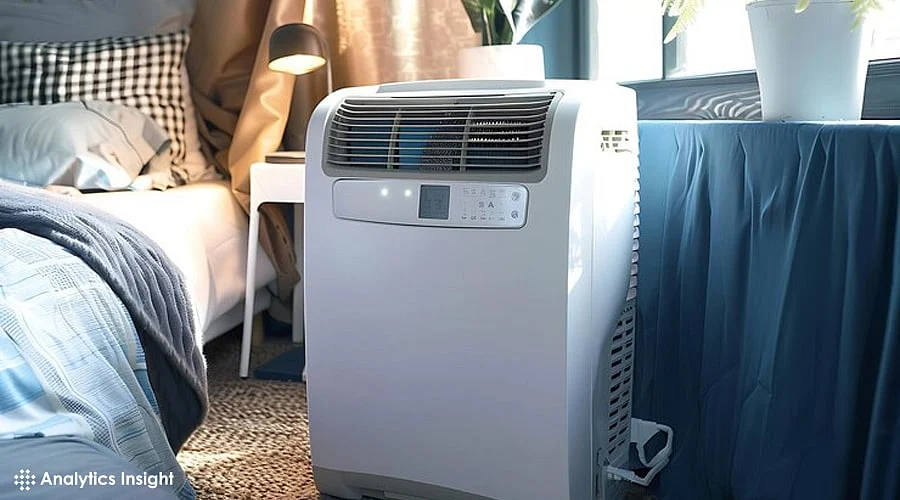
Summer is officially here, and household fans may no longer suffice as temperatures climb. Portable air conditioners have emerged as a preferred solution, particularly for occupants of compact apartments, rental properties, or living areas where mounting a traditional AC unit proves challenging or costly.
Selecting the ideal portable AC, however, involves more than grabbing the least expensive or most aesthetically pleasing option. Elements like room dimensions, cooling power, and setup prerequisites directly influence the device’s efficacy. Here are five crucial factors to evaluate prior to purchasing.
Room Size Determines Cooling Power
Every portable air conditioner features a cooling output rated in BTUs, or British Thermal Units. Generally, a higher BTU number indicates capability for a more expansive area. Nonetheless, purchasing the most robust unit available is rarely the ideal approach.
A portable AC boasting excessive cooling capacity for a small space will chill the room too rapidly, causing the compressor to cycle on and off constantly. This erratic behavior leads to uneven temperatures and leaves the room feeling damp or clammy.
Conversely, an underpowered air conditioner must labor harder to reach the target temperature and frequently struggles to cool the space properly.
Prior to purchase, measure the room dimensions and cross-reference them with the manufacturer’s suggested coverage guidelines. Selecting a portable AC tailored to the specific room size ensures steady cooling while preventing wasted electricity.
Here’s a rough guide:
-
For rooms up to 150 sq. ft. (think small bedrooms or hostel rooms): 5,000 to 7,000 BTUs
-
For rooms 150 to 300 sq. ft. (average-size bedrooms): 8,000 to 10,000 BTUs
-
For larger spaces, 300 to 500 sq. ft.: 12,000 to 14,000 BTUs
Know the Hose Setup: Single vs Dual
Portable ACs pull in hot air and push it out of the room through a hose. Most budget models come with a single hose, but these can be less efficient. They tend to pull warm air from other parts of the house, making the room hot again faster. Dual-hose models have one hose to draw in outside air and another to expel the hot air.
They cool down faster and don’t interfere with indoor air pressure. They tend to be more expensive, but the cooling is more stable and smoother. This is a good option in larger rooms or for extended daily use.
Energy Use Can Sneak Up
Portable ACs can be power-hungry if you choose the wrong unit. Energy labels, such as the BEE star rating and EER (Energy Efficiency Ratio), indicate how efficiently a model uses electricity. The higher the rating, the less power it consumes for the same level of cooling.
Some newer models use inverter technology, which modulates compressor speed rather than turning it on and off repeatedly. This conserves energy and maintains the room temperature constant. An inexpensive AC that uses a large amount of electricity each month won’t remain a bargain for long.
Noise Level Makes a Big Difference
Since the entire machine sits inside the room, it’s louder than a split or window AC. Most models run between 50 and 60 decibels, about the level of a normal conversation. But during quiet hours or while studying, even that can get annoying.
Look for models that mention quiet mode or low-noise operation. Some newer machines can drop below 45 dB, which is quieter than a fan at medium speed. Not all brands advertise this clearly, so checking reviews or demo videos helps.
Also Read: Samsung AC: Latest Models, Features, Prices and What to Know Before Buying
Don’t Overlook Exhaust and Water Drainage
Portable ACs need an exhaust pipe to release hot air, which typically goes through a window or another suitable opening. Most models come with a window venting kit, but buyers should check whether it is compatible with the type of windows installed at home, particularly sliding windows.
Portable ACs also remove moisture from the air while cooling. Some models automatically evaporate this moisture, while others collect it in a tank that needs to be emptied manually. In humid cities such as Mumbai and Kolkata, models with automatic drainage or better moisture management can be more convenient for everyday use.
Smart Features are Becoming Common
Many portable AC models now come with features such as built-in Wi-Fi, app-based controls, and voice support through Alexa or Google. Some models also offer AI-powered modes that can learn cooling preferences.
These features can make everyday operation easier while helping users manage energy consumption. For instance, remote controls let users switch on the AC before they get home, so the room can start cooling in advance.
Also Read: Samsung Brings Gemini AI to Family Hub Fridge, Launches New Bespoke ACs in India
Conclusion
Portable ACs have become more convenient, smarter, and more efficient than earlier models. However, spending a little time comparing specifications before buying can make a significant difference to both cooling performance and running costs.
Matching the AC’s cooling capacity to the room, checking its noise levels, and understanding its exhaust and drainage requirements are important steps. Buyers should also consider whether the unit can be installed easily with their existing windows.
For homes where flexibility matters and permanent AC installation is difficult, portable air conditioners can offer a practical summer cooling option.