Key Takeaways –
-
Semi-automatic machines offer lower upfront costs, water flexibility, and greater manual control.
-
Fully automatic machines provide easier operation with advanced sensors, smart features, and automated wash cycles.
-
Capacity, BEE rating, motor technology, water supply, budget, and service access should guide the final choice.
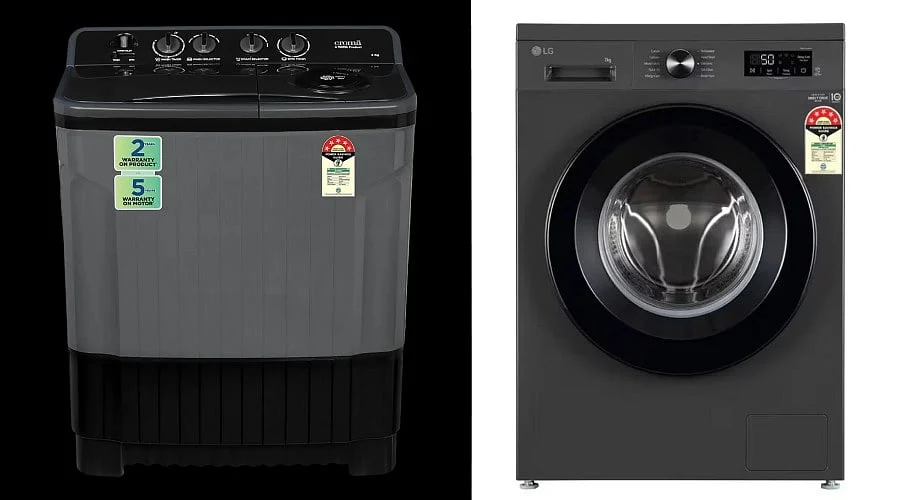
The decision between a semi-automatic and a fully automatic washing machine now extends well beyond the price tag. While both options easily manage standard clothing and family laundry loads, the day-to-day user experience differs significantly. Semi-automatic appliances grant greater oversight regarding water consumption and individual washing phases.
Conversely, fully automatic variants manage the entire cycle with minimal human intervention. Modern iterations also incorporate sensors, inverter motors, artificial intelligence capabilities, superior drying mechanisms, and connected smart controls, making the selection process much more tailored to individual household requirements.
Semi-Automatic Machines Still have a Strong Place
Semi-automatic machines remain practical choices for residences dealing with erratic water availability, low pressure, restricted plumbing configurations, or strict financial limits. These standard configurations feature separate tubs for washing and spinning. Although clothes must be moved by hand from one compartment to the other, this arrangement permits finer management over water usage and wash durations.
Furthermore, this product category has recently integrated updated engineering. On September 22, 2026, LG India debuted 15 fresh semi-automatic units ranging from 8 kg to 12 kg capacity. This lineup introduces additions like a Toughened Glass Lid, Dual Spin Shower, Roller Jet Pulsator+, Ultra Scrub Wall, and Wind Jet Dry+. Additionally, the brand intends to export its AX semi-automatic appliances to upwards of 10 countries starting in 2027.
Such developments are significant for consumers who previously dismissed semi-automatic units as rudimentary appliances devoid of innovation. Contemporary versions deliver enhanced washing efficacy, improved lint management, expedited drying, and tougher components while maintaining the straightforward two-tub layout.
Also Read – Best Semi-Automatic Washing Machines Under Rs. 15000
Fully Automatic Machines Focus on Convenience
Fully automatic machines eliminate the necessity of shifting garments between separate tubs. A single operational cycle manages filling, washing, rinsing, and spinning with minimal user direction. Top-load configurations deliver straightforward accessibility and a familiar layout, whereas front-load designs prioritize textile preservation, water conservation, and sophisticated cleaning routines.
LG guidelines position semi-automatic systems for households facing unpredictable water access, whereas its top-load selection targets effortless routine usage alongside reduced initial expenses. Front-load units concentrate predominantly on material preservation and power efficiency. Furthermore, LG highlights an 8 kg capacity as appropriate for typical four-person households, whereas residences washing heavy blankets, quilts, or window drapes may require 9 kg or larger.
For households enjoying consistent water availability alongside frequent weekly laundry requirements, fully automatic systems noticeably diminish daily labor. Consequently, the elevated acquisition cost purchases operational ease just as much as internal hardware.
AI and Sensors Change the Fully Automatic Category
The most substantial technological evolution stems from integrated sensors and software systems. Samsung’s AI Wash identifies fabric mass, texture softness, and dirt levels. The mechanism subsequently adapts water levels, detergent amounts, soaking durations, rinse lengths, and spin speeds. Samsung also facilitates AI Control via the SmartThings platform on compatible units.
Current company documentation highlights AI Ecobubble and AI Energy Mode across select appliances. AI Ecobubble modulates bubble density, cycle duration, thermal levels, and rotational velocity depending on the material class. Meanwhile, AI Energy Mode monitors electricity consumption via SmartThings, cutting energy usage by up to 70 percent on supported settings under manufacturer test parameters. Actual performance fluctuates according to the specific model, selected program, load volume, and home operating conditions.
These capabilities yield tangible benefits when a household regularly utilizes diverse washing programs. Conversely, premium functions hold lesser utility if most loads rely strictly on a standard basic cycle.
Price Still Separates the Two Categories
A recent market overview highlights this cost distinction clearly. An 8 kg LG semi-automatic appliance was listed at roughly Rs. 14,190, whereas an 8 kg LG fully automatic top-load variant was priced around Rs. 20,699. An 8 kg Godrej 5-star fully automatic top-load device was spotted near Rs. 17,490.
Front-load configurations demand higher investment across current retail listings. An 8 kg Whirlpool 5-star front-load unit was listed close to Rs. 30,691, while an 8 kg LG 5-star front-load model hovered around Rs. 39,390. Because retail pricing fluctuates due to promotional events, product updates, and vendor discounts, these figures serve as a general market snapshot rather than permanent costs.
Energy Ratings Need Close Attention
Upfront pricing alone fails to reveal the long-term expenses associated with running an appliance. The Bureau of Energy Efficiency (BEE) applies a 1-to-5 star scale to denote energy performance, with 5 stars denoting the peak level of efficiency within the framework. The BEE notes that these labels assist purchasers in evaluating power consumption alongside lifetime utility expenditures.
Consequently, an accurate evaluation should simultaneously weigh the BEE classification, volume capacity, cycle frequency, motor variety, water requirements, and maintenance costs. Paying a higher initial price becomes justifiable if routine usage yields reduced electricity and water bills, provided the concrete specifications validate that choice.
Also Read – Best Fully Automatic Washing Machines Under Rs. 40,000
The Best Fit Depends on the Home
A semi-automatic system suits living situations where water availability fluctuates, manual oversight is preferred, and acquisition funds are strictly constrained. Its simpler mechanical design also appeals to users favoring straightforward access to basic wash functions and uncomplicated repair processes.
A fully automatic top-load device is ideal for occupants seeking effortless operation without paying the premium associated with front-load equipment. Front-load units cater to households prioritizing garment care, advanced cycle selections, water preservation, and sophisticated automation.
Ultimately, the ideal selection extends far beyond the label of “automatic.” The correct washer corresponds directly to the residence’s water availability, laundry volume, physical space limits, financial plan, maintenance accessibility, and desired degree of operational control. Modern innovations grant enhanced functionality to both classifications, meaning the most effective decision begins by evaluating everyday laundry demands before reviewing specific features.
FAQs
1. Which is cheaper, semi-automatic or fully automatic?
Semi-automatic machines generally cost less upfront than fully automatic models.
2. Which type needs less manual effort?
Fully automatic machines handle washing, rinsing, and spinning without manual transfer between tubs.
3. Are semi-automatic machines suitable for homes with irregular water supply?
Yes. Their design gives greater control over water use and can suit homes with inconsistent water availability.
4. What capacity suits a family of four?
An 8 kg machine can suit most families of four, while 9 kg or more can help with bulky loads such as blankets and curtains.
5. Are AI features worth paying more for?
AI features can adjust wash settings based on load and fabric conditions, but their value depends on how often advanced programs are used.