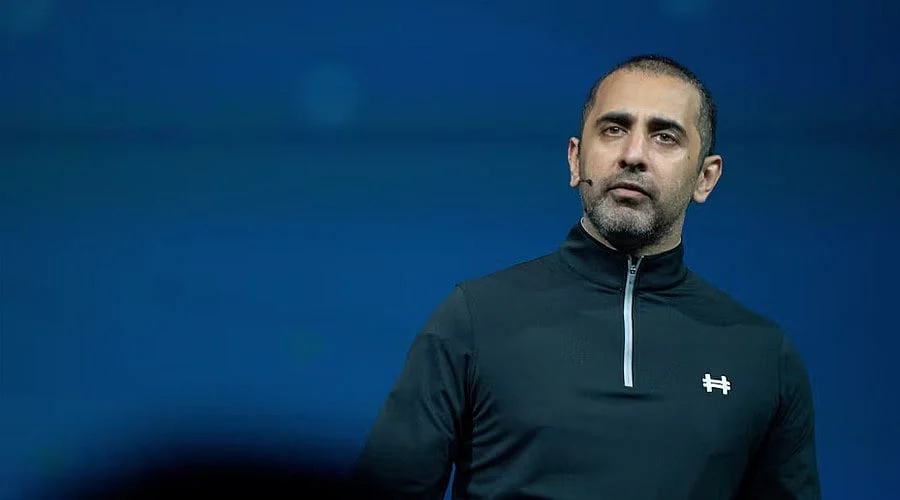
Following Balaji Srinivasan’s Network School acquisition of Farcaster from Neynar, users have raised complaints regarding account restrictions tied to content published prior to the buyout. The October 15 agreement was announced alongside Network School’s intention to rebrand the decentralized social network as the Network State Protocol and enforce a fresh set of behavioral guidelines.
Multiple participants noted they could no longer publish content via Farcaster’s primary app. These limitations emerged after older messages underwent a review process mandated by the new management on Thursday.
Farcaster Users Challenge Restrictions on Older Posts
Participants posted screenshots on X indicating their profiles had been shifted to read-only status. Several individuals pointed out that the punitive measures targeted material shared months prior to the ownership change. The exact motivations behind specific account limits remain unverified.
Kunal Gandhi, formerly the India ecosystem lead at Eigen Labs, voiced disapproval over how veteran community members were handled. “I know most of these folks. They shaped Farcaster with their quirks and wit,” he shared in a post, questioning the retroactive application of new criteria to historical discussions.
The exact quantity of restricted accounts has not been revealed by Network School. The grievances are isolated to the primary Farcaster application and do not involve stripping users of their digital identities or data residing on the foundational network.
Balaji Defends AI Moderation and Promises Appeals
Srinivasan stated his vision was to build the “Singapore of social media,” functioning as a community bound by explicit guidelines. He contended that the application ought to deter personal insults and enable discussions surrounding technology free from endless hostile interactions.
During his disclosure, Srinivasan mentioned that human moderators alongside artificial intelligence systems had scanned millions of messages. The audit focused on what he termed a “small fraction of repeat offenders” who frequently faced mutes or blocks from other members.
While conceding that the evaluation phase might yield errors, Srinivasan committed to establishing a mechanism for appeals. He likened this strategy to Salvadoran President Nayib Bukele’s anti-crime crackdown, though he offered no concrete metrics regarding how these constraints would alter user conduct on Farcaster.
Farcaster’s New Network Code Covers Past Posts
Under the fresh Network Code, offenses are categorized into digital felonies, misdemeanors, and infractions. The framework addresses threats, harassment, fraudulent schemes, and continuous personal attacks. Punishments range from warnings and suspensions to permanent bans, with policies extending to historical as well as upcoming content.
Gaining posting privileges within the official application requires users to endorse a “social smart contract,” which grants administrators the power to uphold these criteria. Individuals declining the conditions retain read-only privileges but lose the ability to publish through that specific client interface.
Nonetheless, Network School emphasized that Farcaster’s underlying architecture stays open. Account holders keep absolute control over their keys, balances, follower lists, and historical posts, enabling them to migrate to alternative clients. This aligns with the original framework of Farcaster’s decentralized social network, which emphasizes portable digital identities.
Plans are underway for an open-weight AI moderation tool alongside utilities designed to detect potential rule infractions before content goes live. Certain determinations will still rely on human oversight.
Farcaster Changes Ownership for the Second Time in 2026
In January 2026, Neynar finalized its acquisition of Farcaster from Merkle Manufactory. By August, the firm had initiated a search for a new steward to run Farcaster. The financial specifics of the recent transaction have not been made public.
Neynar co-founders Rish and Manan are stepping down, whereas remaining staff members are anticipated to transition to Network School. The handover encompasses the principal app, protocol codebases, and associated offerings.
Uncertainty remains regarding the path forward for Clanker, a token deployment mechanism previously managed by Neynar. Earlier this year, that initiative launched a Clanker ecosystem fund dedicated to backing developers and content creators.
Srinivasan aims to engage members who agree to the updated policies in digital assemblies and real-world functions. He has suggested organizing meetups linked to Network School’s upcoming footprint in Astana, Kazakhstan.
ALSO READ: Google Search Updates AI Mode, AI Overviews with More Prominent Links