Overview
-
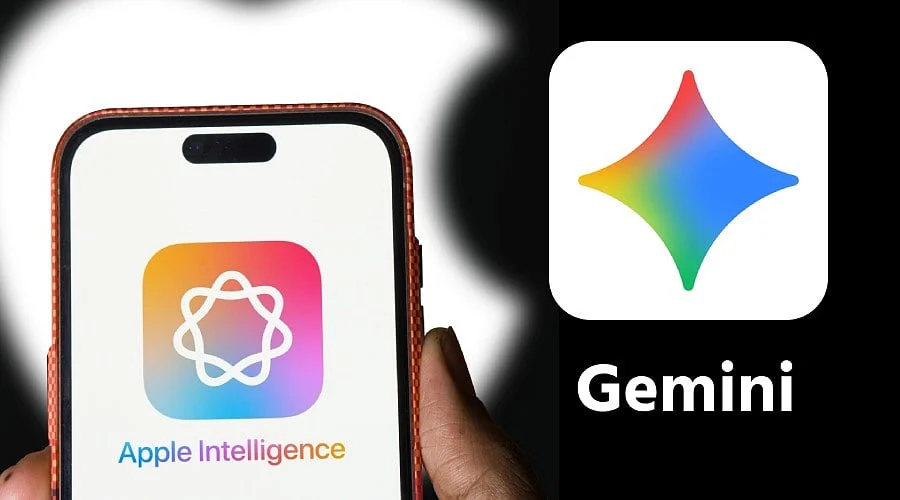
Apple Intelligence embeds artificial intelligence directly into Apple hardware, featuring dedicated writing tools, photo editing functions, and privacy-focused computing.
-
Google Gemini functions as a conversational assistant that interfaces with Google services while supporting text, voice, and visual inputs.
-
Both systems deliver tailored experiences, though specific functionality depends heavily on your device, operating system, geographic region, and configuration settings.
Apple Intelligence and Google Gemini showcase distinct philosophies regarding how artificial intelligence enters daily mobile workflows. Apple embeds its AI deeply within its native apps, system utilities, and personal routines, whereas Google has shaped Gemini as an interactive assistant linked to its expansive service network.
Yet this separation is growing less distinct. In June 2026, Apple announced a partnership with Google to incorporate Gemini technology into upcoming Apple Foundation Models, drawing the two competitors closer together.
For mobile users, the decision extends far beyond which system answers queries best. Factors like hardware integration, user tailoring, creative utilities, data security, and task execution all play a vital role.
Apple Intelligence: AI Built into Apple Ecosystem
Apple Intelligence aims to elevate standard Apple hardware by weaving AI capabilities straight into everyday apps and system operations. Rather than forcing users to open a standalone chatbot, it delivers text assistance, photo modifications, messaging support, and situational recommendations natively.
Writing Tools help people draft, review, and condense text. Within the Mail and Messages apps, AI-driven prompts assist with replies and suggest actions derived from message content. Meanwhile, Apple’s creative suite—featuring utilities like Image Playground and Clean Up—facilitates picture generation and touch-ups.
Siri also plays a central role. Upgraded Siri features are engineered for more conversational exchanges, contextual understanding, and cross-app actions. Furthermore, Visual Intelligence allows individuals to query details regarding on-screen items and surrounding objects.
Security is a major pillar for Apple. The platform blends local, on-device processing with Private Cloud Compute for heavy-duty computing tasks. Apple states that personal data handled via Private Cloud Compute is neither retained nor made accessible to the company.
Availability shifts depending on hardware, spoken language, location, and specific features, meaning consumers should verify compatibility ahead of time to ensure full access.
Google Gemini: A Conversational Assistant with Wider Reach
Google Gemini employs a direct methodology for artificial intelligence support. Users can pose questions, generate concepts, draft documents, process data, and interact with imagery utilizing text, audio, and camera feeds.
On supported Android phones, Gemini can act as the primary virtual assistant, offering contextual assistance without forcing users away from their current application. It also hooks into Google utilities such as Gmail, Maps, YouTube, and other compatible software.
Gemini Live introduces an interactive dialogue tier, letting individuals speak casually, break into responses, and ask follow-up questions. This proves especially helpful when mapping out travel itineraries, practicing for job interviews, or researching a topic hands-free.
Additionally, Google provides Personal Intelligence, which links Gemini to approved applications and programs to deliver custom responses. Google rolled out this capability in India in April 2026, enabling qualified users to connect services like Gmail, Google Photos, YouTube, and Search, subject to account settings and eligibility.
Gemini is not confined exclusively to Google devices. The software runs on supported Android units and iPhones, though native system integration and permissible actions vary by platform.
Also Read: Apple Acquires Samplab to Enhance AI Music Editing
Smartphone Integration: iPhone Vs Android
The core divergence between these ecosystems centers on how artificial intelligence merges with the phone experience.
Apple Intelligence remains tightly bound to Apple’s proprietary hardware and software. Its advantage rests on injecting AI straight into daily routines like composing notes, messaging, taking pictures, and utilizing Siri, letting people leverage these tools without launching a separate application.
Conversely, Google positions Gemini at the heart of its technical ecosystem. On supported Android hardware, it can interpret voice commands, analyze displayed content, and interact with connected software. Its ties to Google’s productivity and information networks make it particularly powerful for heavy users of Gmail, Google Maps, Google Drive, and YouTube.
Both environments continue to improve their contextual awareness and cross-app functionality, though the user experience ultimately relies on the specific hardware, operating system, compatible applications, and local availability.
Also Read: Apple’s ‘Pro and Tell’ Teaser has Mac Fans Watching October 28
Privacy and Personalization: Two Different Priorities
Data protection remains a critical factor when selecting an AI utility.
Apple champions local processing alongside Private Cloud Compute, which manages demanding workloads while restricting access to personal information. Google, on the other hand, lets users dictate which supported apps link to Gemini for tailored assistance. Connected applications can be unlinked, and certain capabilities demand specific activity permissions or active subscriptions.
Individuals should always inspect the privacy configurations on either platform before activating tools that interact with personal messages, photographs, or other confidential records.
Apple Intelligence Vs Google Gemini: Which One Should You Choose?
Neither system stands out as a universal winner. Apple Intelligence makes sense if you prefer a seamless experience across Apple hardware, complete with native AI tools and a strong focus on data security.
Google Gemini better fits those who desire an interactive conversational partner, deeper integration with Google tools, and versatile interaction methods across text, images, and audio.
The competitive landscape is shifting as well. Apple’s joint effort with Google regarding next-gen AI models proves that their respective strategies are no longer entirely distinct.
Ultimately, the superior choice hinges on the phone you carry, your preferred applications, and your comfort level regarding the data you share with an AI assistant. As both corporations scale up their feature sets, practical day-to-day utility may outweigh raw model statistics.
FAQs
1. What is the main difference between Apple Intelligence and Google Gemini?
Apple Intelligence integrates AI into Apple devices, while Google Gemini offers conversational assistance and connects with Google’s services.
2. Is Apple Intelligence available on all iPhones?
No, Apple Intelligence requires compatible Apple devices, supported software versions, languages and regions to access its features.
3. Can Google Gemini be used on an iPhone?
Yes, Google Gemini is available on compatible iPhones through its app, although system-level integration differs from Android devices.
4. Which AI assistant offers better privacy?
Apple emphasises on-device processing and Private Cloud Compute, while Google provides connected-app controls and personalisation settings.
5. Which is better, Apple Intelligence or Google Gemini?
Apple Intelligence suits Apple users seeking integrated features, while Gemini benefits users who prefer conversational AI and Google services.