Ahmedabad: Even with a sought-after menu, consistent crowds, and devoted patrons, an eating establishment can still find it difficult to turn a profit. Hidden behind many hurdles faced by venue operators are unseen operational troubles, such as food waste, inventory leakage, unmonitored promotions, and a hazy grasp of the exact preparation costs for individual plates.
As the food service sector grows progressively tech-centric, proprietors are focusing more heavily on the data behind every ticket. Sales volume is vital, yet tracking where funds disappear between purchasing raw supplies and plating a meal is equally essential for business survival.
“Most restaurants don’t fail because nobody came. They fail because nobody counted.”
This issue frequently starts with stockroom management. Eateries process vast amounts of perishable goods daily, making waste an inevitable reality. Without precise monitoring, though, the gap between anticipated and real usage stays hard to pinpoint.
To a proprietor, a few extra kilograms of supplies might seem trivial on any given day. Yet, when multiplied across weeks and multiple branches, those tiny margins compound into substantial expenses.
Stock leakage introduces another hurdle. Provisions pass through multiple phases prior to reaching diners—from sourcing and storage to prep and service. Without mechanisms linking stock levels directly to sales, spotting where discrepancies happen proves difficult.
Pricing strategies present yet another blind spot. Owners usually know the retail price of an item, but figuring out its true cost means factoring in ingredients, spoilage, and fluctuating market prices. When math is not updated regularly, a top-selling dish might not actually deliver a profit.
Discounts compound these complications. Promotions serve to draw crowds, boost transaction counts, or rival competitors in a busy neighborhood. However, when price breaks are not measured against actual margins, increased sales volume can mask diminishing profits.
Such obstacles multiply as businesses scale up. A solo venue might get by using spreadsheets, paper logs, and direct oversight from the owner. Across multiple branches, keeping tabs on purchases, stock, sales, and waste grows drastically harder.
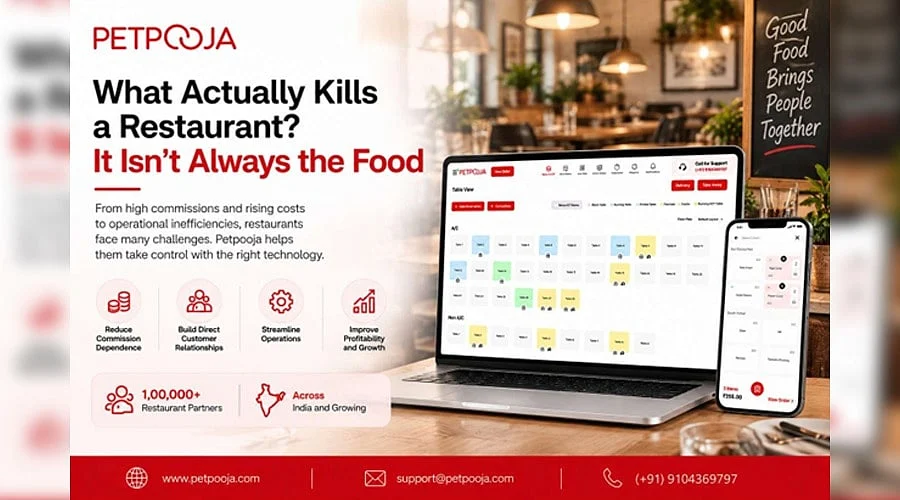
This is precisely where specialized restaurant tech steps in. Petpooja’s POSS system, utilized by upwards of 1,00,000 eateries, unifies billing, inventory, menu oversight, kitchen workflows, delivery aggregator orders, customer relationship management, and analytics.
The true value of these tools lies less in processing payments and more in the insights produced alongside them. By linking sales figures with operational workflows, operators can review which items move best, how stock flows, and where inventory mismatches demand attention.
The inclusion of over 100 analytical reports via POSS aims to grant operators deeper insight into these metrics. For a modest diner, the payoff might mean spotting a routinely discarded ingredient. For a expanding franchise, it means benchmarking performance branch-by-branch to uncover variances that would otherwise stay hidden.
Still, software does not wipe out core operational hurdles. Owners must still make critical choices regarding sourcing, portioning, menus, pricing, and labor. Digital systems simply alter the clarity available when those choices are made.
That clarity proves crucial as dining spots navigate unstable supply expenses, shifting consumer tastes, and rivalry across dine-in, takeout, and delivery platforms.
Industry digitization has historically spotlighted customer-facing gadgets like online ordering systems, delivery apps, and digital payments. Yet, the next wave of tech adoption happens behind the scenes, where better data alters kitchen economics.
The takeaway for operators is clear. A packed house does not guarantee a lucrative business. Gross revenue shows customer volume, but net earnings rely entirely on what remains after covering ingredients, waste, price breaks, and overhead expenses.
As additional venues embrace interconnected systems, viewing all metrics in one dashboard will likely become central to management. In a sector where profit margins hinge on dozens of daily operational choices, understanding the numbers is just as crucial as counting the patrons through the entrance.