Artificial intelligence has quickly shifted from an emerging technology into a core strategic priority for companies across all sectors. As organizations channel resources into AI, automation, data ecosystems, and digital platforms to boost productivity, streamline operations, and adapt to evolving customer demands, a pivotal question persists: Are these expenditures truly delivering measurable business value?
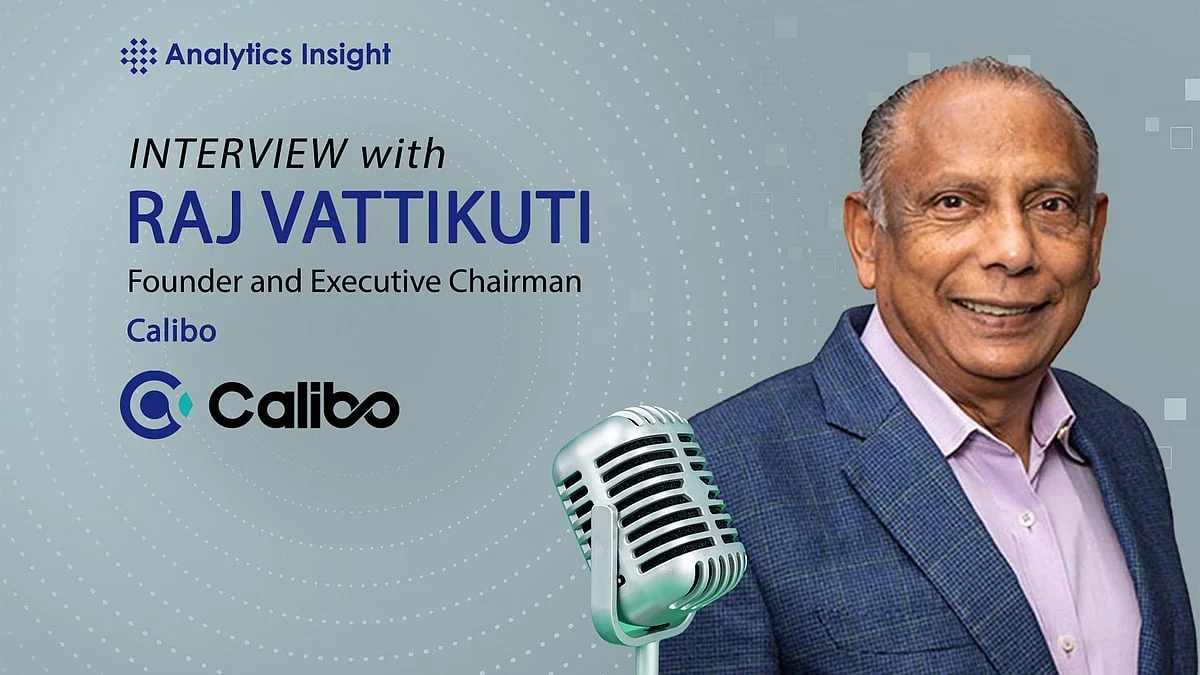
During a recent episode of the Analytics Insight Podcast, host Priya Dialani sat down with Calibo founder and executive chairman Raj Vattikuti—a leader with over forty years of expertise in technology and healthcare entrepreneurship. Below are the primary excerpts from their conversation:
What is your Vision for How Businesses Should Innovate Today?
Having spent more than four decades working in technology and healthcare, I have seen enterprises of different sizes navigate multiple waves of technological transformation. Businesses need to innovate consistently to achieve growth and improve operational efficiency. However, innovation becomes difficult when business teams are not actively involved in technology initiatives or do not take ownership of the outcomes.
What separates organizations that are simply adopting AI from those using it to create meaningful business innovation?
AI is a powerful tool, but organizations must establish the right structure around its implementation. Human involvement and business ownership are essential because the people working closest to business operations understand the challenges, requirements and decisions that determine whether an AI solution will be useful.
Over the years, enterprises have accumulated data from numerous sources, along with multiple analytical tools and complex systems. Despite having access to substantial information, business teams often struggle to understand the data and use it to make better decisions. Ultimately, AI maturity should not be measured by the number of tools an organization deploys. It should be evaluated by whether those tools improve decision-making, strengthen business capabilities and generate meaningful outcomes.
How should business leaders identify AI use cases that can genuinely improve productivity, revenue and operational efficiency?
Enterprises have numerous opportunities to apply AI across customer service, marketing, finance, supply chains and internal productivity. However, the availability of hundreds of potential use cases does not mean that every opportunity deserves investment.
Looking ahead, I see an opportunity to involve a much larger number of young professionals in business innovation. In India, we hope that over the next four to five years, between 10 million and 12 million graduates could potentially participate in these activities. They could help businesses identify new opportunities, simplify operations and build capabilities for sustained growth. However, the priority must remain the business outcome rather than the technology itself.
How can organizations balance rapid AI innovation with security, governance and compliance?
The pressure to adopt AI must be balanced with the need to protect data, maintain accountability and manage risk. Security and compliance concerns can also slow innovation. The objective is to make innovation and governance complementary rather than competing priorities. By simplifying engineering, establishing clear ownership and integrating security and compliance into development, organizations can create a more structured path from experimentation to enterprise deployment.
How can enterprises make business teams the owners of AI-driven innovation?
Business ownership must extend beyond senior leadership. The people who understand day-to-day operations should participate directly in identifying opportunities, developing relevant data products and evaluating the outcomes of AI initiatives.
When business teams take ownership of the outcomes, AI becomes more than a technology investment. It becomes a capability that helps organizations improve their operations, respond to changing requirements and identify new opportunities for growth.
What role will data products play in the future of enterprise AI?
Data products are central to Calibo’s approach because they connect information from different sources with specific business requirements. Instead of expecting business teams to navigate complicated datasets and analytical systems, organizations can develop relevant information assets designed to support clearly defined use cases.
When these conditions are established, data products can form the foundation for AI-driven intelligence, machine learning applications and more advanced knowledge systems. Organizations can then reuse these assets across relevant workflows rather than repeatedly building similar solutions.
How does Calibo’s business innovation methodology help enterprises move from experimentation to production?
Calibo was developed around the idea that business teams need a dedicated environment in which they can experiment, work with relevant data and develop AI-enabled solutions. Its methodology focuses on connecting business requirements with data products, AI capabilities and engineering practices. As AI capabilities become more widely available, the differentiating factor will increasingly be how effectively enterprises combine those capabilities with trusted data, business expertise and disciplined execution.
Listen to the full discussion on the Analytics Insight Podcast.