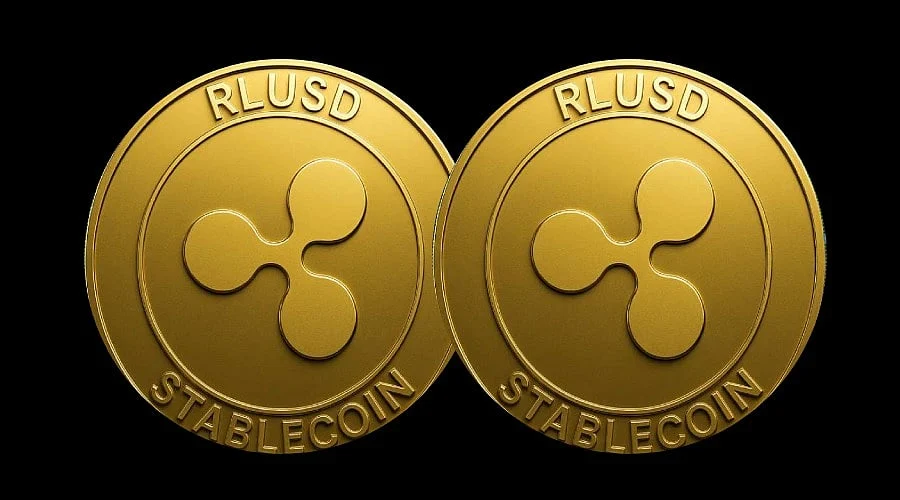
Ripple’s RLUSD stablecoin is extending its reach into traditional finance via new brokerage, wallet infrastructure, and banking alliances. Recent collaborations involving Privy, DriveWealth, and Standard Chartered underscore escalating institutional enthusiasm for blockchain-powered settlement and payments.
Data from CoinGecko indicates that the market capitalization of RLUSD climbed to roughly USD 2.42 billion by October 19, 2026, marking an increase of nearly 65% from its USD 1.46 billion valuation in early August.
RLUSD Market Capitalization and Reserve Coverage
Introduced in December 2024, RLUSD is structured to hold a USD 1 peg backed by dollar-denominated assets. Ripple’s September transparency report noted that roughly USD 2.409 billion of circulating RLUSD was backed by USD 2.5315 billion in reserves, translating to a coverage ratio of nearly 105%.
New York regulatory oversight governs the stablecoin’s issuer, Standard Custody & Trust Company. While monthly reserve attestations offer transparency, they do not remove counterparty, operational, or liquidity risks.
Standard Chartered Introduces Institutional RLUSD Custody
Through its Dubai International Financial Centre branch, Standard Chartered rolled out institutional custody solutions for XRP Ledger-issued RLUSD on October 12. Furthermore, the bank revealed joint plans with LMAX Group and Ripple to incorporate RLUSD into institutional trading collateral frameworks.
This proposed collateral-mirroring framework would let eligible participants leverage collateral worth without moving the underlying tokens straight to trading platforms. That said, this collateral integration remains contingent on regulatory clearances, testing, and final documentation.
Privy Enables Programmable RLUSD Wallets
Unveiled on October 13, Ripple’s collaboration with Stripe-owned Privy brings programmable wallet capabilities to the XRP Ledger. This enables developers to embed wallets that accommodate RLUSD, XRP, and other network tokens into financial software.
Additionally, the setup supports server-side wallets tailored for artificial intelligence agent commerce and automated transfers, which could broaden the payment use cases for RLUSD. However, this announcement does not guarantee confirmed adoption metrics or specific transaction volumes.
DriveWealth Plans RLUSD Settlement Integration
DriveWealth entered into an agreement with Ripple on October 14 focused on digital asset custody, cross-border payments, and stablecoin settlement.
The brokerage infrastructure firm intends to launch this settlement integration in Europe prior to evaluating a potential rollout in the United States. Ultimately, RLUSD may assist institutional users in funding collateral accounts and converting stablecoins to cash more swiftly than traditional bank wires.
Does RLUSD Growth Benefit XRP?
XRP and RLUSD serve distinct purposes. While XRP functions as a market-driven cryptocurrency, RLUSD is engineered for dollar stability. Although rising RLUSD usage may boost activity on the XRP Ledger itself, it does not inherently trigger demand to buy XRP or guarantee price gains.
Final Thoughts
The broader institutional partnerships secured by RLUSD enhance its prospective utility across payment, custody, and settlement operations. Even so, holders should track actual transaction uptake, redemption terms, network compatibility, and reserve attestations instead of relying exclusively on partnership news.
Also Read: XRP Ledger Security Explained: Supply-Cap Risks, Vulnerability Disclosure, and Network Patches
FAQs:
1. What is Ripple’s RLUSD stablecoin, and how does it work?
RLUSD is a US dollar-backed stablecoin engineered to preserve a valuation close to USD 1 using reserves composed of cash and highly liquid instruments. It facilitates digital transfers, trading, payments, and institutional settlement across supported blockchain ecosystems.
2. Why is Standard Chartered’s RLUSD custody service important?
In October 2026, Standard Chartered rolled out institutional custody for XRP Ledger-based RLUSD via its Dubai International Financial Centre branch. This permits qualified institutional clients to store RLUSD through a recognized banking institution rather than depending entirely on specialized custodians or digital asset exchanges.
3. How does the Privy partnership benefit RLUSD and XRP Ledger users?
By teaming up with Stripe-owned Privy, Ripple allows developers to build programmable wallets that handle RLUSD, XRP, and other XRP Ledger tokens. This technology can facilitate automated transfers, embedded payments, and AI-driven commerce, though broader market adoption is yet to be proven.
4. How will DriveWealth use RLUSD for financial settlement?
DriveWealth intends to embed RLUSD within its brokerage framework to handle digital asset custody, cross-border payments, and stablecoin settlement. Starting in Europe with an eye toward future US expansion, the partnership seeks to boost settlement speed and collateral funding efficiency.
5. Will growing RLUSD adoption increase the price of XRP?
Because RLUSD is a stablecoin tied to the dollar and XRP is a separate floating-price cryptocurrency, the expansion of RLUSD does not automatically drive up XRP’s price. Nevertheless, increased institutional deployment of RLUSD on the XRP Ledger could elevate ecosystem participation, liquidity, and network activity, which may indirectly favor XRP.