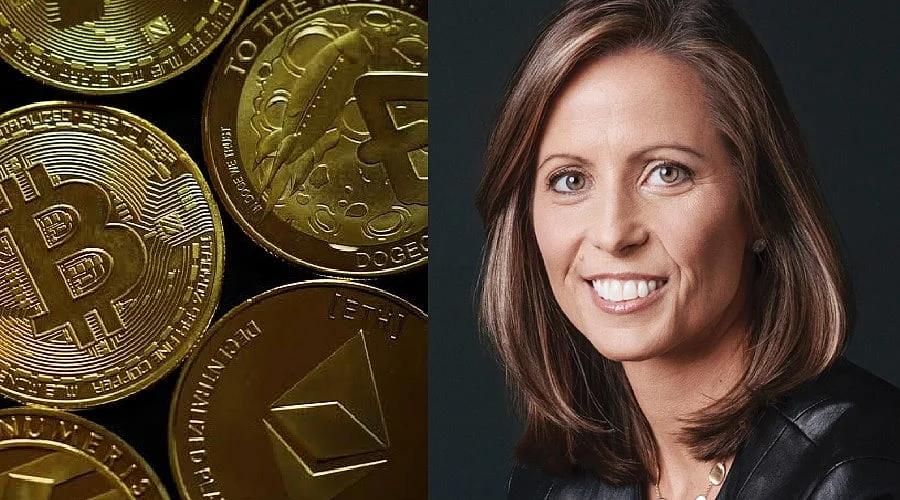
At the recent TOKEN2049 conference in Singapore, NASDAQ CEO Adena Friedman stated that tokenization has the potential to unlock tens of billions of dollars currently trapped as collateral throughout the worldwide financial system, which could significantly increase market liquidity and efficiency.
During a conversation with CNBC’s Joanna Ossinger, Friedman detailed how tokenizing assets like market funds, equities, and US Treasuries can simplify the utilization and transfer of collateral.
Tokenization Could Improve Capital Flow
Through tokenization, traditional financial assets—such as bonds and stocks—are converted into digital tokens that operate and transfer via blockchain technology.
“If you tokenize all those instruments along with the flow of money, then the collateral becomes very fluid,” Friedman remarked.
She mentioned that institutional enthusiasm for tokenization has grown over the last year, spurred in part by the US passage of the Genius Act, which created a formal regulatory structure for stablecoins.
“If we can tokenize money, then we can tokenize the flow of capital,” she further added.
Additionally, Friedman pointed out that this rising institutional focus is meeting retail investors’ growing appetite for around-the-clock trading, noting that the retail sector has led this charge by roughly a decade.
Also Read: US Stock Market: Dow, S&P 500 and NASDAQ Futures Fall as Oil Prices Jump Nearly 5%
24/7 Trading Requires Real-Time Risk Management
Transitioning financial markets to a 24-hour, seven-day-a-week model demands extensive, industry-wide adaptations. Friedman pointed out that upgrading exchange infrastructure is actually the simplest component of this shift.
Traditionally, financial institutions rely on market closures to run system updates and handle risk management. A continuous trading schedule necessitates that risk and collateral procedures function seamlessly without pause.
“Everything has to be real time all the time,” she noted.
To assist with this transition, artificial intelligence will be a crucial tool. NASDAQ has introduced digital agents inside its risk management framework that currently offer advisory recommendations, which banks could later grant authority to execute independently.
“AI is critical for 24/7,” Friedman said.
Tokenization Could Expand Market Access
Kraken co-CEO Arjun Sethi told CNBC that international firms are increasingly looking into tokenization as a pathway to gain wider entry into American capital markets.
Sethi shared an example of a business pulling in about USD 25 million in revenue that was evaluating methods to reach capital markets, alongside larger global companies interested in tokenization and US public offerings.
At the same time, Friedman issued a warning that continuous trading might not be appropriate for every single asset type.
“Not every asset is liquid enough to support a 24/7 environment,” she added.
The NASDAQ leader concluded that enhanced integration within the international financial architecture could broaden availability to asset classes that were previously inaccessible to certain market participants.