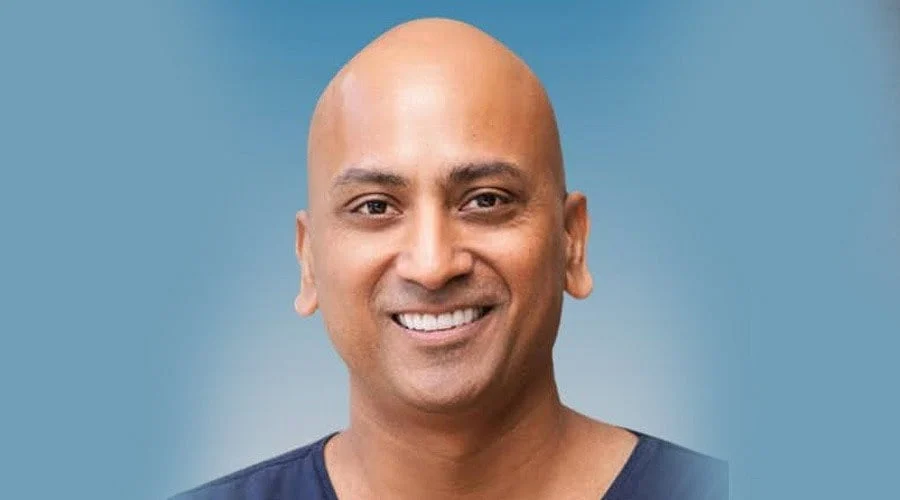
Overview:
-
Prakash started programming at a young age, eventually leaving college to focus on software development and entrepreneurial ventures within India’s nascent internet landscape.
-
His professional history features Vipul’s Razor, Cloudmark, Topsy, and Apple, emphasizing a long-standing dedication to tackling massive technology obstacles.
-
As the CEO of Together AI, Prakash drives open-source AI infrastructure forward and broadens global access to advanced artificial intelligence systems.
Vipul Ved Prakash’s trajectory serves as a clear illustration of how inquisitiveness, an open-source mindset, and continuous experimentation can transform a young programmer into a serial tech entrepreneur.
Born in 1977 in New Delhi, Prakash currently holds the role of co-founder and CEO at Together AI, an artificial intelligence infrastructure enterprise dedicated to improving accessibility for high-performance computing and open-source AI models.
Early Life and Childhood
Prakash’s interest in computers reportedly sparked around the age of 12 while he attended Apeejay School in Noida. A basic BASIC program that requested a user’s name and outputted a personalized greeting left a lasting mark.
That initial exposure to coding marked the foundation for a career rooted in software, internet infrastructure, and later, artificial intelligence.
Computers were not his sole focus during childhood, as Prakash was also a competitive table-tennis player. Biographical summaries indicate he represented the Food Corporation of India and Delhi during the early 1990s while performing at a high tier in junior competitions.
One profile attributes over 25 state and national championship gold medals to him and notes that he participated in an Olympic training camp.
Education and the Decision to Drop Out
Prakash matriculated at St. Stephen’s College in Delhi, where his studies covered mathematics, physics, and computer science. Traditional academics, however, failed to hold his interest for long.
He ultimately departed from college to dedicate more time to writing software and pursuing independent technical interests. Period reporting, referencing an MIT profile on Prakash, explained his departure stemmed from a desire for “undisturbed coding time.”
This unconventional choice stood out, particularly during an era when leaving a prominent Indian institution of higher education carried a very different perception than it does today. Nonetheless, it enabled Prakash to engage in practical software engineering while India’s internet sector remained in its infancy.
Early Career and the Internet Years
During the late 1990s, Prakash co-established Sense/Net alongside Ashish Gulhati, which served as an early internet and privacy platform tailored for Indian users. Additionally, he engaged in web development and authored columns on networking and technology, including a piece titled Net Zeppelin for the Indian version of PC World.
Open-source programming helped elevate his standing in the tech community. Among his most notable creations was Vipul’s Razor, a collaborative anti-spam utility engineered to address the escalating issue of unwanted email.
The software gained widespread adoption, reportedly scaling to millions of servers and establishing itself as a crucial component of open-source email security infrastructure.
This accomplishment brought significant acclaim. In 2003, at approximately 25 years of age, Prakash earned a spot on MIT Technology Review’s Top 100 Young Innovators list in recognition of his work on free and commercial software designed to combat spam.
Cloudmark, Napster and Topsy
Prakash subsequently took on an engineering role at Napster, where he acquired expertise in large-scale internet systems. He later partnered with Jordan Ritter to co-found Cloudmark, commercializing the technology behind his anti-spam efforts to build a firm centered on messaging security.
In 2007, he helped launch Topsy, a social-media search and analytics enterprise. Topsy engineered capabilities capable of indexing and parsing massive quantities of social-media content, focusing heavily on Twitter activity. The platform’s aptitude for handling real-time social conversations eventually caught Apple’s attention.
Apple acquired Topsy in December 2013 for a reported sum exceeding USD 200 million. Following the acquisition, Prakash joined Apple to contribute to search technologies, including initiatives tied to Spotlight and other Apple offerings. He also made an appearance at Apple’s WWDC 2015, where developers were introduced to iOS search APIs.
Together AI and the Open-Source AI Mission
Following his tenure at Apple, Prakash re-engaged with entrepreneurship. In June 2022, he co-founded Together AI alongside researchers and engineers such as Ce Zhang, Percy Liang, and Chris Ré, taking on the position of CEO.
Together AI centers on the infrastructure powering modern generative AI—delivering computing, model development, and deployment tools while serving as a staunch advocate for open-source artificial intelligence. Its overarching philosophy mirrors a theme present throughout Prakash’s career: advanced technology ought not to be restricted to the control of a select few corporations.
By 2025, Forbes India noted that Together AI catered to upwards of 50,000 businesses, demonstrating the enterprise’s growth and scale.
A Career Built Around Open Technology
Prakash’s professional trajectory spans teenage programming, competitive athletics, open-source software, cybersecurity, social-media search, Apple, and frontier AI. A consistent core trait defines his path, as he repeatedly steps into emerging technological sectors well before they hit the mainstream.
From tackling email spam via Vipul’s Razor to helping construct Topsy’s extensive social-search framework and now advancing AI infrastructure through Together AI, Prakash has spent a significant portion of his career building the foundational systems supporting the internet’s most disruptive technologies.
Consequently, his narrative centers less on a conventional academic background and more on learning through creation—a philosophy that transported a Delhi teenager captivated by BASIC programming to the forefront of the worldwide open-source AI movement.