Overview:
-
Acquiring smart contract abilities enables developers to investigate blockchain applications across decentralized finance, digital assets, and other domains.
-
Cardano supports multiple programming methods, letting developers select tools that align with their background and project needs.
-
Mastering wallet integration, transaction construction, and app architecture allows developers to progress past simple coding tasks.
Blockchain development extends well beyond issuing cryptocurrencies. Developers are actively creating solutions for decentralized finance, digital identity, supply chain tracking, and tokenization. Cardano is a distributed network gaining traction due to its research-backed engineering and smart contract framework.
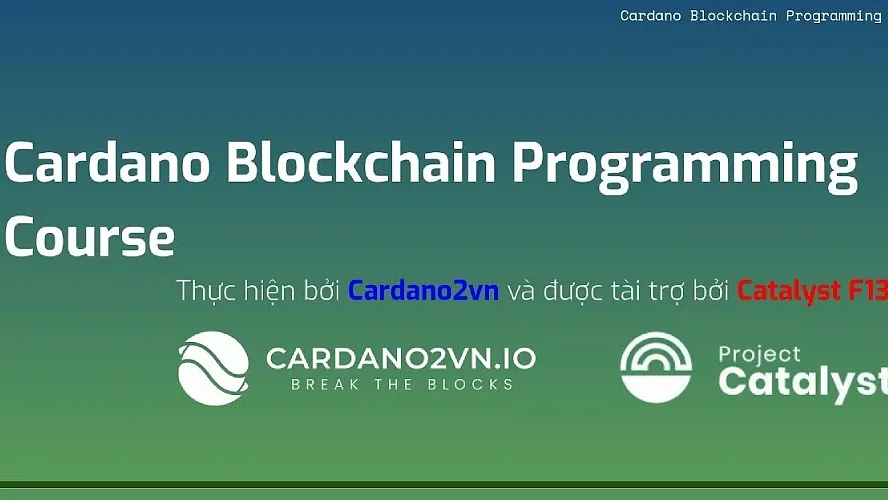
For developers keen on this ecosystem, a Cardano blockchain programming course provides insight into smart contract operations, accessible programming languages, and the creation of decentralized applications. Grasping foundational architectural concepts remains just as crucial as writing syntax.
Understanding Cardano Smart Contracts
Smart contracts function as code that enforces set rules whenever transactions fulfill specific criteria. Within Cardano, these programs typically manifest as validator scripts that permit or deny transactions based on their internal logic.
Cardano uses an extended unspent transaction output framework known as eUTXO. Rather than depending on a standard account-based system, it builds upon the UTXO concept by integrating supplementary data and validation parameters. This structural choice shapes how developers oversee contract states, assemble transactions, and manage app interactions.
An effective educational program ought to clarify these principles prior to diving into intricate coding exercises. Comprehending transaction validation empowers developers to craft predictable applications and manage errors with greater efficiency.
Also Read: South Korea Targets November Review for New Digital Asset Bill
Choosing the Right Programming Language
Cardano supports several languages and development pathways, enabling programmers to pick utilities that fit their expertise and project goals. Aiken functions as a purpose-built language for authoring Cardano validator scripts. Its contemporary syntax, static typing, and native testing utilities make it an attractive entry point for developers seeking smart contract creation without first mastering Haskell.
Plutus provides another avenue via its Haskell-driven development environment. It proves especially useful for programmers drawn to functional programming and Cardano’s established smart contract infrastructure. Meanwhile, Marlowe caters specifically to financial contracts, and tools like OpShin permit developers to draft validators utilizing a subset of Python.
Ultimately, these languages compile down to a shared on-chain execution architecture called Untyped Plutus Core (UPLC). The ideal selection relies on a developer’s history, project demands, and the degree of control required over execution expenses.
Learning Smart Contract Design and Testing
Drafting a contract involves more than just outlining successful transaction outcomes. Developers must equally factor in invalid inputs, unexpected transaction conditions, security vulnerabilities, and processing costs.
A practical curriculum should encompass validator logic, data structures, transaction verification, exception management, and automated testing. Students can begin with straightforward tasks—such as placing limits on digital asset transfers—before advancing to more sophisticated applications.
Testing is vital because deployed validator code cannot simply be altered directly. An error might necessitate a meticulously planned migration or the launch of a fresh contract. Developers must verify expected behaviors and failure states prior to managing actual assets.
Aiken features an integrated test runner, while the broader Cardano network supplies supplementary utilities to inspect transactions and contract behaviors. Utilizing these tools early helps avert costly errors further down the line.
Also Read: Absa Launches Digital Asset Custody in South Africa with Ripple
Connecting Smart Contracts to Decentralized Applications
On-chain code represents only a fraction of a functioning blockchain application. Users additionally require a user interface, a method for wallet connectivity, and software that prepares transactions for dispatch.
Cardano keeps transaction creation separate from on-chain validation. The application typically collects information, assembles a transaction, and transmits it for review. The validator subsequently checks if the transaction honors the contract’s guidelines.
Depending on the chosen technology stack, developers can employ languages like JavaScript, TypeScript, Python, or Rust for off-chain elements. Consequently, a comprehensive course should incorporate wallet connectivity, transaction building, API utilization, and basic software architecture.
This understanding aids learners in moving beyond isolated coding drills to comprehend the mechanics of a fully functional decentralized app.
Practical Projects and Security Skills
Practical assignments offer one of the most successful methods for cultivating Cardano programming capabilities. Novices can construct a basic validator, formulate a token-centric application, or execute a transaction adhering to specific spending constraints.
As their comprehension grows, participants can investigate decentralized finance, digital asset administration, and other use cases demanding advanced transaction parameters. Every initiative should incorporate testing, documentation, and an evaluation of prospective failure conditions.
Security warrants special focus. Developers must grasp transaction verification, access controls, execution budgets, and the ramifications of immutable code. They should additionally learn to audit dependencies and pursue independent security assessments prior to rolling out applications managing substantial value.
You May Also Like
Crypto Privacy vs Compliance: Can Digital Assets Remain Private in a Regulated World?
India’s USD 2B Farm Assets Go Digital: Arya.ag Tests Blockchain Loans
Caplin Launches White-Label Digital Asset Trading Platform for Firms
Building a Career in Cardano Development
Cardano programming can enhance existing competencies in software engineering, cryptography, distributed systems, and decentralized application development. Prior exposure to functional programming or core blockchain concepts can smooth out the learning curve, though driven newcomers can begin with foundational topics.
A productive educational roadmap blends official reference materials, organized tutorials, compact projects, and routine assessments. The Cardano Developer Portal delivers instructions addressing foundational blockchain concepts, smart contracts, and production-ready application engineering.
Ultimately, a Cardano blockchain programming course ought to impart more than mere syntax. It should assist developers in grasping the rationale behind the network’s architecture, producing dependable validators, and fashioning software that can be responsibly tested and maintained. Those competencies supply a sturdier basis for operating within the shifting blockchain landscape.
FAQs
What is a Cardano blockchain programming course?
A Cardano blockchain programming course teaches developers how to build smart contracts and decentralized applications on the Cardano network. It may cover validator scripts, programming languages, transaction validation, testing, security, and application integration.
What are smart contracts on Cardano?
Smart contracts on Cardano use validator scripts to check whether transactions satisfy predefined conditions. These scripts help enforce rules governing how digital assets can be spent or transferred.
Which programming languages are used for Cardano smart contracts?
Common options include Aiken, Plutus, Marlowe, and OpShin. Aiken is designed specifically for Cardano validator development, Plutus uses a Haskell-based development environment, Marlowe focuses on financial contracts, and OpShin allows developers to write validators using a subset of Python.
What is the eUTXO model in Cardano?
The extended unspent transaction output (eUTXO) model builds on the UTXO approach by incorporating additional information and validation rules. It influences how developers manage contract state, construct transactions, and validate smart contract interactions.
Is Aiken a good starting point for Cardano programming?
Aiken can be a useful starting point for developers interested in Cardano validator development. It offers static typing, a modern syntax, and built-in testing tools. The best choice depends on a learner’s programming background and project requirements.