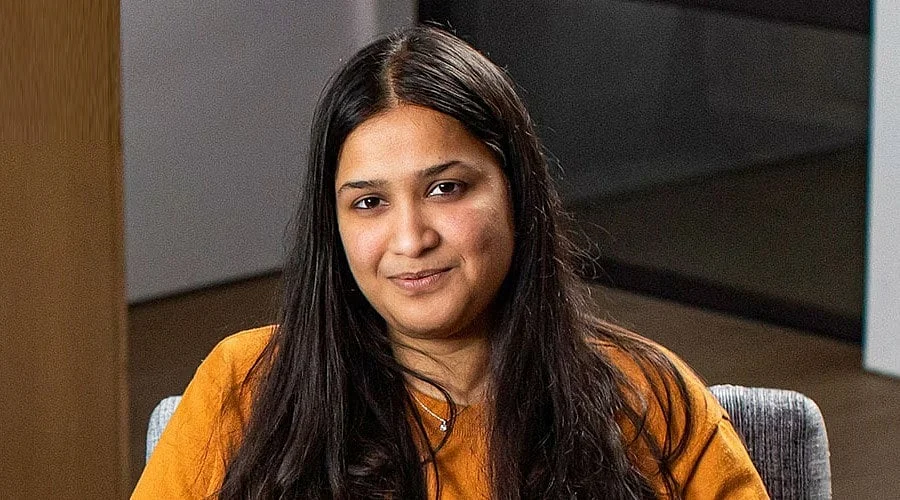
Overview:
-
Parmar co-authored “Attention Is All You Need,” introducing the Transformer.
-
Following her departure from Google, she co-founded Adept AI Labs and Essential AI.
-
She currently conducts reinforcement learning research at Anthropic, helping to build Claude.
The history of modern artificial intelligence bears a distinct Indian influence, and few figures demonstrate this better than Niki Parmar. Beginning her professional path quietly inside Google’s research group, Parmar went on to co-write one of the most frequently cited papers in computing history. Her contributions did more than just advance machine learning—they fundamentally reshaped the underlying architecture used by nearly all contemporary language models.
Today, serving on the technical staff at Anthropic, Parmar continues to guide the development of systems that drive products like Claude. Her path—originating from a college in Pune, moving through the research labs of Google Brain, and leading to the establishment of two ambitious AI startups—highlights the understated yet powerful impact of Indian innovators at the forefront of the global artificial intelligence movement.
From Pune to Google Brain
Parmar earned her Bachelor of Engineering in Information Technology from the Pune Institute of Computer Technology. Although an initial goal of attending an IIT did not work out, this hurdle steered her toward self-directed study instead of causing her to quit. She dedicated herself to online programs taught by AI experts Andrew Ng and Peter Norvig, establishing a vital foundation for her future work.
She subsequently earned a Master of Science in Computer Science from the University of Southern California, completing her studies in 2015. During her time at USC, she collaborated with Professor Morteza Dehghani, applying machine learning techniques and large datasets to computational social science questions. This cross-disciplinary problem-solving experience prepared her for the engineering hurdles ahead.
The Transformer Breakthrough
Joining Google Research in 2015, Parmar transitioned to Google Brain in 2017 as a research software engineer. In that role, she became part of an eight-person group investigating sequence transduction models for machine translation. Their collaboration yielded “Attention Is All You Need,” a 2017 paper that unveiled the Transformer architecture relying entirely on self-attention mechanisms.
The metrics from the paper spoke for themselves. The proposed model attained a BLEU score of 28.4 on the WMT 2014 English-to-German translation benchmark, beating previous results by more than two points. On the English-to-French benchmark, it set a new state-of-the-art score of 41.0 after completing training in just 3.5 days using eight GPUs, a fraction of the computational requirements of prior leading models.
This efficiency, combined with the removal of recurrence and convolution, made the Transformer faster to train and simpler to scale. It emerged as the structural foundation for GPT, BERT, and eventually Claude, securing Parmar’s position among the key architects of the generative AI era.
Expanding Beyond Language
Parmar’s work extended far beyond text. She brought self-attention mechanisms into the realm of computer vision, creating the Image Transformer for attention-based image generation and contributing to Bottleneck Transformers for vision backbones. She also participated in developing the Conformer, a model that merges convolutions with transformers for speech recognition. These efforts proved that the framework she helped create could scale across different formats, from text and sound to visual assets.
Building Companies After Google
Parmar exited Google in late 2021 to help establish Adept AI Labs alongside Ashish Vaswani and David Luan. Serving as chief technology officer, she pursued the vision of “action models”—artificial intelligence systems designed to control software and web browsers for users, automating routine workplace tasks rather than merely producing text.
In 2023, Parmar co-founded Essential AI alongside Vaswani, her longtime partner from the original Transformer paper. The new company concentrated on developing comprehensive AI solutions tailored to automate tedious, data-intensive tasks for enterprises, with the goal of reducing the time organizations spend on manual operations.
Key milestones defining this entrepreneurial phase include:
-
Co-founding Adept AI Labs in 2022 as chief technology officer with a focus on enterprise automation
-
Co-founding Essential AI in January 2023 alongside Ashish Vaswani
-
Creating products designed to minimize time spent on repetitive, data-centric business operations
-
Keeping close connections with fellow Transformer co-authors throughout her startup ventures
Joining Anthropic
Parmar came on board at Anthropic as a technical staff member in December 2024, publicly sharing the news in February 2025. At Anthropic, she focuses on reinforcement learning research targeted at challenging exploration problems, advanced model capabilities, and test-time scaling, alongside broader efforts in natural language processing, human feedback, and model interpretability.
She has noted that her efforts contributed to building Claude 3.7 Sonnet, the hybrid reasoning system launched by Anthropic in February 2025, which the organization highlighted as a major milestone for programming and intricate reasoning tasks. Her arrival aligned with a wider trend of prominent technical leaders—including past founders and chief tech officers from firms such as Adept, Instagram, and Workday—taking on technical positions rather than executive roles at Anthropic.
Her Google Scholar citation metric surpasses 315,000, underscoring the immense impact of her research across the broader machine learning community, including work utilized by teams at OpenAI, Google DeepMind, and academic institutions worldwide.
Final Words
Niki Parmar’s career follows a trajectory matched by very few engineers globally: a single academic paper altering an entire technological epoch. From a self-taught student in Pune who missed out on an IIT entry to a co-creator of the Transformer, and later a founder of two ambitious AI ventures, her journey demonstrates relentless perseverance paired with deep technical expertise.
Her current position at Anthropic places her once more at the edge of artificial intelligence innovation, this time enhancing the reasoning skills of systems built upon the very framework she helped design. As India’s impact on worldwide AI leadership gains recognition, Parmar’s narrative serves as a powerful reminder that fundamental breakthroughs frequently originate far outside Silicon Valley, driven forward by curiosity, discipline, and a refusal to treat early setbacks as final destinations.