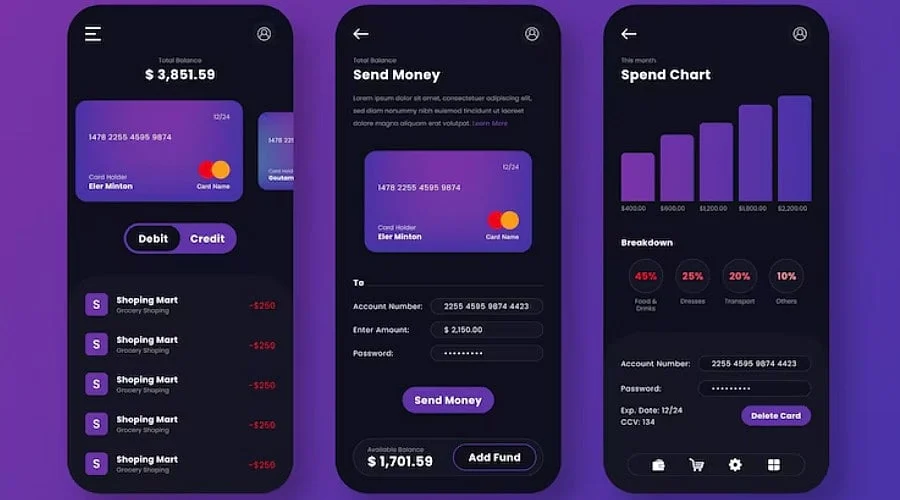
Payment applications do not have to transform into full-fledged cryptocurrency exchanges to offer digital assets. By utilizing third-party crypto on-ramps, wallets, fintech platforms, and payment apps can seamlessly integrate cryptocurrency purchases, leaving specialist providers to manage payments, verification, and blockchain settlement.
How Third-Party Crypto On-Ramps Work
A crypto on-ramp functions by converting conventional fiat currency into cryptocurrency. Instead of building internal exchange infrastructure, a platform can easily integrate an embedded checkout, a software development kit, or an API.
When a user chooses to buy crypto, the service provider handles identity verification, payment authorization, transaction execution, and asset delivery to the wallet. Consequently, the customer stays within the original application while an external company powers the underlying infrastructure.
MoonPay reports that it operates in over 160 countries, servicing more than 300 websites, applications, and wallets. Meanwhile, Transak offers support for more than 136 cryptocurrencies spanning 45 different blockchains.
Payment Methods are Expanding
These on-ramp providers link apps to a variety of payment methods that would otherwise demand separate integration efforts. Globally, MoonPay accommodates cards, Apple Pay, and Google Pay, alongside localized alternatives such as bank transfers, PayPal, Venmo, and Revolut.
In August 2026, the company introduced Cash App Pay for eligible customers in the US, enabling purchases directly through Cash App balances without exiting the MoonPay interface. Similarly, Transak supports bank transfers, cards, and mobile payment options, though processing times and availability differ depending on the country.
Infrastructure Providers Handle Complexity
Outsourcing the crypto purchasing process also helps companies navigate regulatory compliance. For instance, Stripe’s Crypto Onramp lets businesses embed cryptocurrency purchasing directly into their sites and apps. Stripe states that it functions as the merchant of record while managing fraud prevention, sanctions screening, KYC verification, and overall regulatory compliance.
The Stripe on-ramp accepts ACH payments, Google Pay, Apple Pay, and cards, with certain eligible payment methods enabling instant crypto settlement.
While this setup significantly cuts down the technical and compliance burden placed on the application developers, regulatory responsibilities vary across different jurisdictions and providers, meaning businesses must still remain aware of their exposure.
Risks Remain for Consumers
Although embedded purchasing lowers barriers to entry for digital assets, users should still carefully review exchange rates, fees, custody arrangements, and supported networks.
Because the app interface looks familiar, customers might not realize that an entirely different company is processing their transaction. Furthermore, if a user sends crypto to an incorrect address in an external self-custody wallet, recovering those funds may be extremely difficult or impossible.
Final Thoughts
Thanks to third-party infrastructure, purchasing cryptocurrency now closely resembles making standard digital payments. Apps deliver familiar user interfaces while specialist firms take care of the complex backend operations. Consumers must always weigh this added convenience against potential fees, security considerations, custody terms, and provider responsibilities.
Also Read: How Businesses Can Use Blockchain for Real-Time Crypto Payments
FAQs
1. What is a third-party crypto on-ramp?
A third-party crypto on-ramp allows users to convert traditional currency into cryptocurrency. It handles payments, verification and crypto delivery for the payment app.
2. How do payment apps integrate crypto buying?
Payment apps can integrate crypto providers through APIs, SDKs or embedded checkout systems. This lets users purchase crypto without leaving the app.
3. Which payment methods do crypto on-ramps support?
Depending on the provider and region, users may pay through cards, bank transfers, Apple Pay, Google Pay and other local payment methods.
4. Do payment apps handle crypto compliance themselves?
Third-party providers can handle processes such as KYC, sanctions screening and fraud prevention. However, regulatory responsibilities can vary by provider and jurisdiction.
5. Are third-party crypto purchases safe?
Established providers use identity verification and security measures, but crypto transactions still carry risks. Users should check fees, networks, custody arrangements and wallet addresses before purchasing.