Ethereum’s prospective bullish run in 2026 relies on institutional capital commitments, staking levels, ongoing network enhancements, and the broader sentiment of the cryptocurrency market. Although ETH has rebounded from prior lows, recent outflows from exchange-traded funds and macroeconomic uncertainty highlight that a prolonged rally is far from guaranteed.
Ethereum Price Recovery and Structure
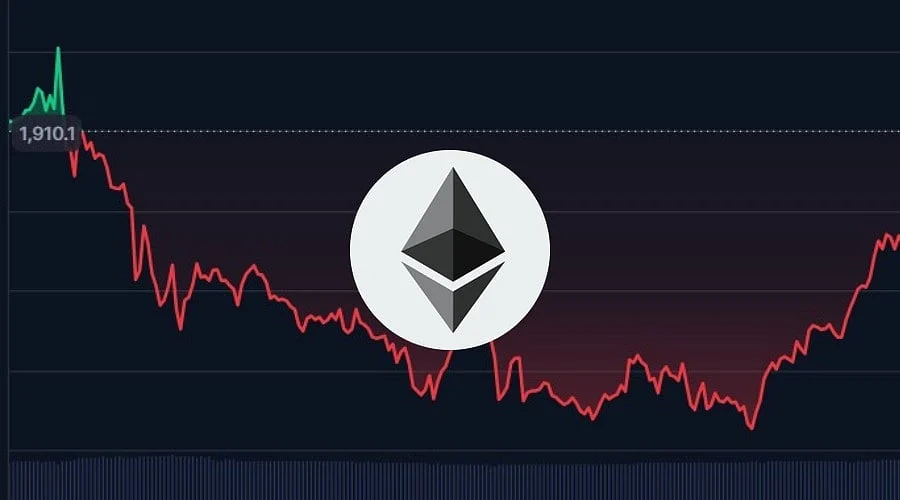
Ethereum experienced significant market turbulence over the course of 2026. Data from CoinMarketCap shows that ETH traded at approximately USD 2,446.74, registering a 3.87% gain over a 24-hour period. Despite this, the token remains roughly 50.57% below its all-time high of USD 4,950 reached in August 2025.
With ETH having traded near USD 2,550 in late June, the digital asset has achieved a recovery of nearly 61% from that trough, even though valuations continue to sit well under historical peaks. A lasting upward trend depends heavily on intensified buying interest and an expansion in overall market liquidity.
Ethereum is currently holding above its major exponential moving averages (EMAs), maintaining a cautiously optimistic technical stance despite the latest correction. The 100-day and 200-day EMAs stand at USD 2,356 and USD 2,309 respectively, whereas the 50-day EMA at USD 2,493 acts as the immediate price ceiling.
On the downside, immediate price support sits near the USD 2,400 mark, with subsequent floors at the 100-day EMA near USD 2,356 and the 200-day EMA at USD 2,309. To reignite upward momentum, ETH must successfully break back above the 50-day EMA at USD 2,493.
Institutional ETF Flows Remain Important
Regulated investment vehicles offer a window into how institutional capital may shape Ethereum’s upcoming market trajectory. Figures from SoSoValue reveal that U.S. spot Ethereum ETFs experienced a cumulative net outflow of roughly USD 715 million between October 1 and October 13. However, October 13 saw USD 24.84 million enter the funds, which was followed by an additional USD 19.7 million leaving on October 14.
Such fluctuations point to inconsistent institutional demand rather than a confirmed bullish reversal. Meanwhile, Ethereum Institutional reported that BlackRock’s iShares Staked Ethereum Trust held 440,929 ETH as of October 8, with approximately 337,190 ETH actively staked.
Staking Could Reduce Liquid Supply
Another key mechanism capable of driving momentum is Ethereum staking, which locks up circulating tokens to support network validation.
Data from September indicated that upwards of 42 million ETH had been committed to staking contracts, accounting for about one-third of the total circulating supply.
Elevated staking rates can decrease the quantity of tokens readily available on public exchanges, potentially amplifying upward price reactions when demand picks up. That said, staked coins remain subject to withdrawal protocols, and tightened liquidity can also exacerbate downward price swings during volatile periods.
Network Upgrades Strengthen Ethereum’s Outlook
According to official institutional documentation, Ethereum’s Fusaka upgrade boosted data availability capacity by as much as eightfold and elevated the Layer 1 gas limit from roughly 45 million to 60 million. These adjustments are designed to decrease expenses on Layer 2 networks and boost transaction throughput.
Looking ahead, the Glamsterdam upgrade is slated to introduce enhancements to block production and execution mechanisms. P2P.org noted that Glamsterdam went live on the Sepolia testnet on October 6, although a definitive mainnet release schedule has not yet been announced.
Enhanced scalability has the potential to draw in decentralized finance platforms, stablecoin creators, and enterprises looking for robust blockchain settlement rails. Nonetheless, cheaper transaction costs do not automatically guarantee higher token valuations, as overall network utilization and demand for ETH remain critical factors.
What Could Trigger a Bullish Cycle?
A positive market shift would require a combination of steady ETF inflows, rising network utilization, growing participation in staking, and outperformance by ETH against Bitcoin. Market participants should keep a close eye on derivatives leverage metrics, exchange reserve balances, and prevailing interest rates.
Conversely, prolonged ETF capital flight, stiff competition from competing blockchains, and an unfavorable macroeconomic climate could derail the recovery. Current price projections should be viewed as conditional scenarios rather than definitive predictions.
Final Thoughts
Ethereum’s outlook for 2026 presents a mix of improving underlying infrastructure and uncertain capital flows. While institutional products and staking reinforce the long-term investment thesis, the realization of a full-scale bull market demands consistent demand, wider adoption, and enduring price strength.
Also Read: How Ethereum Staking Rewards Work: Validators, Lockups and Risks
FAQs:
1. Is Ethereum expected to enter a bullish cycle in 2026?
Ethereum could enter a bullish cycle if institutional ETF inflows strengthen, staking participation increases, and network activity continues expanding. However, sustained price momentum and improving market liquidity are necessary to confirm a broader bullish trend.
2. What are Ethereum’s key support and resistance levels in October 2026?
Ethereum faces immediate resistance near USD 2,493, corresponding to its 50-day exponential moving average (EMA). Important support levels include USD 2,400, followed by the 100-day EMA at USD 2,356 and the 200-day EMA near USD 2,309.
3. How do Ethereum ETF inflows and outflows affect ETH prices?
Ethereum ETF inflows can increase investment demand and strengthen institutional participation, potentially supporting ETH prices. Conversely, sustained ETF outflows may indicate weaker investor appetite and create additional selling pressure.
4. How does Ethereum staking influence its potential bullish cycle?
Ethereum staking involves locking ETH into the network’s validation system, potentially reducing the amount of cryptocurrency immediately available for trading. With more than 42 million ETH reportedly staked, growing participation could influence liquid supply, although it does not guarantee price appreciation.
5. How could the Fusaka and Glamsterdam upgrades affect Ethereum’s future?
The Fusaka upgrade improves Ethereum’s data availability and network capacity, supporting more efficient Layer 2 transactions. The planned Glamsterdam upgrade targets further execution and block production improvements, potentially strengthening Ethereum’s scalability and long-term ecosystem adoption.