Key Takeaways :
-
eSIM wins on convenience: Ideal for travelers, multiple numbers, and digital activation.
-
Physical SIM wins on flexibility: Easy to move between compatible phones, especially during emergencies.
-
Dual-SIM is the best of both: Combines eSIM convenience with physical SIM backup.
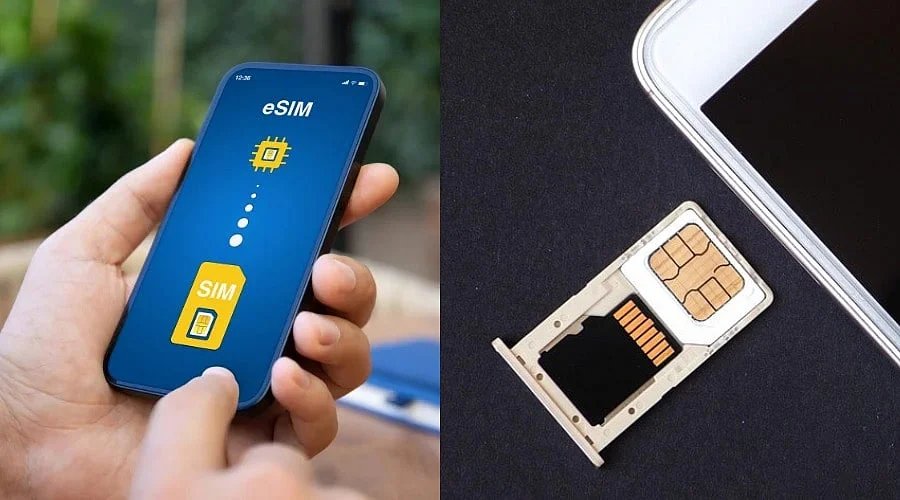
Smartphones no longer require a small plastic card for mobile service, as an eSIM can store a mobile plan internally while a physical SIM maintains the traditional removable card. Both options provide calls, messages, mobile data, and 5G connectivity. Ultimately, the distinctions between them arise during travel, device swaps, security incidents, carrier evaluations, and post-failure recoveries.
While eSIM provides the more adaptable option for most contemporary flagship handsets, physical SIM cards retain a distinct advantage regarding rapid device changes and broad equipment compatibility. Devices supporting both technologies deliver the most robust combination of backup reliability and daily convenience.
eSIM Makes Travel and Multiple Numbers Easier
Travel represents one of the primary benefits of an eSIM. Users can add a travel data plan without visiting a local shop to purchase a plastic card, often initiating the service prior to departure or immediately upon touching down abroad to streamline international mobile access.
Apple notes that international eSIM providers offer coverage spanning more than 190 countries and regions. Furthermore, modern mobile devices can store multiple eSIM profiles simultaneously, allowing a primary phone number to remain active while a secondary plan manages travel data—a particularly advantageous setup for frequent flyers.
Managing multiple phone numbers is equally seamless with eSIM technology. Users can maintain a personal number on one line while assigning a separate line to a work account or travel itinerary. Compatible phones handle both lines concurrently without demanding two physical cards.
Security provides another practical benefit for eSIM users. Because an eSIM cannot simply be pulled out of a lost or stolen device and slipped into another handset, it creates an additional hurdle that aids in device recovery. However, strong screen locks, account protections, and theft prevention protocols remain vital, meaning eSIM should not act as the sole line of defense.
Also Read – Best eSIM Phones Under Rs. 30,000 in India (2026)
Travelers opting for eSIM can utilize [Saily](https://saily.com) for destination-specific data plans that install prior to leaving and activate upon arrival. The application offers packages ranging from 1 GB to unlimited data, and a single Saily eSIM can be reused across subsequent journeys by purchasing new destination plans. This approach cuts down on airport SIM kiosk visits and simplifies travel budgeting, though users must still confirm that their carrier and handset support eSIM functionality.
Physical SIM Still has One Major Advantage
A physical SIM continues to excel when rapid device swaps are necessary. Users can transfer a SIM card between compatible phones within minutes, which proves critical if a primary device malfunctions, drains its battery, or requires servicing. In such cases, a backup phone can immediately accept the card without requiring a carrier visit or a fresh digital activation.
Conversely, transitioning an eSIM may entail carrier approvals, security verifications, QR codes, application steps, or specific transfer procedures that vary by network and device. These extra steps can introduce complications precisely when rapid access to a mobile line is most critical.
Physical SIMs also ensure wider compatibility. Older handsets, budget models, and select imported devices may lack eSIM capabilities, and regional variations of the same phone model can feature entirely different SIM configurations depending on the country of purchase.
Consequently, buyers should verify exact phone specifications and carrier compatibility ahead of any purchase, as general eSIM support does not guarantee compatibility with every specific network feature.
Also Read – How to Activate eSIM in Your New iPhone
2026 Phones Make the Choice More Important
The mobile market continues its steady transition toward eSIM integration. Apple already offers eSIM-only iPhone models in select regions, Android manufacturers regularly incorporate eSIM into new hardware releases, and Huawei is reportedly bringing eSIM support to its upcoming Mate XT 2.
India has similarly reached a mature market phase for eSIM adoption, with Apple listing Airtel, Reliance Jio, and Vi as domestic carriers. Both Airtel and Jio also facilitate eSIM Quick Transfer on supported iPhones. Because network procedures vary, verifying specific models and networks remains essential prior to converting a SIM.
Addressing a common misconception, eSIM does not inherently accelerate 5G speeds. Both eSIM and physical SIM technologies deliver identical cellular performance on a given device and network. Instead, modem capabilities, antenna design, supported network bands, carrier coverage, network congestion, and the chosen mobile plan dictate speed and signal quality.
For the majority of current flagship devices, eSIM provides the most practical option, benefiting frequent travelers, multi-number users, and those seeking effortless digital setup. Meanwhile, physical SIM remains the more reliable fallback for individuals who frequently swap numbers between handsets or rely on secondary backup devices.
Ultimately, the optimal configuration in 2026 involves a device supporting both technologies. A physical SIM can anchor the main phone number, while an eSIM accommodates a professional line or travel plan, blending eSIM flexibility with the instant recovery capabilities of a removable card.
The decision therefore hinges less on raw speed and more on convenience, device recovery, and network backing. eSIM represents the future trajectory of mobile hardware, whereas physical SIM cards continue to solve a logistical challenge that digital activation cannot always resolve instantly: transferring a mobile number to an alternate device on short notice.
FAQs
1. Is eSIM better than a physical SIM?
For most modern smartphones, eSIM is more convenient, especially for travel and managing multiple numbers. Physical SIM remains better for quick phone transfers.
2. Does eSIM provide faster 5G?
No. eSIM does not inherently make 5G faster. Speed depends mainly on the phone’s modem, network bands, carrier, coverage, and plan.
3. Can I use eSIM and physical SIM together?
Yes, on compatible phones. You can use one for your main number and the other for a work, travel, or backup line.
4. What happens if my eSIM phone breaks?
Moving your number to another phone may require carrier verification or an eSIM transfer process. A physical SIM can usually be moved directly to a compatible backup phone.
5. Should I choose eSIM or physical SIM in 2026?
Choose eSIM for convenience and frequent travel. Choose physical SIM if you regularly switch phones or rely on a spare device. A phone supporting both offers the most flexibility.