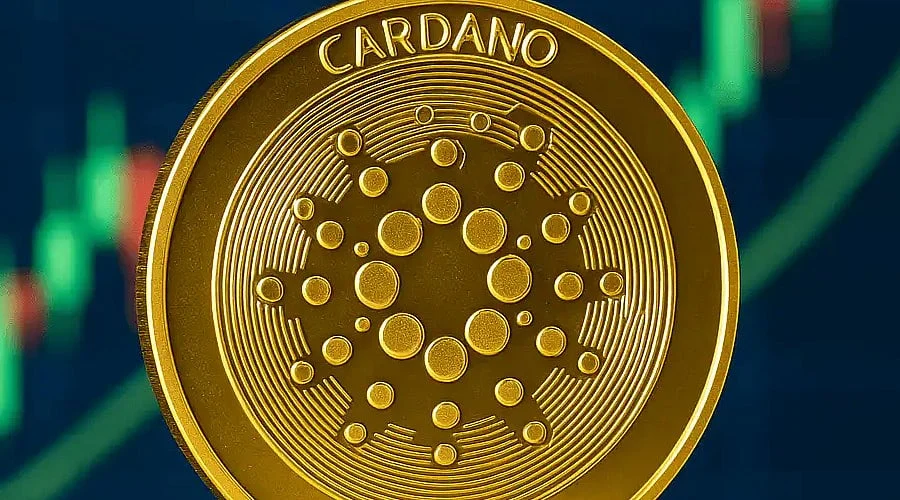
RealFi debuted USDrf alongside the yield-bearing sUSDrf on Cardano on October 1, introducing real-world credit exposure to the blockchain ecosystem. This rollout is the result of years spent developing lending infrastructure for emerging markets. Cardano founder Charles Hoskinson has previously characterized RealFi as part of a broader mission to bridge blockchain finance with underserved borrowers.
This introduction coincides with Hoskinson’s broader view that cryptocurrency has entered a phase of rapid technological evolution. During an address at the United Nations, he likened blockchain to earlier exponential technologies like the internet, nuclear power, and artificial intelligence.
According to Hoskinson, such technologies often advance gradually before their effects suddenly accelerate. He noted that incremental improvements ultimately trigger massive shifts as infrastructure, adoption, and efficiency mature simultaneously.
RealFi Connects Cardano With Real-World Lending
Qualified retail users can purchase USDrf and stake it to receive sUSDrf. This secondary token generates variable yields derived from the system’s underlying asset portfolio. At the same time, RealFi restricts direct token minting and redemption via the issuer strictly to vetted institutional partners. This framework grants institutional participants different redemption privileges compared to retail investors.
Back in July, Hoskinson revealed that he personally invested several million dollars into RealFi. He also pointed out that the team had already handled loans in Uganda and Kenya while quietly building the platform out of the public eye.
Hoskinson stated that RealFi marks an early milestone in Cardano’s quest to provide banking services to unbanked populations. The strategy focuses on generating yields through traditional lending channels rather than depending primarily on token rewards.
Consequently, the platform introduces a fresh use case to Cardano’s financial toolkit. The launch also takes place as the network’s stablecoin reserves approach record highs, even though total value locked in decentralized finance applications has dropped significantly.
Hoskinson Sees Blockchain Following an Exponential Path
While speaking at the United Nations, Hoskinson cited the internet to demonstrate how exponential innovations disrupt legacy systems. Historically, communication relied heavily on geographic distances and occasionally required months to complete.
The internet disrupted this paradigm by turning global communication into an instantaneous process. Hoskinson pointed to computing and the internet as prime examples of exponential technological progress.
He also categorized artificial intelligence under this identical framework. AI models continually grow more efficient, enabling highly sophisticated systems to function using fewer computational assets.
Hoskinson observed that intelligence is becoming broadly democratized as these tools advance. Enhanced efficiency could allow advanced AI applications to operate outside massive data centers and serve a much wider demographic.
Against this backdrop, blockchain technology is likewise stretching far beyond simple cryptocurrency transactions. These networks can now mirror traditional assets—including real estate, currencies, and equities—through tokenization.
Also Read: Cardano, AI Agents: How Blockchain Could Enable Autonomous Payments
Tokenized Assets Add to Cardano’s Broader Shift
Data concerning tokenized equities highlights the swift expansion of specific market sectors. This particular segment surged from roughly USD 600 million at the beginning of 2025 to approximately USD 3 billion.
Meanwhile, traditional financial institutions are actively experimenting with tokenized assets, blockchain settlement mechanisms, and digital currencies. These frameworks migrate standard assets onto the blockchain and hold the potential to deliver faster settlement speeds than legacy financial architecture.
To emphasize how initial projections can severely underestimate tech adoption, Hoskinson referenced Germany’s transition to renewable energy. Early forecasts predicted that green energy would account for no more than 4% of the nation’s power output.
By 2025, renewable energy accounted for 55.9% of Germany’s electricity. Hoskinson used this metric to demonstrate how market adoption can skyrocket once a technology attains sufficient efficiency and scale.
RealFi now brings a tangible portion of Cardano’s real-world financial agenda to life. USDrf serves as the dollar-pegged token, while sUSDrf connects eligible investors to variable yields generated by the underlying credit portfolio.
Simultaneously, the platform maintains a strict boundary between retail access points and institutional minting or redemption channels. This clear division governs how different groups interact with the product as Cardano scales its exposure to real-world credit.
Conclusion
The debut of RealFi brings USDrf and sUSDrf to the Cardano network, effectively merging blockchain infrastructure with real-world lending markets. Furthermore, Hoskinson groups blockchain alongside the internet and AI as an exponential technology, while surging tokenized equity valuations underscore the ongoing expansion of on-chain financial assets.