Key Takeaways :
-
Individual accounts: Tailored for sole proprietors and single persons, displaying the creator’s personal legal name as the seller on the App Store.
-
Organization accounts: Mandate a qualifying legal entity, typically a D-U-N-S Number, documented legal authority, a company-domain email address, and a working website.
-
Account transitions: An individual membership can be converted into an organization membership at a later date, provided Apple’s criteria are satisfied.
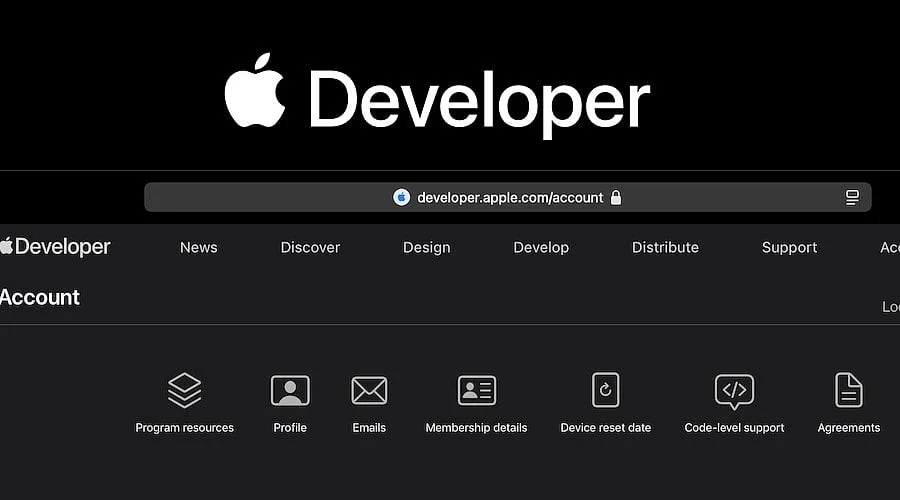
Apple provides two primary options for joining the Apple Developer Program: an individual account or an organization account. The individual tier is designed for a single person, sole proprietor, or one-person enterprise.
Conversely, the organization tier is intended for legally established companies, partnerships, nonprofits, joint ventures, and other recognized legal entities. For organization accounts, Apple publishes the legal entity name as the seller, whereas individual accounts display the member’s personal name.
Individual Accounts Use a Personal Legal Name
Individual accounts do not require a D-U-N-S Number, and sole proprietors as well as single-person operations are welcome under this classification. Applicants must have reached the legal age of majority in their respective jurisdiction.
According to Apple’s current terms, this age threshold is set at 18 in numerous countries and regions. Apple verifies applicant details and may ask for a government-issued photo ID.
The principal distinction on the App Store involves how the seller is named. Apple displays the developer’s legal name for both the membership and the seller identity. Trade names, DBAs, brand labels, or alternate business titles cannot be substituted for this legal name, and having a distinct company name on a website will not alter the designated seller name.
Also Read – Elon Musk Sues Apple and OpenAI Over App Store Bias Claims
Organization Accounts Need a Legal Entity
Setting up an organization account calls for a formal legal entity capable of entering into binding agreements with Apple. Fictitious businesses, DBAs, trade names, and branch offices are not accepted. The name of the legal entity will be shown as the seller for any applications distributed through the App Store.
In most instances, Apple requests a D-U-N-S Number for organization accounts. This distinct nine-digit business identifier is issued by Dun & Bradstreet and enables Apple to confirm the identity and legal status of the organization.
Government organizations are exempt from the D-U-N-S Number requirement. Apple notes that this identifier is generally provided free of charge. Once requested, Dun & Bradstreet typically takes up to five business days to supply the number, after which Apple may require another two business days to process the updated records.
Business Verification Goes Beyond D-U-N-S
The individual submitting an organization application must possess the legal authority to bind the entity to Apple’s contracts. Acceptable representatives include founders, owners, executive team members, senior project leads, or employees holding proper authorization.
The applicant’s work email must correspond with the organization’s official domain, and the entity must maintain an active, public website tied to that domain.
Apple reserves the right to ask for supplementary business documents, and certain jurisdictions might mandate notarized paperwork. Verification procedures may incorporate D-U-N-S data checks and authorization confirmations. If the account handler did not found or own the enterprise, Apple may request a reference to corroborate their legal authority to bind the company.
Fees Stay the Same for Both Paths
Membership for the standard Apple Developer Program is priced at USD 99 annually for both individual and organization accounts. Additionally, Apple provides the Apple Developer Enterprise Program for USD 299 per year, targeted at qualified organizations requiring private, internal distribution of apps via secure channels or Mobile Device Management tools.
Also Read – Apple Removes Dorsey’s Bitchat From China App Store Over Rules
Moving from Individual Account to Organization Status
Developers can request to transition an individual membership into an organization membership. To do so, the applicant must act as a founder or cofounder of the organization and supply pertinent information, such as the enterprise’s D-U-N-S Number.
On August 18, 2026, Apple announced significant revisions to its EU business terms, slated to take effect on October 1, 2026. These updates address commission frameworks, alternative payment processors, alternative app marketplaces, and web distribution models within the European Union.
Apple stated that the Core Technology Fee will be replaced by a Core Technology Commission—established at 5% on digital transactions for software distributed outside the App Store—while both the Initial Acquisition Fee and Store Services Fee will be discontinued.
Ultimately, the choice between account types hinges on a single legal consideration: whose name should represent the seller on the App Store? Sole proprietors and individual developers can opt for an individual membership to display their personal legal name.
Meanwhile, formal corporate entities can utilize an organization membership to feature their official company name on the marketplace, supported by D-U-N-S documentation, legal authorization, a domain-specific email, and a corporate website for verification.
FAQs
1. Can I use a business or brand name with an individual Apple Developer account?
No. Apple designates the individual’s legal name as the seller; brand names, trade names, and DBAs are not permitted as substitutes.
2. Does an individual Apple Developer account require a D-U-N-S Number?
No. D-U-N-S verification is primarily mandated for organization accounts rather than individual memberships.
3. What does Apple require for an organization account?
Applicants generally need a valid legal entity, a D-U-N-S Number, an authorized representative, a work email address using the company domain, and a working public website.
4. Does an organization account cost more than an individual account?
No. The standard Apple Developer Program membership fee is USD 99 per year regardless of whether it is an individual or organization account.
5. Can I change from an individual account to an organization account later?
Yes. Apple permits qualifying individual members to apply for a conversion to an organization account, provided they meet criteria such as holding founder or cofounder status and providing corporate details.